22 February 2026
1300 794 893
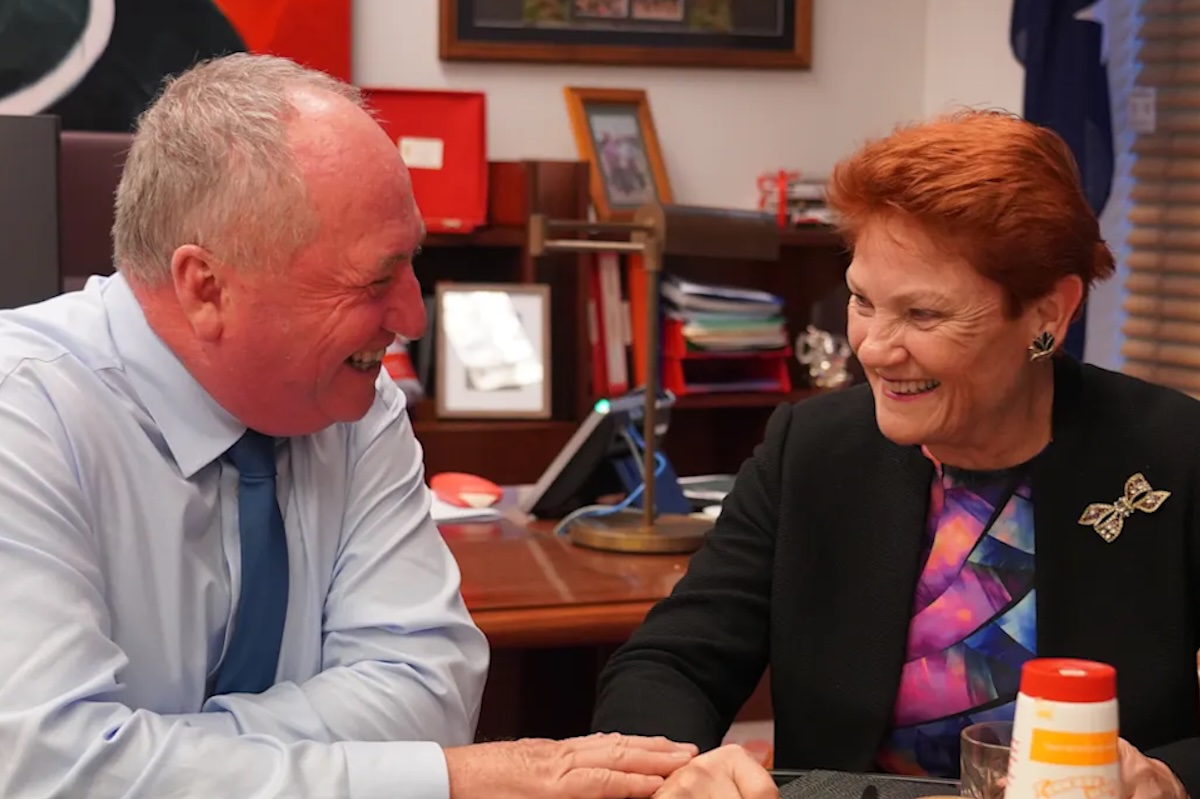

New polling out today from DemosAU shows that Pauline Hanson’s One Nation party could pick up as many as 18 seats if the election were held today. That is as many as the Liberals hold right now in Parliament. Could PHON become the new Opposition? Here is how it works.
Labor is already dominating the House of Representatives following its recent commanding election win. Albo's party holds 94 seats in the House of Representatives right now. The Liberal–National Coalition, meanwhile, once the natural alternative government for as long as any of us can probably remember, has shrunk to 43 seats spread across three parties. The Liberals hold 18 seats, the Queensland LNP holds 16 and the Nationals hold 9. Minor parties have just three seats between them, while ten independents sit on the crossbench.
Against that backdrop, the new DemosAU multilevel regression projection lands like a thunderclap. It suggests Labor could climb toward the 100-seat mark if an election were held today. The Coalition would fall to roughly half its current size. And One Nation, which holds no lower-house seats at present, could surge into double digits. The model’s upper range has them reaching 18 seats, which is the same number the Liberal Party currently brings to the chamber.
🚨 NEW: One Nation is nearing striking distance of becoming the official opposition, according to a federal voting intention poll and MRP released today by DemosAU
One Nation would win 12 seats and are within range of 18, while the Coalition risks falling to as low as 21 https://t.co/CfEysXAY2R pic.twitter.com/zbLnZTPqyB
— AusPoll (@AusPoll6) December 2, 2025
This polling begs the question: could Pauline Hanson become the new opposition leader if the election were to be held today?
While Labor or Liberal-National Coalition have held onto both government and opposition for decades, it doesn't mean it has to stay that way. The Opposition is not defined by tradition or history, it is defined by simple maths. The largest non-government grouping in the House is recognised by the Speaker as the Opposition. That grouping can be a single party or a formal coalition.
The key blocker to a Hanson-led Opposition? The fragile Coalition agreement between Libs and Nats.
Under today’s DemosAU projection, One Nation does not come close to overtaking the Coalition bloc as it currently operates. Even if PHON were to win at the upper end of the model’s range, they would match the Liberal Party, not the combined Coalition. As long as the Coalition agreement holds, the three conservative parties act as one parliamentary unit, and that keeps them the Opposition regardless of how many seats One Nation manages to collect.
Still, the projection highlights two important currents. First, One Nation’s vote is concentrated in Queensland and parts of regional Australia, which is why a modest national vote share can translate into a cluster of winnable seats. That same geographic concentration is what makes the Greens competitive in inner-city electorates. Second, if the Coalition parties ever broke their agreement, each would be judged on its seat count alone. A Liberal Party reduced to the high teens would suddenly be competing with One Nation to be the largest non-government party.
The path for PHON to become the Opposition therefore exists, but only through a political rupture on the right combined with a sustained rise in their regional seat strength. Under normal conditions, the Coalition remains the Opposition by sheer weight of numbers.