As kinetic retaliation plays out around the Middle East, bells are about to ring on markets around the world. Here are what different analysts have to say about Iran vs the market.
In case you’d rather the short version, Peter Switzer wrapped his thoughts this morning for today’s column.
The attack and the response
In case you’ve been out of range of the news this weekend, let’s quickly recap how we got here.
Iran is currently observing 40 days of mourning following the death of Supreme Leader Ayatollah Ali Khamenei. Khamenei was killed in airstrikes that were coordinated across Iran by the US and Israel. These strikes were carried out with the cooperation of several Arab states, including Bahrain, Kuwait, Qatar, Saudi Arabia and the United Arab Emirates.
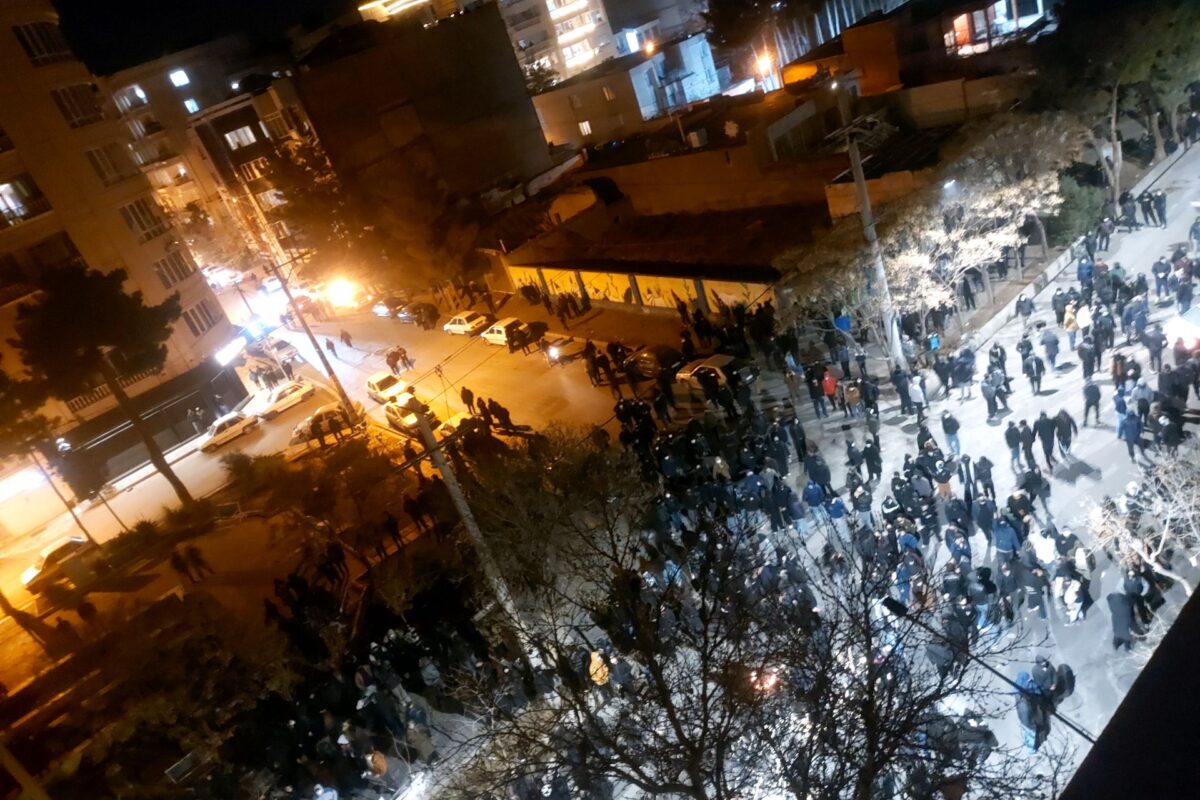
Following Supreme Leader Ayatollah Ali Khamenei’s death, said Arab states saw themselves targets of Iranian retaliatory attacks. The Islamic Revolutionary Guard Corps launched missile and drone strikes at US military assets across the region. These attacks included strikes on several key civilian airports in Abu Dhabi and Dubai which have left five people dead and many more injured. Airspace across the region is now closed and travellers are either stranded or scrambling to organise alternate routes.
So what happens next? Truthfully, nobody knows, but experts have all lodged their predictions.
The immediate signals
Traditional markets don’t trade over the weekend, so we didn’t observe an immediate market response. However, the crypto casino is open 24 hours a day around the world, and it responded to the news swiftly.
During times of global uncertainty, investors tend to fly to safety in assets like precious metals as a hedge. These days, that can involve crypto too. These assets can trade around the clock, even after the closing bells sound on traditional markets on Fridays, through tokenised proxies: digital instruments backed one-to-one by physical gold held in custody, trading continuously on crypto exchanges.
PAX Gold, one of the more established of these instruments, was trading at USD $5,344 per ounce by Sunday morning, up 2.2 per cent since Friday’s close. Tether Gold had reached USD $5,292 per ounce, up 1.2 per cent over the same period. These figures are not definitive prices, weekend liquidity is thinner than during regular trading hours and moves can be amplified, but analysts treat the direction of travel as a reliable signal for where traditional gold markets are likely to open.
Bitcoin told a different story. It fell in the immediate aftermath of Saturday’s strikes before partially recovering, finishing the day up approximately 1.8 per cent at USD $66,725, then slipping back to around USD $66,325 by early Sunday. The pattern confirmed what analysts have observed across several recent geopolitical events: Bitcoin is not behaving as a safe-haven asset.
Analysts have used the tokenised gold signals to crystal-ball-gaze at market movements for Monday. Tim Waterer, Chief Market Analyst at KCM Trade told Investing.com:
“I think we could open up by about $200/ounce on gold, but then drift lower over the course of the day. The markets are rather dispassionate when it comes to military conflicts; the only thing investors are ultimately focused on is whether the oil flows will be interrupted so once the initial spike is over, the initial rally tends to fade.”
Supply disruption could pump global petrol prices, and fuel another rate rise
Oil prices are already up in 2026 against what many analysts had predicted two short months ago.
Australia isn’t supplied oil by Iran (we get it mostly from South Korea, Singapore and the UAE), meaning any shortfall in Iranian production isn’t immediately to blame for potential price spikes. But we’re not totally insulated either.
Australian fuel prices track international benchmarks, specifically Brent crude and Singapore Mogas, regardless of where the physical oil originates. When Brent crude markets move, the bowser follows, typically with a lag of a few weeks.
Prices are expected to move upwards for a barrel of oil following escalated kinetic conflict, but analysts are split on by how much. Jorge León, Head of Geopolitical Analysis at Rystad Energy, told Yahoo Finance that without de-escalation signals, prices could surge USD $10 to $20 per barrel when the market reopens. Mizuho’s macro team flagged Brent reaching $100 as a plausible scenario if Strait of Hormuz disruption fears intensify. On the more contained end, however, other analysts forecast a $5 to $7 per barrel move at open, even absent further escalation.
Regardless of the number, any sudden jump in local prices for essentials is bad news, not just for motorists but also for mortgage holders. That means a sustained petrol price jump isn’t likely to stay isolated to the local servo. Any jump in petrol prices contributes to the RBA’s ongoing calculus of how to tackle inflation using interest rate moves. Analysis from WhichCar citing AMP noted the RBA is expected to look through a temporary oil-driven inflation spike (see the difference between trimmed mean inflation and headline inflation), with a rate cut still anticipated around July.
While a spike could spook investors and a few RBA board members, fuel for your car still only carries a weight of 3.3 per cent in the ABS CPI basket. That is not a dominant share, but given how volatile fuel prices are relative to other components, a sudden spike could show up more prominently than other factors.
Reading the Futures
The ASX 200 futures index is predicting the market opens 20 points down from its record-high closing from last week. It saw its way into Friday evening a hair-short of 9,200 points.
On a sector-by-sector level, an armchair investor can probably guess the industries likely to see price movements on Monday. Sabre-rattling between the West and Iran last week had already served to push Australian oil stocks to healthy share price gains. Woodside, for example, rose last week in response to rising oil prices before the strikes were announced.
Airlines like Qantas, however, could see some disruption as airport closures and missile strikes along key routes serve to cripple travel from Australia up to the Northern Hemisphere through the Middle East. When Israel struck Iranian targets in June 2025, Qantas fell 5.2 per cent on the day, with the broader Consumer Discretionary index down 0.8 per cent. The setup today is materially more serious.
For investors trying to read the session in real time, the index to watch alongside the ASX 200 itself is the S&P/ASX 200 VIX, known as the A-VIX. It measures implied volatility in Australian options markets and functions as the local equivalent of Wall Street’s fear gauge.
If the A-VIX moves above 15, the market is pricing genuine uncertainty. Above 20, concern is material. The 52-week high sits at 27.154, reached during the most risk-off episode of the past year. Watch where it opens and, critically, whether it continues to rise through the session or retreats, because that trajectory will tell you more about how institutional Australia is reading this event than any single stock move will.
Wait-and-see
As with any geopolitical happenings, the first session rarely tells the full story. Markets will open and initial moves can overshoot in either direction.
The situation on the ground in the Middle East, however, remains fluid enough to shift the calculus before the closing bell. As always, the prudent approach is to watch before acting before drawing conclusions about what this week means for your portfolio.
Before making any investment decisions, you should seek advice from a licensed financial adviser who can assess your personal circumstances.