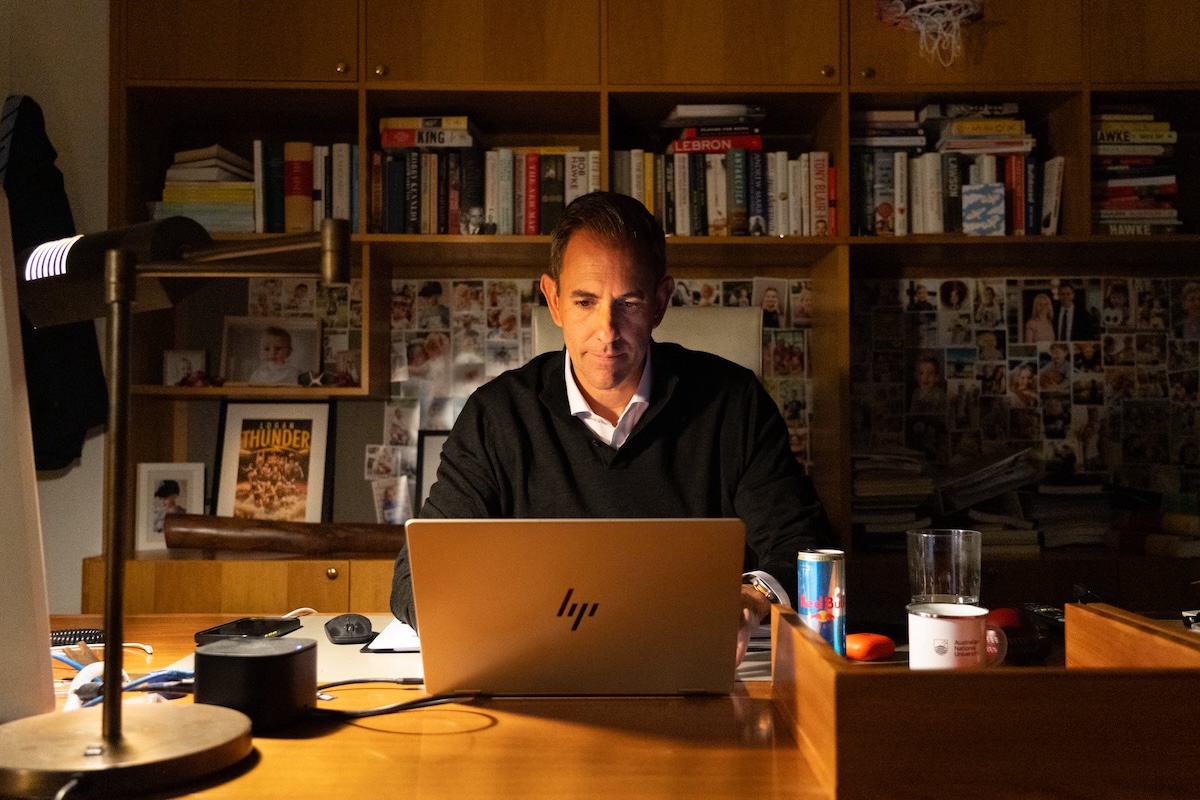
The RBA has assessed why inflation spiked causing interest rate rises but who is to blame? And who is to blame for falling house prices? Let’s get forensic on this one.
Secret notes made by Reserve Bank officials for an RBA board meeting last year, and before the May election, made the hard call that Labor’s housing policies were unhelpful for solving the housing supply crisis. This comes as Treasurer Jim Chalmers is defending his widely criticised Budget that he says was designed to help first homebuyers into the property market.
The SMH’s Paul Sakkal has accessed these controversial RBA notes which “show its policy experts were critical of policies such as Labor’s Help to Buy share equity initiative and an expansion of a scheme allowing people to buy a house with a 5 per cent deposit.”
Here are the actual notes tidied up by me for purely grammatical reasons: “In recent years, many policies that subsidise first home buyers are just demand side measures, that pull forward purchases. Many think this just translates into higher prices,” they wrote. “Being characterised as a demand side measure to bridge the gap until supply is online.”
What this says is the Albanese Government in trying to help the first home buyer by making loans easier to get via a 5% deposit added to house price pressures and therefore inflation.
ABS data shows housing costs are big for the CPI making up 22% of the CPI basket and in the year to April 2026 housing prices rose by 6.3% and this was the greatest contributor to the overall increase in the measured inflation of 4.2%.
And this has clearly been a key trigger for why the RBA has increased interest rates three times this year.
This is an important revelation as the Treasurer defends his Budget from causing house prices to fall as auction clearance rates have tumbled since he announced his changes to negative gearing and the capital gains tax discount.
In his defence, which has an element of truth, he told reporters yesterday that the fall in house prices has been caused by global concerns, which has raised petrol prices and hit households’ ability or willingness to borrow and rising interest rates.
But that was where he has put himself in the frame for those who like the blame game.
You see, not only has Jim contributed to inflation by a generous 5% deposit scheme but he is also in the frame for spending too much which also caused inflation. And that’s not my one-eyed biased view but is the assessment from someone Jim could not call politically motivated.
In February, the AFR’s Lea Jurkovic, reported the following: “Reserve Bank of Australia governor Michele Bullock has confirmed government spending contributed to a resurgence in inflation that forced the central bank to raise interest rates for the first time in two years, contradicting Treasurer Jim Chalmers’ claim public spending was not to blame for an overheated economy.”
This was not a throwaway line but a serious view offered to House of Representatives Economics Committee as it was pointed out that federal government spending, which was hovering near 26.9 per cent of the economy – the highest level in the past four decades, outside the pandemic!
To be fair, this 2026-27 Budget aims to increase supply but that will take time and some serious industry experts think the impact in creating more homes from the tax changes will be small beer.
The real tax changes to bolster the supply of homes has to be to reduce the tax slugs from local governments, state governments and the federal government.
Until we get a national commitment from these three taxing bodies to lower their imposts on the key providers of homes, the economics of building more homes will remain a disincentive for builders and developers.
Another area where the Albanese Government’s efforts to fix the housing crisis were marked down by RBA officials was with their immigration policy, which clearly was seen as allowing too many new immigrants to arrive without a related improvement in the supply of homes to house them.
Not surprisingly rent rose by a big 5.2% in 2025, which was no help for the RBA’s fight against inflation.
It does appear that Dr Chalmers’ defence against attacks on his contribution to our inflation and rising interest rates, is not a strong one.
But it’s not all bad news because I would argue the combined effect of rising interest rates, the Trump-created petrol price spike and the negativity that this Budget is creating will slow the economy down such that the RBA might stop raising interest rates.
In fact, it might have to think about cutting rates before the year is out, which is what HSBC’s chief economist locally predicted earlier this year, when he was one of the first to tip rate rises were on the way.
Economics is a zero sum game, where winners are matched by losers, but it is good for working out who should cop a bagging when it comes to the blame game!
No surprises here Pete. I have been stating on your posts ever since they came into govt that this is a big spending govt and they will never learn
Warren Hogan has continually called them out.
And do you really think that if the RBA lowers interest rates, that is a good decision when we have inflation caused by too much spending and runaway renewables costs eg snow power and massive windmills around the country?
An interest rate cut decision “smacks” of a recession. Probably a good thing in the long run as it will force govt austerity plans.
And no doubt the Chalmer will blame trump for that as well
Anyway, I hear Albanese is making retirement plans because of the pressure from the back benches. If he goes earlier, then that will be one problem out of the way.
😊