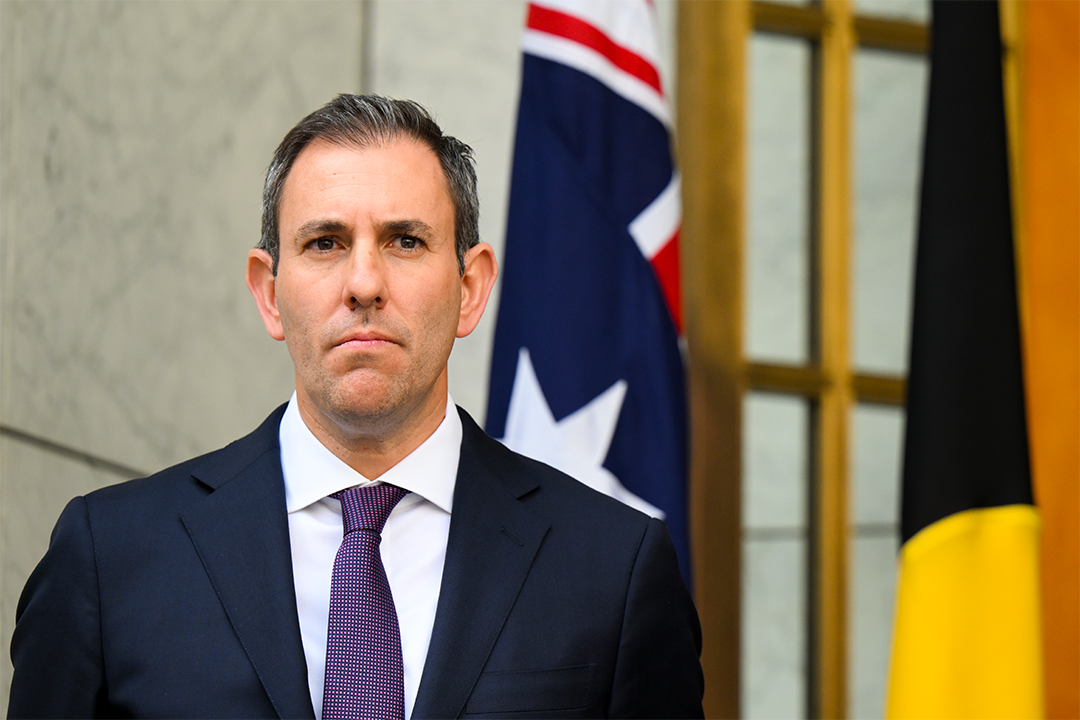
Apart from the unemployment story where the jobless rate is a strong 4.1%, a lot of the Albanese Government’s books look worryingly bad. What’s my educated take on this?
Looking at this disappointing inflation reading of 3.8% that’s making a quarter per cent rate rise on March 17 possible or on May 5 probable, it’s not unfair to think: “You do the crime, you do the time.”
One problem with this generalisation is that many sufferers of high inflation and rising interest rates might not have been keen voters supporting the Albanese Government at the past two elections.
While it looks like I’m placing the bulk of the blame on the Federal Government, more than three decades of economics, business and financial commentary (and let’s throw in teaching at the University of New South Wales) does mean I know the country’s Treasurer and his boss the Prime Minister must either take the blame or cop the praise for the state of the economy and the nation’s books.
Objectively, a lot of the Albanese Government’s books look worryingly bad, apart from the unemployment story where the jobless rate is 4.1%.
However, a Treasurer like Jim Chalmers can’t be a one trick pony. The country’s top bookkeeper has to get these things right:
1. Low unemployment.
2. Stable inflation in the 2-3% band.
3. Stable interest rates.
4. A falling and not too high budget deficit.
5. Economic growth around 3% to 3.2%.
6. Falling taxes as a percentage of GDP.
7. Falling government spending to GDP.
So, what does the Treasurer’s Report Card look like?
1. Unemployment? 4.1%, so a nice pass. ✅
2. Inflation? 3.8% Fail ❌
3. Interest rates? Rates rising so Fail ❌
4. Budget Deficit? It will be $36.8 billion! Fail ❌
5. Economic Growth? It’s 2.3%, so Fail ❌
6. Taxes? Highest to GDP in 40 years. ❌
7. Government Spending? Near historical highs. Fail ❌
Politically, while the Government has been good for wage rises to employees, that’s not usually a badge of honour for a Treasurer, unless productivity is rising. While productivity has been averaging 0.2%, a decade ago it was 1.2%.
Public service wages have increased at 4%, above inflation and faster than private sector wages that have increased by 3.2% of late.
The Government has been good for low-to middle-income Australians with tax cuts, but it hasn’t helped the RBA beat inflation and has led to interest rate rises.
All this explains why the Daily Telegraph’s Paul Wallbank started his story today with: “Inflation has defied forecasts and continued to surge sparking fresh fears for further interest rate hikes as households face mounting cost-of-living pressures”.
Here are the main points from the January CPI release yesterday:
1. Headline figure was 3.8% for the year.
2. Economists expected 3.7%.
3. The monthly rise was 0.4% compared to the huge 1% in December.
4. The RBA’s preferred trimmed mean inflation reading was 3.4%, higher than the 3.3% the market anticipated.
5. The big inflation drivers were housing prices/costs, recreation services, beverages, alcohol, education, clothing and footwear.
Australians are shopping and spending because they haven’t been subjected to enough hip pocket pain to make them not pay high prices that drive inflation. Based on my knowledge of former successful treasurers, Chalmers has been too soft, and the RBA misread the economy when it gave three rate cuts in 2025. Deloitte’s Stephen Smith told the Telegraph that a more fundamental reform is needed if Australia is to tame the inflation genie.
“The May Budget needs to meet the moment and outline significant economic and tax reform. As living standards atrophy and as the Reserve Bank wrestles with limp supply growth, it is fiscal policy that holds the key to lifting the pace of growth and bringing inflation back to target.”
It comes back to the Treasurer, but he will be helped by his ministerial colleagues after the PM instructed them to find billions in savings for the May Budget.
The question is this: who will Labor single out to fix the Budget and bring down inflation? I suspect a non-Labor voters could cop it in May, but that might not be enough to beat down inflation.
Jim’s Budget must pass the “no guts, no glory” test or we will be stuck with high inflation and interest rates. And that might make the once thought unsellable Angus Taylor, a chance at the next election.
By the way, I listened to Shadow Treasurer Tim Wilson, at a Business Sydney lunch yesterday. This guy looks like a promising politician. I hope he can live up to his promises.
Surely much of this inflationary trend can be traced back to the astronomical rise in energy prices that we have seen in recent times, caused by increased demand ( through immigration), lack of supply ( the decommissioning and lack of maintenance of existing coal fired power stations) and the massive infrastructure costs being incurred via this dogged roll out of renewables.
Our electricity costs are now amongst the worlds highest when they should be at the bottom of the chart and this reflects in absolutely everything we consume.
Meanwhile the government continues to throw ( our) money away in a shameless attempt to own its voter base, as well as employing a record number in the public sector.
Hopefully the country will wake up before the next election and realise what an absolute dogs breakfast of an economy they have created.
Hi Peter,
From an untrained armchair economist! It seems blatantly obvious the Labor Party’s unfunded ‘promises’ are a significant contributor to inflation and shortages in the construction sector. Govt infrastructure projects not only cost large amounts, but cost blowouts are not a problem – just throw more money in. These projects also take out resources that would normally be available to the private sector. That competition raises prices for all. The only difference is Govt contracts don’t have to meet budget!
You can’t do a lap of the country pre election promising a billion here and a billion there (unfunded) and not create an inflationary headache. Labor are so obsessed with buying votes that the cost of it all seems secondary. My two bobs worth. Cheers Ross Donald
The treasurer’s sleight of hand in temporarily lowering the inflation numbers using the energy rebates prior to election the fooled most commentators as well as the RBA (it seems); or did they really know and decided it was best to be politically compliant?
If the treasurer runs to form he will have another card up his sleeve or have a clever diversion to distract from the underlying issues. Will the commentariat pick it up this time?
To the list of crosses you should add the abject failure to improve housing supply. It was a key initiative and failure on supply means higher housing prices and higher rents = inflation. This is very evident from the data and you don’t need to be an economist to see this. The reasons are also obvious.
Given all the noise, my prediction is that the distraction this time will be the changes to capital gains tax.
Even the unemployment number would be very bad except for government backed job creation. NDIS, Canberra and alike! Private sector job creation is relatively low. If interest rates keep rising even unemployment will start to rise.