The oil crisis is pushing inflation back into tricky territory, and the Reserve Bank is holding tight on the reins. The latest cash rate bump up to 4.10% has investors and homeowners alike all asking: how high could it go this time? We asked an economist, and his interest rate prediction isn’t too rosy.
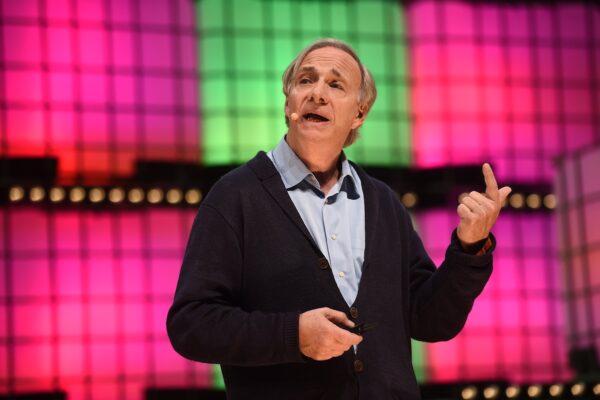
Speaking to us on Switzer Investing TV on Monday night, Morgan’s Chief Economist and Director of Strategy, Michael Knox, paints a picture where rates climb significantly higher in a fairly short span of time.
Knox laid out his case, saying that interest rates could climb as high as 4.95%. Even the conservative estimate is unpleasant, with Knox projecting rates of “at least” 4.6% if current inflation persists.
Interestingly, Knox isn’t jumping on this high-rate bandwagon just now. He has actually been saying this for years now.
Speaking on Switzer Investing TV, Knox said his model has not shifted, despite market hopes that the rate cycle is nearing its peak.
“My model still says 4.95 basis points… but I’m confident that the RBA will at least get to 4.6%,” he told Peter on the show.
And he’s not new at this either. Knox is one of the world’s most respected economists. He has worked in trade missions overseas, served on government committees, and has been with Morgans as its chief economist since the late 1990’s. Fair to say he’s had his finger on this pulse for a while now.
Why rates may need to go higher
At the core of Knox’s argument is the idea that monetary policy is fighting against powerful forces still driving demand in the economy.
One of the biggest is the government’s current fiscal policy settings. Specifically, spending. Knox pointed to ongoing government spending and increasing demand drivers as key reasons inflation is proving difficult to contain.
“We’ve had an underlying deficit…that generates demand. And we’ve got a very high level of immigration…immigration [also] generates demand.”
He explains that new arrivals don’t just add incremental spending: they can trigger large increases in economic activity, particularly through housing.
This combination of government spending and population growth is effectively offsetting the Reserve Bank’s efforts to slow the economy. Two steps forward, one step back.
The hidden tightening already underway
Knox also highlighted that the RBA is already trying to throw the brakes on the economic machine beyond just raising rates.
“The RBA has actually been doing quantitative tightening… they’ve been running down their balance sheet by 3% of GDP every year.”
This process of allowing bonds to roll off the central bank’s balance sheet reduces liquidity and lending capacity in the system.
“That gives you the same tightening effect as… interest rates would do.”
Despite this easing, however, inflation still isn’t coming off the boil. And the underlying problems in the economy are still hurtling us forwards towards problem territory.
The inflation problem isn’t over
Another key driver of Knox’s prediction is the risk that inflation pressures are being underestimated, particularly from energy.
He pointed to electricity prices in particular as a major factor that could push inflation higher again.
“The 33% increase in retail electricity prices… will add around about 4.2% to the Australian CPI.”
And he’s been proven right so far: energy has been one of the biggest contributors to inflation jumps in recent quarters.
While government subsidies for consumers may have temporarily softened the blow, Knox suggests those effects are masking the true underlying trend.
“That had a much greater effect in reducing the CPI than people think.”
As those temporary effects fade, inflation could re-emerge, forcing the RBA to maintain or even increase its tightening stance.
Can it be avoided?
For Knox, the path to avoiding further rate rises is narrow and uncertain.
A key variable is how much additional tightening the RBA can achieve through its balance sheet instead of interest rates.
“Whether the RBA can avoid that extra 25 basis points… by quantitative tightening remains to be seen.”
That suggests rates may not necessarily need to reach the very top of his forecast but only if other forms of tightening do more of the work.
The bigger risk? External shocks
Beyond domestic factors, Knox also pointed to global risks (particularly energy markets) as a wildcard. A wildcard that is currently very much in play:
“If that went on for that length of time, we would see very high oil prices, and that would be enormously damaging.”