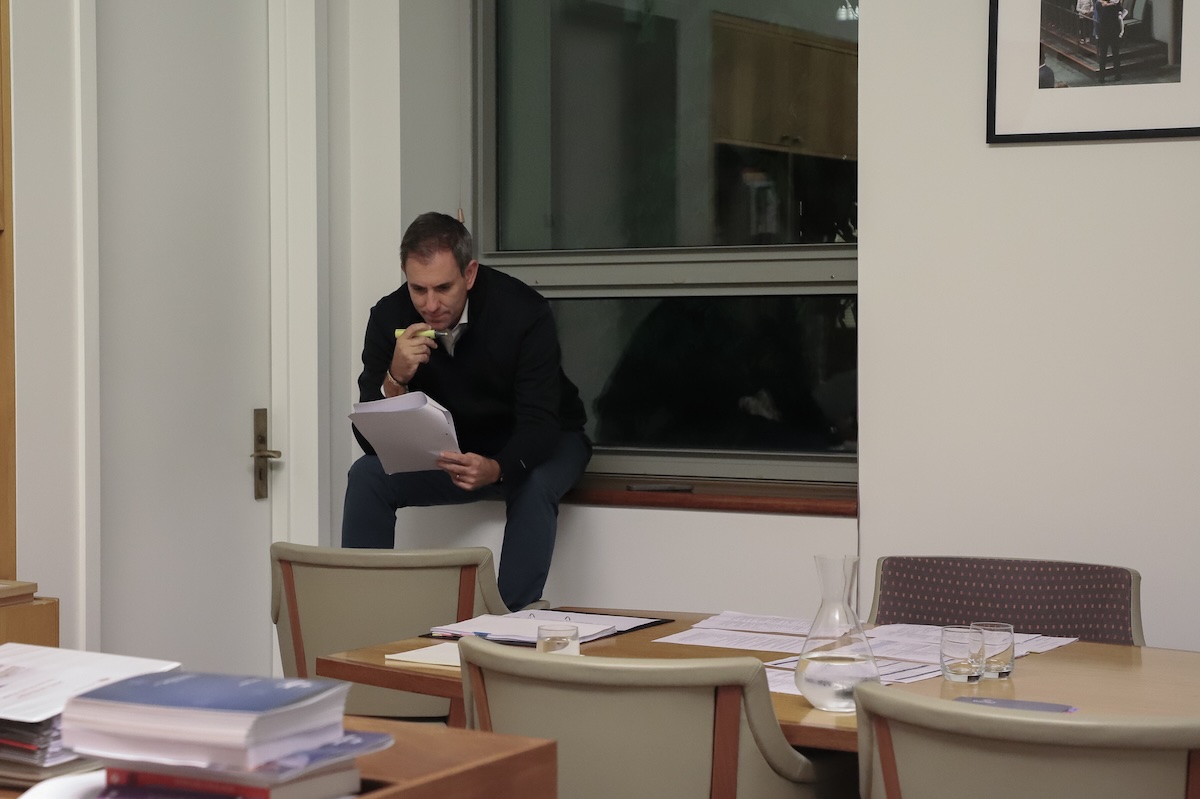
Let’s get down to basics: here’s the good, the bad and the ugly of this Federal Budget.
For the first time ever, Ben Fordham, my radio colleague on 2GB (who nowadays is Sydney’s number one breakfast host) simply asked me to report on two questions from the 2026-27 Budget.
And here’s what Ben asked: What do you like? What don’t you like?
Because this Budget is meant to bring down the deficit to possibly prevent the RBA from raising interest rates again, let’s start with what I liked.
So, here goes: here’s what I liked
- In 10 years, the cumulative deficit between now and the end of the decade is forecast to be $150 billion. While this is a $45 billion improvement, it’s always hard to believe projections because governments change and politicians break promises, just like the Albanese government has done with this Budget.
- Investors in new houses will retain the 50% capital gains tax discount.
- All existing negatively geared properties will be exempt from the changes that abolish negative gearing for existing houses acquired after Budget night. (But note: Existing properties bought after Budget night can be negatively geared only until July 1 next year. After that, the negative gearing on these properties will be lost.)
- The $20,000 instant asset write-off for firms making less than $10 million is good for business investment.
- Businesses with a turnover of up to $1 billion will be able to use current-year losses to claim a refund on tax paid in the previous two years.This is called the loss carry back measure.
- Start-ups will also be able to get a tax refund for losses in their first two years of operation.
- There’ll be $2 billion for infrastructure to create 65,000 new homes over four years.
- The halving of the fuel excise for three months, which should reduce the price of petrol and diesel by 26.3 cents.
- Reducing those on the NDIS from 760,000 to 600,000 but it will take 3 to 4 years!
This is what I didn’t like
- This AFR headline: “Budget to make RBA’s inflation-taming efforts harder.” There’s $18 billion worth of extra spending that will be inflationary.
- The capital gains tax exemption for assets held before 1985 will be scrapped as of 1 July 2027, which will lead to a lot of selling.
- Negative gearing will be abolished for existing houses bought after last night’s Budget, though there’ll be one year’s grace from when this applies.
- The 50% CGT discount on all assets ends from 1 July 2027 and reverts to the pre-1999 model, based on paying tax on the non-inflation part of any capital gain. For investors sitting on large, unrealised gains, the window to crystallise under the current regime closes 30 June 2027.
- There’s a new 30% minimum tax on discretionary trusts, but this will only affect assets acquired as of and after today (i.e. May 13 2026)!
- Tax revenue that this government will receive from all the above changes will fund a Working Australians Tax Offset of up to $250 a year, which would be good if we didn’t have high inflation. This doesn’t start until next year.
- These new taxes will raise $7 billion, which is economically good, but it will be spent rather than saved to reduce debt.
- Off-budget spending on the Snowy Hydro project and the National Reconstruction Fund doubles to a headline deficit of $264 billion.
- Gross debt is set to hit $1.1 trillion next financial year and stay there for the duration of the forward estimates
- The Iran war has taken inflation from a forecasted 3.75% to 5%.
- Economic growth for 2026-27 goes down from 2.75% to 1.75%.
Some experts will praise this Budget for hitting older, wealthier Australians and for helping younger property buyers, who’ve had to cope with high and rising house prices and high and rising interest rates.
This has the Government’s fingerprints all over these ‘crimes against the economy’ and the people who live and work in it.
Some of these changes will advantage those currently disadvantaged, which will bring ticks from many commentators. But those who’ll now face unexpected costs and losses, (which were promised before the election that these changes wouldn’t happen), could be justifiably annoyed and feel cheated.
The problem I have with the Budget is that I’m not sure it will boost the supply of new houses and apartments. But if it does, why wouldn’t investors (because new properties will have the 50% discount and negative gearing) be buyers of these properties, which means young buyers will either pay higher prices or miss out.
Meanwhile, existing homes will have fewer investors chasing them, but they’re already expensive. Only if our homes fall in price will younger people find them easier to buy.
So, I ask: is this Budget framed to make our homes less valuable?
Finally, if I’ve made big capital gains on shares, I should sell them before 30 June 2027 because the new/old capital gains tax regime that comes in next year will be more taxing. These Budget changes will lead to more share selling than buying, and it makes overseas shares more attractive.
While I don’t like that, I will be increasing my financial planning clients’ exposure to more overseas investments that will be hedged for a rising Aussie dollar, driven by our high interest rates, which I can’t see getting any lower any time soon.
Investing in good income paying investments with good franking credits will also be popular.
* I appear at 6.40am with a money segment with Ben Fordham Monday to Friday.

He’s protected existing negatively geared investors but not those without borrowings. I have one, not geared, investment property. After land tax (the biggest killer), rates, insurance, repairs, maintenance and income tax it yields less than 1.2% on current value. So I only have it for the capital gain. Like every other landlord I’ll decide it’s now going to be so totally uneconomic after next July so I’ll sell it and reinvest in shares with franked dividends. The nett result of all this is there will be nothing to rent, an exponential rise in rents and a massive accommodation crisis – which is what happened last time and is why the 50% discount on CGT was introduced in the first place. They have very short memories.
Here’s my Q:
Ahead, Trusts will be required to pay 30% tax on income, ie on distributions. So, double whammy??? The Trust will need to be sure it has funds available for the distribution AND for the 30% tax liability. Is that correct. So much for having cash around to re-invest!
How long has the Albanese Government (his Government not ours!) been in office?
What have they achieved?
Answers….Too long and very little.
Now they want to attack those Australians who have worked hard, paid taxes, saved and retired.
If I did not have family here (working, paying tax and saving) I would sell up and leave Australia.
The problem is that there is a rapidly growing number of people sucking on the Government welfare teat and a reducing number of those capable or willing to pay for this largesse. Politicians have to pander to the first mentioned otherwise they will not be elected and become part of the second group.
Negative gearing should be permitted to ensure most people acquire at least one residential property in their lifetime so that they can never be eligible for the Centrelink pension because of the assets test. Claiming interest deductions to be phased out after say three properties.
Plus a sufficiently high capital gains tax to ensure that they are unlikely to ever sell.
I take offence with “Doctor” Jim Chalmers assumption that older people who managed to invest wisely should be penalised for our good money management.
When I was trying to buy my first property in the late seventies I had much difficulty trying to secure a $13000 loan to buy a $19500 unit even though I had a well paid job. I did not meet the banks requirement to bank money consistently without withdrawing some occasionally when I needed it.
I eventually secured a loan with a building society to buy the unit. I bought a basic property that met my needs and was within my means. The interest rate back then was regularly increased one percent at a time until it reached 18%. My repayments were not covering the interest but I managed to keep my head above water and eventually own the property.
Perhaps we should be building more unit blocks that would enable first home buyers to purchase a more affordable home or alternatively move out of the capital cities to cheaper country areas.
Quite frankly there is very little of any thing good in this budget. This attack on CGT concession, negative gearing and family trusts after Albanese and Chalmers promised not to touch them is unforgivable. Many Australians planned their financial future on this commitment. However, just like promises about saving $275 on power prices, not increasing taxes on superannuation this was just lies.
This budget crushes aspiration not just for baby boomers but for the young, it will result in rents going up due to less investment properties and lack of Government intestinal fortitude to reduce immigration and by definition demand. House numbers and price will only get worse.
Why would people invest in businesses, start ups or primary production, work hard, build a good business and eventually to sell it only to have this desperate government take most of the gain for your hard work.
This is a deceitful, cynical and short sighted budget to take from those who earned it and give it to those who didn’t. Socialism 101.
Too few houses or apartments built and too many immigrants over the last 6 years means young Australians don’t get a look in. Are the immigrants getting jobs or going on welfare? We are above population of 27 million. If not enough are working & contributing to tax, and instead getting welfare, then we can’t pay down the Trillion in debt or provide the services needed to ensure a thriving Australia.