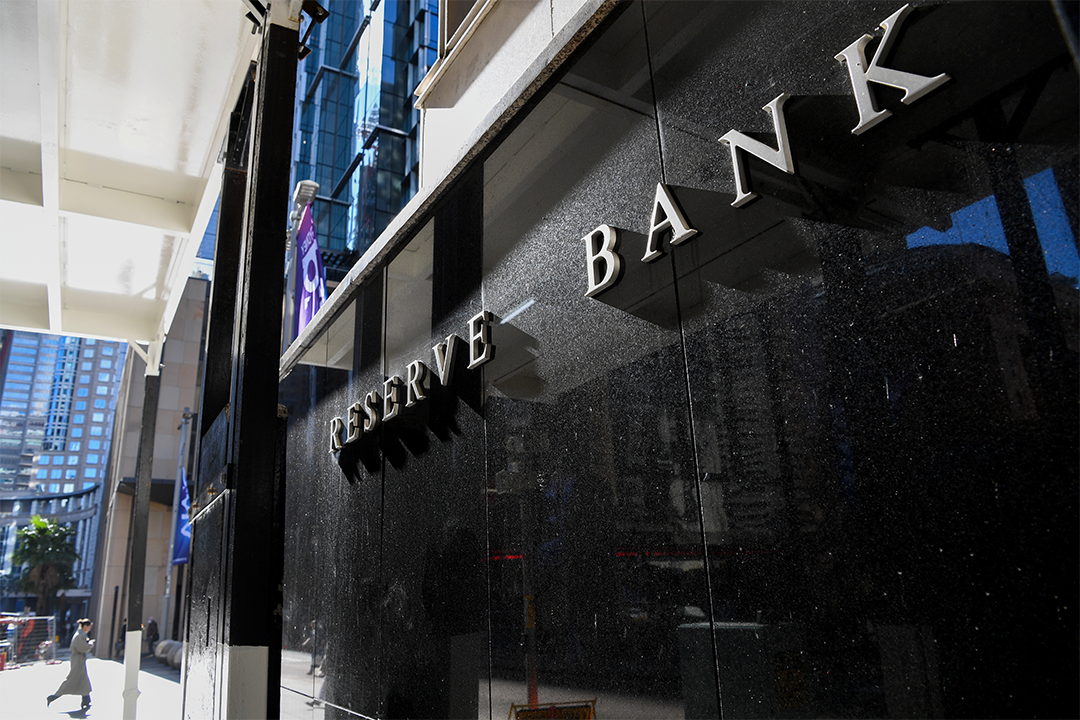
The Reserve Bank this week faces a Shakespearian-like drama, which could be seen as: “To raise or not to raise, that is the question.” If they do, it could end up as an economic tragedy.
RBA Governor Michele Bullock is poised to make the second biggest decision of her interest rate setting life. The first was in February when she decided she was wrong to cut interest rates in 2025, three times!
That was a U-turn by her and her board that said two important and gutsy things.
First, they were effectively saying, “we, the RBA monetary policy board have stuffed up”. Of course, they didn’t say that, but economists knew it. However, as a group they are generally too respectful to bag a central bank boss.
I know this, after three decades of reviewing and reacting to RBA rate decisions. They even cut Dr Phil Lowe some slack, when he made his outrageous call that we might not see a rate rise until 2024.
At the time, I was broadcasting on 2GB breakfast, as I am nowadays, and even though I knew the economy needed some good news after Covid threw us into recession and interest rates went to historically low levels, I did say on air and in writing that Dr Phil would regret that call.
In reality, it was a needed thing to say, when he made the call, but his mistake was that he did not back off that prediction publicly when it was obvious that the economy was improving faster than expected. Too many Aussies took out variable loans and then endured successive rate rises and lots of hip pocket pain as they had bought homes at very high prices because of the post-pandemic low interest-rate regime.
The second admission they didn’t make was that they had been misled by Treasurer Jim Chalmers’ economics team when they believed their forecasting guesses from the 2025 Budget. This proved to be deceptive, and while I don’t think Treasury intended to mislead, their predictions about specific policies and inflation were way off the mark.
Now, it could be argued that the RBA should have been smarter than they proved to be, but you can’t really expect the central bank to test out the take-up of policies such as NDIS and other generous handouts from the Albanese Government before the 2025 election, which they won in a canter.
So, that’s the scene that has been set before we look at what is happening now within our economy, as well as outside our economy, which could influence the RBA decision on Tuesday.
In a nutshell, this is the current lie of the land within our economy:
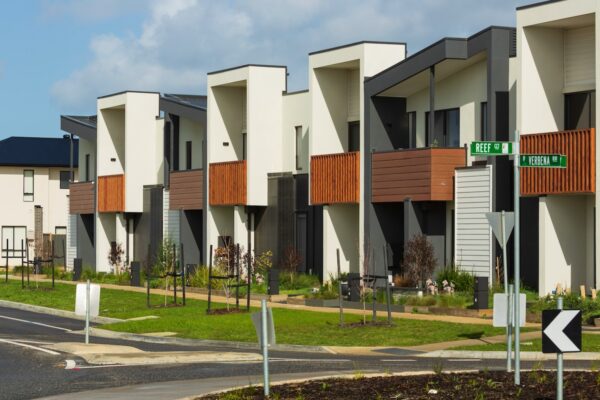
- The housing sector is in crisis and getting worse, with the likes of Coolabah Capital’s Chris Joye predicting our worst house price fall ever.
- Inflation has been coming in better than expected, while still being too high, with the trimmed mean reading at 3.6%.
- Job ads rose another 0.8% in July and are now 1.9% higher over the year,
- AMP’s Shane Oliver reported that household spending numbers in Australia were “remarkably strong”!
- Business and consumer confidence are at low levels on a historical basis.
- Employment rose by 76,300 in June, after 44,000 in May, full-time employment and hours worked were strong, labour force participation rose to near a record high and unemployment remained relatively low at 4.4%.
The view on the economy is split and the numbers above do not scream that we are in big trouble, but if Chris Joye’s team of econometricians is right that the Budget’s hit on the economy via its property tax plays is equivalent to two interest rate rises, then since February we have had the impact of five 0.25% rate rises in the space of six months.
I would throw in the petrol price hikes as well as another effective rate hike, taking it to six rate rises in half-a-year.
That’s huge and it is why the RBA should pause on rate rises, and simply keep monitoring how our economy is going. Michele Bullock can talk tough and threaten more potential rises, which would help her goal to cut inflation, but another rate rise now would be excessive.
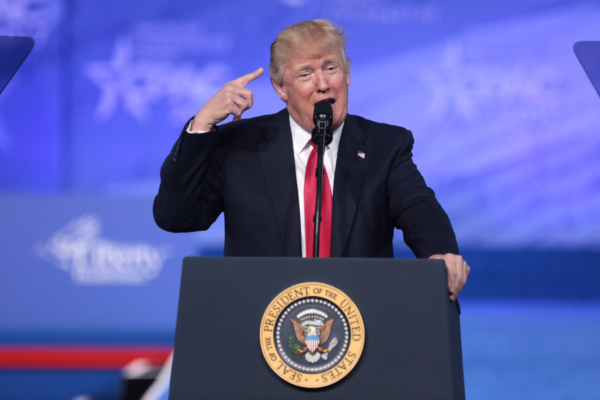
In a perfect world, the Iranian leaders and Donald Trump cut a peace deal, which would lower oil prices and then inflation. That would be a bonus for the RBA and would mean no more lifts to the cash rate would be on the cards, and it would speed up the arrival of rate cuts.
However, we don’t live in a perfect world and that makes the RBA’s job even harder than it should be, but if they raise rates this week, it would leave them exposed as a group, who look set to screw up again!
Don’t do it, Michele. Don’t do it!
We are in a recession, we just dont know it
Mmmmm?
I still with Chris Joyce’s assessment where the economy will go in the next 12 months
And don’t think that the Strait issue will be resolved anytime soon
US experts were chatting about this with New 24 this very morning
Trumpy has also been mislead on this issue. The Iranians are seeking far too much from the world
The strait must open – otherwise there will be further tension and world wide inflation issues
Agree, our inflation rate is largely home grown
You can thank the good (bad) doctor for that!
Instead of more rate rises, we need public sector job cuts, and lots of them. We suffer from too much government in this country. That’s one of the main causes of inflation. Jobs with no useful purpose other than to create & enforce red tape & shuffle paper do nothing for the economy except massage the jobs numbers. We need to unleash AI in government and start reducing the numbers of employees at all three levels of government. Imagine how quickly we could get control of inflation if we cut 250,000 public sector jobs across all three levels of government. Imagine if we made that number 500,000 then we wouldn’t need to keep stuffing this country with immigrants. We could retrain all these public sector employees in productive trades such as plumbing, carpentry, formwork etc.
I remember a previous RBA Governor saying a 3% target cash rate was “emergency level” and 6% was neutral – neither stimulative or restrictive. I think this was Glen Stevens so not all that long ago.
Until we start to price capital correctly, the cycle of exuberance and sobriety will continue.
Sorry Peter but time to move the cash rate up .15 basis points!
I believe the RBA should hold rates and let the petrol price rises help dampen spending without making it harder for mortgage holders. Petrol/ diesel affect all areas of the economy as all goods must flow through the railway and transport systems and is hitting all areas of the economy including the home owners who have no debt and senior citizens who have only their super savings to live. This is truly more effective than hurting loans and more evenly effects the whole population.
Time to rethink how to slow the economy without hitting the mortgage minority.
Pete – the almost universal prediction of the economic commentatariat that the next RBA decision will be to hold, is hard to understand? Is it because they all think the RBA is timid or because the economic fundamentals?
The organisation where I control the finance is seeing prices for services (mainly labour) and utilities (water, gas, electricity, fuel) which are our largest costs rising faster than inflation. We must pass this on, and so the cycle continues. As costs go up, wages will go up due to the Fair Work Commission basing it decisions on costs….
Bottom line – inflation expectations are now entrenched due to the Governments financial, IR and immigration (mis) management. This entrenchment has been permitted by an RBA which has toed the political line when required (e.g. the interest rate reductions prior to the election which have subsequently been reversed).
At the hip pocket level i.e. the impact on consumption of a reduction in housing prices will be relatively inelastic, as it impacts the disposable income of far fewer consumers (compared to an interest rate change) particularly in the short term.
Bottom line – unemployment is low – inflation is embedded. So interest rates should go up until there is definite evidence (i.e. data) to the contrary.