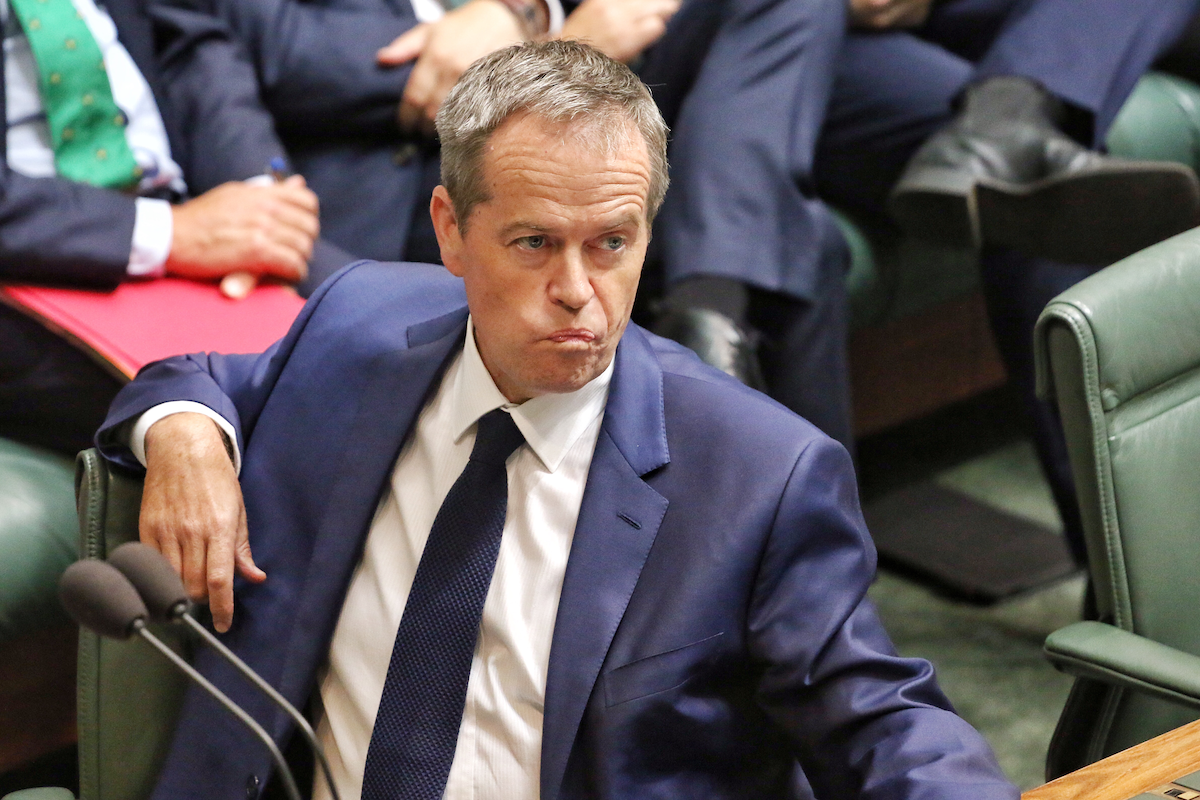
The Treasurer seems short on ways to cut his bloated budget said to be caused by overspending on public servants and the NDIS. So, he’s reading Bill Shorten’s unpublished book 50 ways to lose an unlosable election!
It’s pre-Budget ‘big ideas’ time! Treasurer Jim Chalmers is obviously under pressure to show how he’ll bring down the deficit. And his starting point is bound to be taxing those who Labor thinks are under-taxed.
No doubt, party strategists would be telling him that many of these Australians aren’t committed Labor voters, so they’re fair game for politician of a different persuasion.
Also, the Treasurer has a $54 billion deficit to reduce. These rising interest rates are bound to slow the economy, while beating down inflation. But this slowing economy will also reduce the tax the Treasurer collects when an economy is growing.
We already suspect the capital gains tax (CGT) discount could be shrunk from 50% to 33%. Now comes this idea: Treasury has been asked to work out what happens if negative gearing is only permitted on two investment properties!
Right now, you can have any number of properties and investors can use the interest paid on the debt over the properties and deduct it from their income. If the debt cost is greater than the income (rent) from the properties, the property is then negatively geared (or runs at a loss).
This loss can then be deducted from investors’ overall income and reduces their total tax paid, meaning the Treasurer gets less tax dollars. This is why he’s looking at restricting negative gearing to only two properties.
But why two?
1. Lots of middle-income Australians have one or two investment properties. Facts show that many police and nurses have investment properties and these are often Labor voters.
2. Many self-managed super funds (SMSFs) have properties in them. Killing negative gearing for all investment properties would be a retirement disaster for many voters.
3. Many young people have become investors because they have big tax bills but can’t buy a property to live in. So, they’ve bought places to rent out until they can afford a home to reside in.
4. At least restricting negative gearing to two properties is fairer than totally changing the rules on this.
Why is the Treasurer wanting to change the rules on negative gearing? Well, The Australian’s Matt Cranston reports that “it is estimated by the independent Parliamentary Budget Office to be worth $7.9bn in forgone revenue for the
federal government in the 2027 financial year”.
Data also shows that as of 2023, two million plus Aussies have an investment property, one million have them negatively geared and a third of this group have more than one investment property.
The ACTU has argued negative gearing should only apply to one property, while property experts argue changing negative gearing will reduce the number of rental properties that could reduce house prices but also, with less supply, rents would surge.
Cranston points out that The Grattan Institute says, “by halving the capital gains tax discount and curbing negative gearing so that rental losses could no longer be offset against wage and salary income – would boost the budget bottom line by about $11bn a year”.
They doubt it would lead to a housing crisis and a surge in rents, but these guys are only qualified ‘guessers’. While they could be wrong one thing it would do is increase the use of negative gearing for buying stocks.
That would push up stock prices. If the Government stopped that as well for those who would deduct losses from their wage and salary income, then stock prices and super fund balances would fall.
If adopted, I think The Grattan Institute’s idea would be the greatest leg up for new Liberal leader Angus Taylor and his very vocal Shadow
Treasurer Tim Wilson. It would be seen as the kind of vote-killer of a Bill Shorten kind, who lost the unlosable election in 2016 by tampering with franking credits, the capital gains tax discount and, yep, negative gearing!




Good morning Peter,
I find it interesting in your article there is no mention of housing affordability. If this policy is a step towards taking the heat out of the housing market and assisting young people to buy a home, then I would be supportive.
I am fortunate to own an investment property and to have purchased my home when housing was at an affordable level compared to average wages.
I admire any government that puts good policy ahead of re-election concerns.
Would they also limit positive gearing to two properties? Most of mine are positively geared.
Also, I keep hearing how much negative gearing is costing the government. We never hear about the amount tax on positively geared properties is giving the government.
Unfortunately neither Shorten or Chalmers are economic savvy but very good at spin and spending to grab those votes. Neither could answer challenging questions so merely deflect or revert to prewritten talking points.
For negative gearing there are too many small mum and dad investors involved who have taken on risk based on the tax laws in place now for some time primarily investing in the lower priced market segments. The mega rich wont be affected too much as there are already ways around the proposed multiple property scenarios. It just needs to be rearranged before changes come in unless Chalmers is looking at retrospectivity – wouldnt put it past a cash strapped govt not knowing what to do about the mess their Vic counterparts have created.
The current tax rules do need changing but would be best implemented in stages allowing time for the mum and dad investors to reassess their attempt to look after their family future, not that too many would have two or more investment properties.
What they could look at is put a time period in for existing arrangements to be worked through aiming for an end game that puts emphasis on new housing, maybe caps of tax benefits, holding periods of 5+ years etc for capital gains concessions.