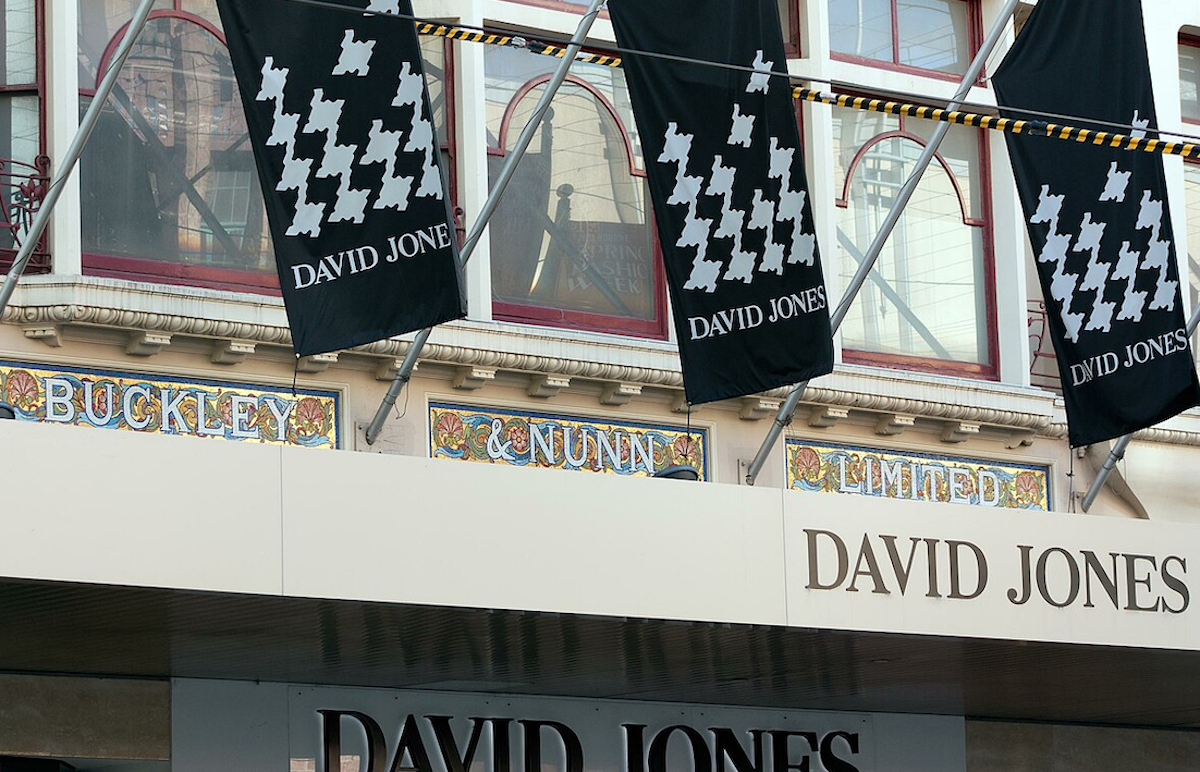
Headlines told us that esteemed department store David Jones was making suppliers wait eight weeks for payments. But the question is this: will DJs sink or swim going forward?
As one of the country’s most esteemed department stores struggles with losses such that it has told suppliers that they’d have to wait eight weeks for payments, it makes one ask whether David Jones is heading for the pirate’s grave of Davey Jones’ locker?
The irony of this fair enough question is that the new owner of David Jones is a private equity group called Anchorage Capital, famous for turning around failing businesses! Given that many Australians have shopped at and have a high regard for David Jones and can never forget its TV and radio ads that told us that: “There’s no other store like David Jones”, we hope the business survives the rough seas it currently copes with.
However, this isn’t a new story for the store as the list below shows and explains why Anchorage is playing hardball with supplier payments:
- Department stores worldwide have lost business to online rivals.
- The former owners, Woolworths of South Africa not Australia, paid $2.1 billion for DJs in 2014 and Anchorage picked it up for a reported $92.5 million in 2023!
- DJs reported loss for 2024 financial year was $74 million and 2025 is tipped to show another loss when its report goes public.
- The famous Saks of Fifth Avenue in New York went broke earlier this year, showing how the department store business model is under pressure.
On the plus side, Anchorage has spent $250 million upgrading key stores along with changes to its “loyalty program, digital presence and customer relationship systems to boost sales and compete head-on with online retailers and luxury brands going direct to consumers”, the SMH’s Colin Kruger reported.
These are changing times for old world businesses. What sounded outrageous decades ago, such as suppliers waiting two months for their payments, could become the rules if supplying businesses want to play with the “big boys”, as the old saying goes.
Clearly, Anchorage got a good deal buying DJs on the cheap and is redefining the way it does business to turn losses into profits. This is a business that has been in trouble for possibly decades, and the online world has forced big retailers to either change the way they do business or go out of business! “We note that recent media commentary is best characterised as misinformed – like many businesses, David Jones is adjusting some operational processes to best position the business for sustainable, long-term growth,” a spokesperson for Anchorage said to Kruger.
Adding to the woes for Anchorage is rising interest rates, as it has borrowed for its investment into DJs. Then there’s the likelihood that the RBA’s squeeze on consumers, with two more rate rises being possible, could be a sales killer.
On a historical basis, while this is a big business squeezing smaller suppliers on payment terms, given big retailers are struggling to survive, it’s a sign of the times. This is a new age of online shopping and very different Generations X, Y and Z, while Gen Alpha, who were born from 2010, would probably think DJs are a group of cool record players at a dance event.
I wish DJs calm seas, and though suppliers are copping a new, tougher deal, if the department store fails under Anchorage and ends up under water in Davey Jones’ locker, those suppliers too will have to sink or swim in the scary AI-changing new world ahead.