As AI gets smarter at doing complex work, employers are sounding the alarm: graduates coming through the door can’t communicate, can’t think critically, and can’t survive without a chatbot holding their hand. Now an employer body is telling universities to wake up and telling students to get strong in the skills no AI can fake.
As Artificial Intelligence ‘machines’ get smarter upskilling themselves to do more complex jobs, bosses are worrying that the whole AI explosion is making our graduates dumber, lazier and less employable. And an employer body is warning would-be university-trained employees to get strong where AI agents are weaker than real people.
The Australian reports that a Senate education and employment inquiry has heard from the Australian Association of Graduate Employers (AAGE) graduates looking for a job rely too much on AI and “need more practical workplace skills including communication, resilience and critical thinking”.
Beyond the academic integrity problems AI creates (cheating, and the erosion of once-unchallengeable professions like accounting and law), the AAGE is urging university students to build strength in “human-centric skills like communication, emotional intelligence and resilience”, which remain critical regardless of what the machines can do.
Given AI is here to stay, as both a plus and negative, for graduates, employees and employers, students need to do the following to leverage off what AI brings to the job market:
- Reduce the dependence on AI.
- Critically assess the value and use of AI technology.
- Apply AI and other technology thoughtfully.
- Develop their communication skills.
- Learn to work in a team environment.
- Outcompete with AI by having strong inter-personal skills.
- Be strong in personal and time management.
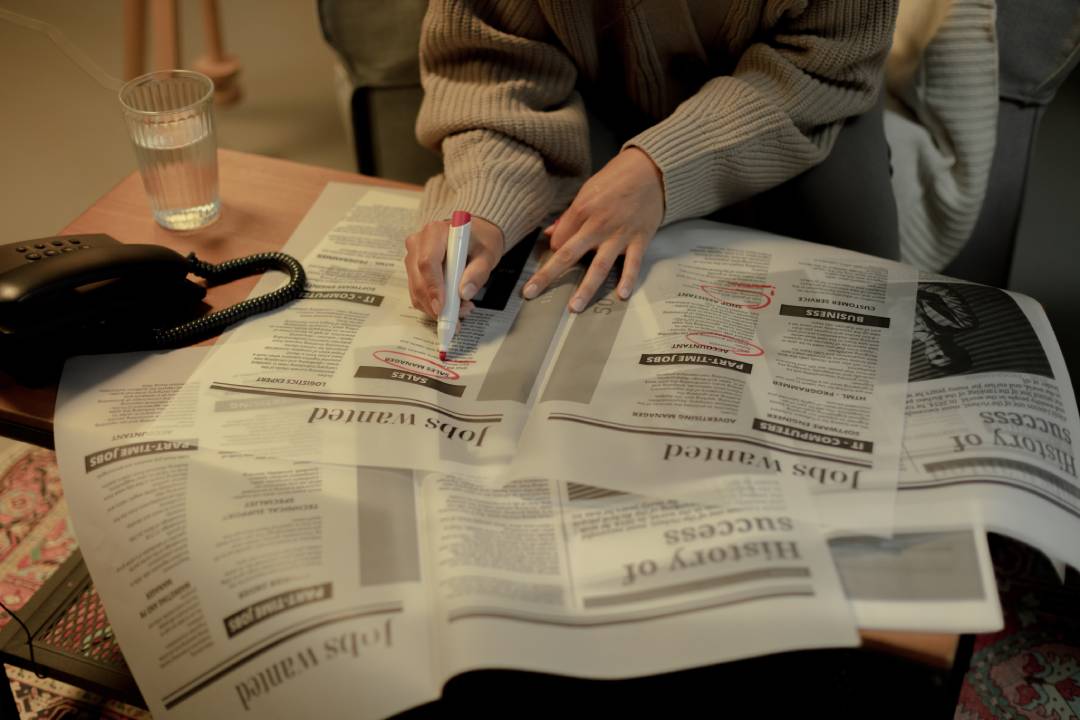
- Don’t use only AI-generated job applications.
“Giving appropriate attention and scrutiny to thousands of near identical cover letters and resumes has created a perverse challenge for employers,” the AAGE has revealed. “In contrast, the percentage of employers who report solely relying upon human screening has risen from 35 per cent in 2024 to 48 per cent in 2026 … (as they are) cautious about relying solely on AI to assess qualities that may be better evaluated through human interaction or judgment.”
The inquiry is making a strong case that universities have to assume that much of the work that lecturers used to supply to students is now being sourced from AI, and so educators will have to teach what AI machines or agents can’t do well.
AI is lifting the calibre of IQ-dependent or brain-developed work of students/workers by delivering information students once had to find, and this added to their useful retained knowledge.
However, many high achievers combine their mastery of information with softer EQ skills, which helps them understand consumers who buy their stuff and employees who they lead in their businesses.
The inquiry heard from other employer groups, who argue while knowledge is strong, there is a problem with how graduates fit into the workplace.
The Australian reports that The Minerals Council of Australia says: “Graduates’ employability and work readiness are holding the industry back.
“Though technical knowledge from Australian universities is strong, employers in mining and related industries often report gaps in practical problem-solving, technology integration and other real-world competencies.”
Many employers groups at the inquiry are arguing more workplace-integrated learning has become more important than ever. And in a sense, employers are telling universities that they better change what they are teaching for the sake of the productivity of the economy, the employability of their graduates and even their own employment future.
Universities that acknowledge the AI threat and start delivering employment-relevant skills will be essential for graduates that now face the threat of this new age technology. Success in business gets down to exploiting your competitive advantage and being smart, communicative and a team player, will be crucial to prevailing over the AI challenge.
Great academic training and workplace savviness will help employees to ask the best questions to get the best out of this AI technology.




Our world as we know it is doomed if this confounded AI is not wiped out. Sickens me now when you talk to friends, family and work employees, the common inclusion in conversation. “If it’s true or AI but etc etc etc.”