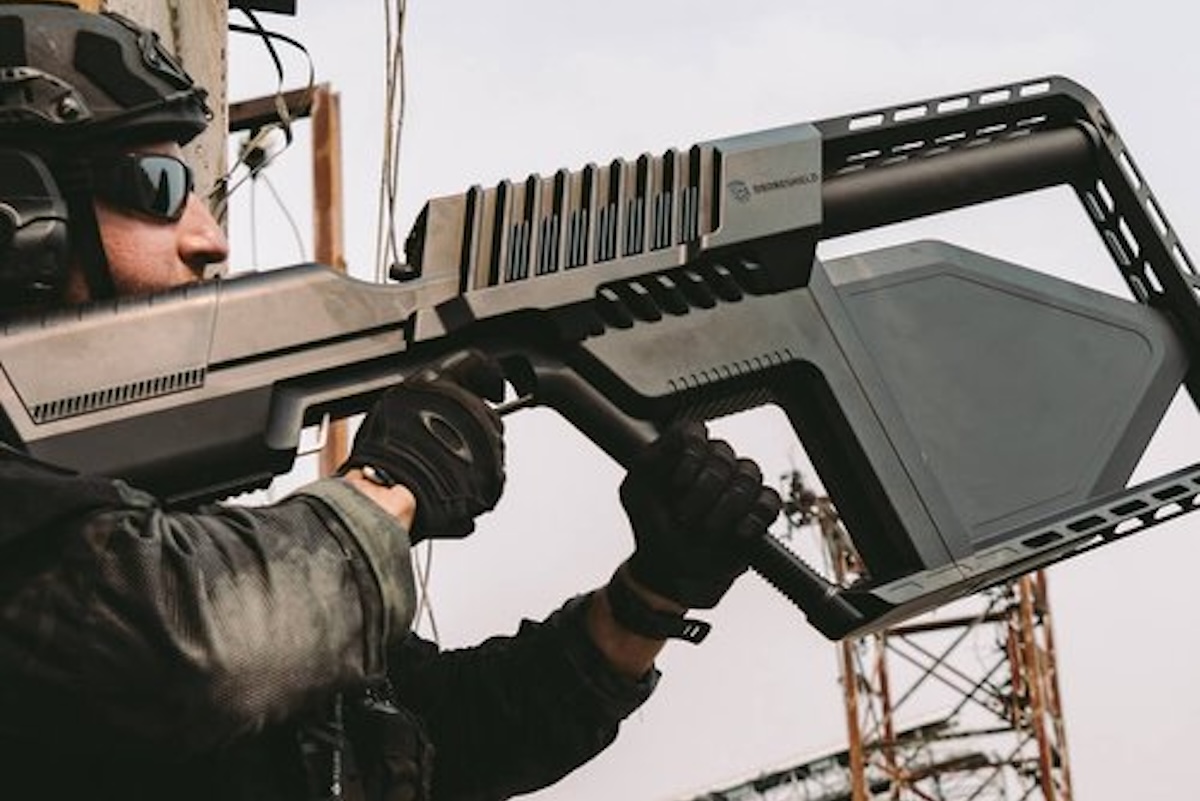
On Switzer TV this week, two market watchers were asked whether they would buy the long-troubled DroneShield after recent positive bounces.
Despite the headlines, DroneShield (ASX: DRO) has become a market darling. Revenue climbed 276 per cent to $216.5 million in 2025, though statutory net profit came in at $3.5 million. The shares are up about 39 per cent over the 12 months to 22 June, but that figure hides a wild ride: the stock peaked near $6.70 in October last year and has since fallen back to about $2.65.
The numbers weren’t enough to win over Adam Dawes of Shaw and Partners, or Rudi Filapek-Vandyck of FNArena, when the stock was put to them on Switzer TV this week.
Dawes started from the gap between what DroneShield wins and what the market is paying for it. The company carries a market capitalisation of about $2.45 billion, compared to its contract announcements which are measured in the millions (rather than the hundreds of millions).
“It’s a no for me,” Dawes said. “Their contract wins are small relative to the market cap they’d need to justify, and the stock is trading on a war theme that ends one day.”
His second concern was the company’s own people heading for the exit. Here’s where the headlines come up.
In November 2025, then-chief executive Oleg Vornik sold his entire holding, around 14.8 million shares, for roughly $49.5 million. Chairman Peter James and a fellow director also sold out, taking the combined total to about $66.8 million. Vornik, who had been the company’s first employee back in 2015, stepped down as chief executive in April. Product boss Angus Bean took over.
“Oleg knew exactly what he was doing getting out, so I think there’s writing on the wall,” Dawes said.
Watch the full interview:
The selldown drew enough attention that DroneShield introduced a minimum shareholding policy for its leaders in February, after an independent review. There is also a regulator looking at the period.
The governance question
Filapek-Vandyck reached the same conclusion on governance-grounds.
“It’s a no for me too, on corporate governance,” he said. “Companies that treat shareholders like second-rank citizens.”
Rudi’s last point was about competition. A high-flying stock built on a single theme invites company.
“Warfare is moving more and more to drones, other companies will enter, so I don’t think they have a moat no one else can cross,” he said.
Both seasoned traders were clear that this was their own on-air assessment of the stock. DroneShield’s order pipeline and revenue have kept climbing through the year, and the company has rejected the suggestion that the executive selldown says anything about its prospects.
This article does not take into account the investment objectives, financial situation or particular needs of any individual. It does not constitute formal advice. Consider the appropriateness of the information in regards to your circumstances. Before acting on anything we discuss, we strongly recommend you seek the appropriate professional advice.