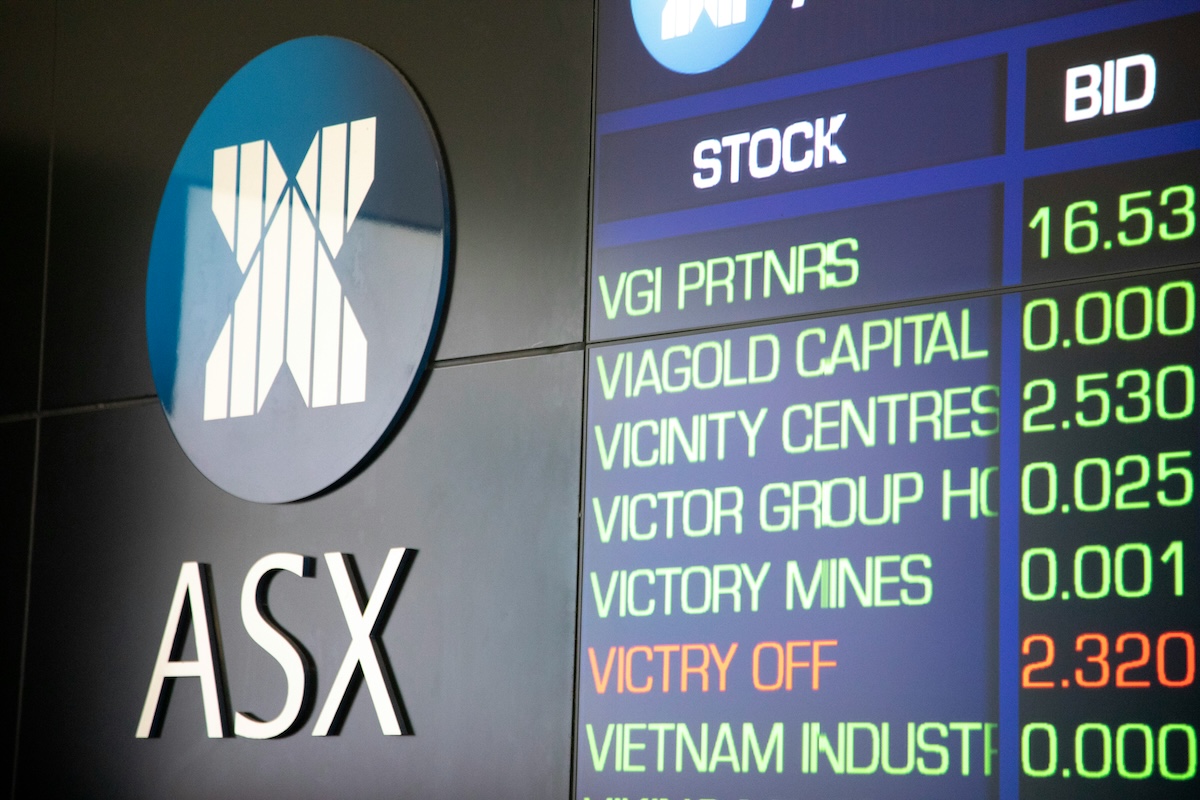
As we sat down to record the latest episode of Switzer Investing TV yesterday, markets were firmly in the red. I sat in my producer chair and watched the market tick down and by the time the episode was uploading, the market was at its lowest.
So naturally, we asked our share trading experts – Paul Rickard and Adam Dawes – whether it was time to hold ’em, or time to fold ’em.
While the market is set to rebound today after strong US performance overnight, we’re certainly not out of the woods yet.
With that in mind, here’s our expert’s advice on what to do the next time a sea of red engulfs your portfolio like fighter jets over Iranian radar.
Here are their tips.
Don’t sell, but don’t rush in either
Rickard was direct: when you’re seeing that much red, the selloff has already happened, and acting after that would likely lock in losses at the worst possible moment. “Too late to sell,” he said at the time, adding that the market is now in a phase where the right question is what to buy, not whether to exit.
Dawes echoed that. He spent much of the day fielding calls from clients wanting to sell and talked them down. His message was consistent: markets recover from geopolitical shocks, this cycle has played out before, and the investors who sell at the bottom are the ones who regret it most.
That said, neither man was calling for an immediate rush into the market. Rickard’s view is that the selldown may have a few more days to run. The market’s reaction came later than he expected, roughly ten days after the conflict escalated, which suggests the pricing of the risk is still incomplete. His advice is patience: wait for the dust to settle before deploying capital.
What to watch
Both Rickard and Dawes pointed to the oil price as the single most important indicator. If it stays elevated, the risk of higher inflation and slower growth, the stagflationary mix that markets dislike most, remains on the table. If the conflict moves toward a negotiated resolution and oil pulls back, the picture changes quickly.
Rickard also flagged the Reserve Bank. His expectation is that the RBA will sit on its hands at the March meeting, given the uncertainty. A stagflationary environment makes rate decisions nearly impossible: cutting into rising inflation is difficult, but tightening into a slowing economy is equally problematic. If oil comes down and the conflict resolves, rate cuts could become live again by May.
Where to look when the time comes
On resources, Rickard likes BHP and Rio Tinto. BHP had already corrected significantly from near $60.50, and he sees the underlying commodity thesis as intact. A global resources ETF is also worth considering for investors who prefer broader exposure, though he noted liquidity can be an issue with some ETF vehicles in volatile conditions.
Dawes had a more specific energy call. Santos is his pick of the sector. His argument is that the conflict in the Middle East has effectively forced Asian energy buyers to look elsewhere for long-term LNG supply, and Australia is well placed to capture those contracts. “Iran has sort of secured our gas future,” he said. Woodside, by contrast, was trading flat to marginally negative even as oil rose during the session, which he flagged as a concern. If an energy stock cannot rally when oil is rising, that is a signal worth paying attention to.
On the defensive and cyclical side, Dawes pointed to Qantas as a stock to watch rather than buy immediately. It has fallen from the $11-13 range to around $8, and while the current environment is not conducive to an airline, a post-conflict recovery trade could be significant. Brambles was also mentioned as an industrial name that has held up better than most.
Tech: the hate session may be over
Both men spent time on technology stocks, and the tone was cautiously constructive. Rickard noted that Promedicus, Xero and JB Hi-Fi have held up well through the broader selloff, with underlying buying evident even on a down day. He interprets that as a sign that the tech-specific correction, which preceded the current geopolitical selldown, has largely run its course.
Dawes went further. He believes the backbone of the tech selldown has been broken. His preferred names are WiseTech Global, Xero and Promedicus. His reasoning is that these businesses have a stronger moat than pure software plays, built around proprietary data, IP and deeply embedded client relationships, which makes them harder to disrupt than the market feared during the AI-driven selldown earlier this year. For investors who want broad exposure to a technology recovery rather than picking individual stocks, Dawes suggested a technology ETF as a practical vehicle. [Note: confirm ETF ticker before publishing, the audio was unclear on the specific name.]
His filter for the sector is profitability. Cost-cutting at companies including Block and Atlassian should improve earnings, but the names he is most confident in, Xero, WiseTech, Promedicus, are already profitable and have structural advantages that justify holding through volatility.
The longer view
Neither Rickard nor Dawes expressed doubt about the medium-term direction of markets. Both expect some form of negotiated resolution to the current conflict, driven in part by the domestic political pressure on the United States to avoid a prolonged, inflation-driving war. History supports that view: markets have recovered from every geopolitical shock of the past several decades, often sharply once a resolution emerges.
For investors, the message from both men is the same. Sit tight, watch the oil price, keep a list of quality stocks you would want to own at better prices, and be ready to act when the signal comes. The opportunity is coming. The discipline is in waiting for it.
Watch the full episode below or on YouTube: