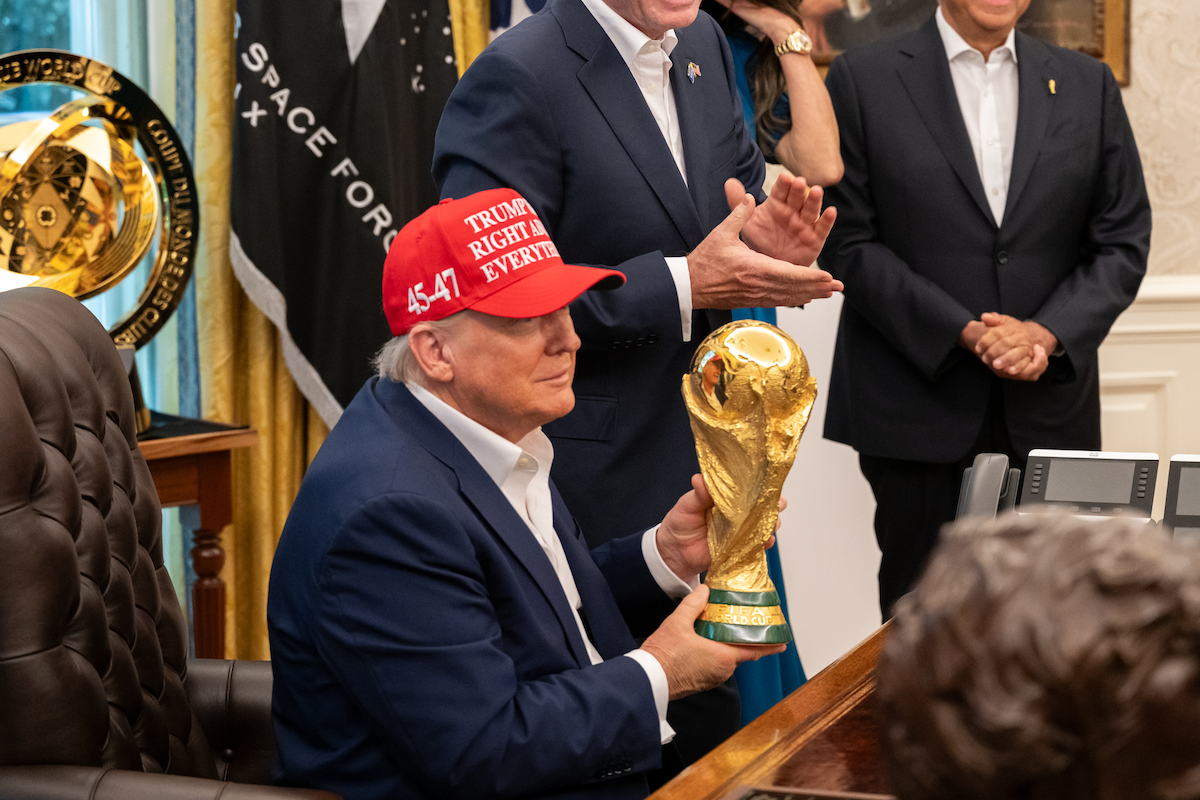
In trying to understand why Wall Street didn’t sell off overnight, maybe it’s because the country has an affinity with their President as well as Homer Simpson!
For reasons best explained by an over-exposure to US television shows, I often see a lot of Homer Simpson in some of the attitudes of President Donald Trump and the many Americans who rate this guy highly. These thoughts came to hand after witnessing European and UK stocks markets react very negatively to what was playing out in the Middle East. Then these same US stock market indexes were up before the close of trade on Monday.
The CNBC headline for Europe was: “European stocks fall sharply as conflict grips the Middle East; oil prices jump”. This looks entirely rational given the uncertainty these hostilities are creating for oil prices, global trade and worldwide economies, as well as financial markets.
Yesterday, I had a financial planning client whose investments have averaged well over 10% for the past four years, who was so spooked by what looked like the makings of World War III to him, that he wants to buy another two properties to add to his already five!
While financially this isn’t a great long-term idea, short term it could look like a smart move if the responses of the Iranians and their allies lead to a worst case scenario.
However, this rationale didn’t wash on Wall Street overnight. Here’s the CNBC headline for US stocks: “S&P 500 turns positive in dramatic comeback as traders buy the dip after US-Iran attacks”.
It’s as though everyone has bought Donald Trump’s “it’ll be over soon” message. And it reminded me of what Homer once said about doughnuts: “Donuts: is there anything they can’t do?”
Right now, the influencers and drivers of markets are equating Trump to a ‘donut’ (US spelling!). Consequently, they’re buying the dips of stock markets. Like in old-fashioned US movies, they’re believing there’ll be a happy ending.
While it’s rational to hope for an eventual solution to the Middle East crisis and the threat of nuclear expansion by hostile powers, as I always tell my advice clients: Hope is not a strategy.
To be fair, while the Yanks were normal when Wall Street opened for trade with the indexes down solidly, ahead of the close there was green on the screens saying the early sell-off was a buying opportunity.
Here are the reasons offered by CNBC for the U-turn on market sentiment:
- US oil prices traded off their highest levels of the session, easing concerns about the war’s impact on the U.S. economy.
- Investors heavily bought tech leaders of the bull market such as Nvidia and Microsoft, cash-rich companies that could be resilient to any war impact.
- There’s history of equities largely shaking off past geopolitical conflicts.
One reason that’s left out is that a lot of Americans think Trump has ‘donut’ powers, so they think: “Is there anything Trump can’t do?”
While I hope they’re right, given my academic, market and business background, I think it’s time for caution, not full on punting on the powers of the US President.
A critical issue to watch is what happens in the Strait of Hormuz. Will it be closed? Will drones take out oil carrying ships? These could have big impacts on the price of oil, global inflation and economic growth.
Of course, if Trump has an easy win, with the war over in a week or two, then the dip-buyers overnight were good gamblers. My view is that we need time to see how this war plays out.
Here are the four big take outs from what the President said overnight at a medal presentation event, as reported by the abc.net.au:
- Destroying the regime’s ballistic missile stocks and its capacity to produce new ones. “You see that happening on an hourly basis,” Mr Trump said.
- “Annihilating” the Iranian navy. Ten ships had already been “knocked out” and were “at the bottom of the sea”, he said.
- Preventing Iran from obtaining a nuclear weapon.
- Stopping Iran from arming, funding and directing proxy militant groups.
If these kinds of goals are achieved and Iran puts in place a leadership willing to work with the West, instead of plotting against it, then stocks should bounce strongly.
While these are all big wishes that can’t easily happen, stocks would roar higher if this best case scenario eventuated.
For now, I want to play a waiting game because history shows markets do bounce back after dramatic political crises. This table from Morgans shows how markets comeback from scary geopolitical events:
| Event | S&P 500 initial fall | Recovery time | Oil outcome |
|---|---|---|---|
| Gulf War (Aug 1990) | Down 20% | ~6 months | Spiked, then fell as war ended |
| 9/11 (Sep 2001) | Down 12% | ~3 months | Brief spike, quickly reversed |
| Iraq War (Mar 2003) | Down 3% | ~1 month | Fell as conflict resolved quickly |
| Ukraine invasion (Feb 2022) | Down 13% | ~4 months | Sustained high – structural supply loss |
| Israel and Iran 12-day war (Jun 2025) | Minimal | Days | Spike reversed within a week |
So, what’s my conclusion here? If this war ends quickly, stocks will rebound and vice versa. With apologies to Homer Simpson, my view is that these wars are caused by absolute “nuts”. As someone who’s involved in the financial world of looking after the wealth of my clients, all this nutty behaviour really does affect their “dough” and that of all Aussies.



thanks for the great article. the history table very goo I thought …. This Iran war, what is it good for?