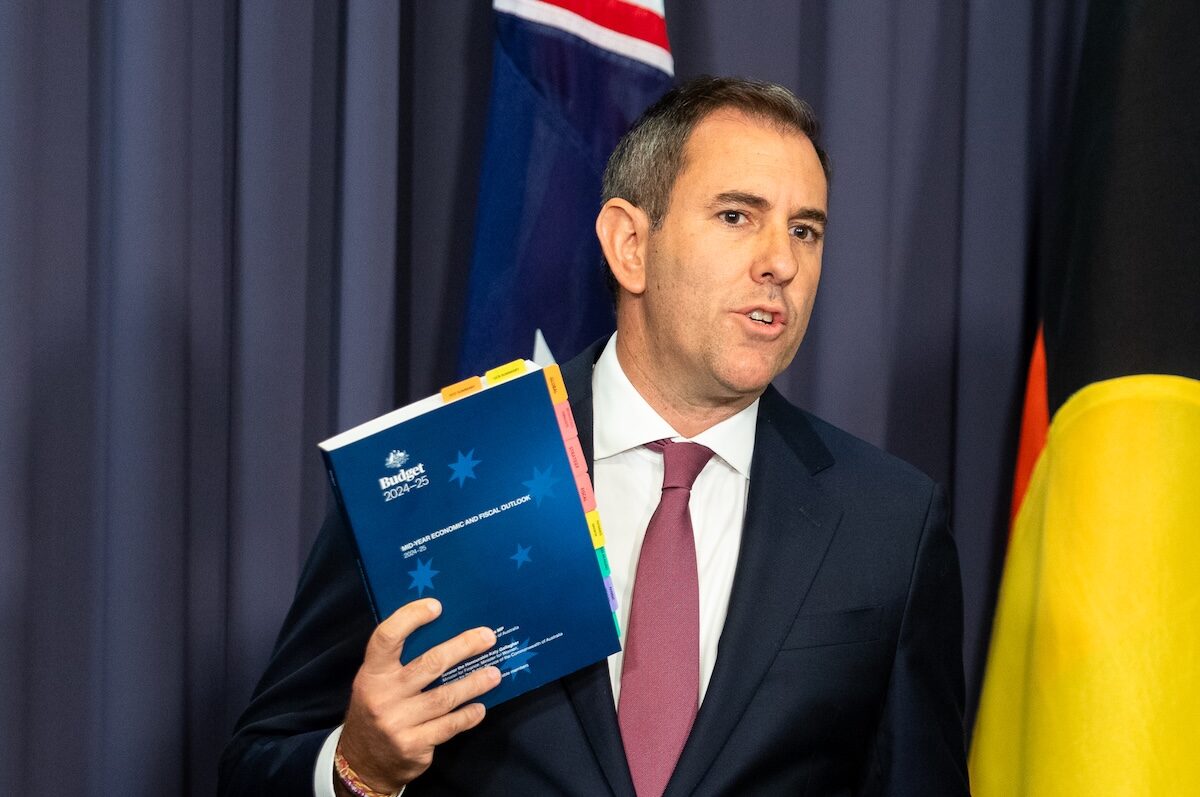
The Treasurer has a budget deficit problem to the tune of $36 billion and looks set to cut support for green energy initiatives. How would this affect the power prices we pay?
The Albanese Government is cutting down its monetary support for renewable energy in the short term to help reduce the budget deficit. It comes as reports say the Government is behind in its commitment to green energy.
The SMH’s Mike Foley looked at the subject and reported the following: “No extra money will be spent on the Albanese government’s ambitious rollout of renewables across the electricity grid next year, in an attempt to claw back savings in the next federal budget, even as Australia falls short of its target to reach 82 per cent green energy by 2030.”
To understand the link between going green and the actual cost of that goal, here’s Foley again: “The push to halt spending on the nation’s net zero agenda will reverse the trend since Labor came to power in 2022, as successive federal budgets have injected billions of dollars into wind and solar farms, including $2 billion for the nation’s green bank in 2025.”
Going green and budget blowouts are related, first because the Paris Agreement means we have to cut greenhouse gas emissions by at least 62% by 2035. Second, not only do we need renewable energy projects to deliver on this agreement, they also need poles and wires to get them connected to the grid, all of which hits the budget’s bottom line.
A number of sources have told Foley that the May Budget will not have any new spending measures for the renewables rollout. It means Energy Minister Chris Bowen needs to do what all ministers have been instructed to do by the Prime Minister, that is, “find savings”.
This is tricky for Bowen as he’s the lead negotiator at the COP climate conference in Turkey this year, where he’ll be telling other countries to lower their emissions.
What pro-green policies could be negatively affected in the Budget? Here’s a list:
1. The FBT waiver for electric vehicle leases to save $3 billion.
2. The Cheaper Home Battery program, which now costs the budget and taxpayers $7 billion.
3. A 30% capital gains tax (CGT) on foreign investors on the sale of wind, solar and battery projects.
4. The $22.7 billion Future Made in Australia fund could cop a haircut, which encourages solar energy and battery production locally.
Foley says that this comes as experts say we’ll fall short of the 2030 target because of “investor jitters, planning disputes and construction cost blowouts”.
Bowen disputes these claims saying we’ll be on 82% green energy by the end of the decade but this year’s budget doesn’t look like it will help him.
Important for the Minister’s goal is his beloved Capacity Investment Scheme but Foley says “the government does not disclose the amount of taxpayer money set aside for the scheme, but it increased the size of the pot by 25 per cent last year.”
Green energy is now providing 43% of the electricity on the grid, which is a 22% increase between 2022 and 2025, which Bowen would be happy about, though his 82% target is still a way off.
Meanwhile, the Australian Energy Market Operator says as coal-fired power stations are set to close in coming years, the actual rollout of renewable alternatives is too slow to meet future demands, which implies it won’t be good for the price of power to households and business.
This suggests we might not meet Bowen’s target, and it doesn’t look good for power prices. For lower price reasons, a solution might be to delay the closure of coal-fired power stations, though I don’t think the Minister will buy that, but Angus Taylor and his new Liberal team might.



Bowen is a foolish man . He won’t make the Paris Agreement and he knows it.