Reserve Bank Deputy Governor Andrew Hauser was asked at Citi’s Australia and New Zealand Investment Conference in Sydney last week what would be top of his shopping list to boost productivity. He said it “isn’t our job” (our being the RBA in this context), and that he was “nervous about wading into a public policy debate that involves winners and losers”.
He did make two brief points, however. The first was that Australia needs to be part of the global technology wave. Nothing groundbreaking but worth mentioning. He added that Australians and their policymakers-alike “may wish AI was or wasn’t a thing, but it is a thing”.
The second was about who is responsible for productivity and its growth. Productivity is a problem, and he said that when Australians see a problem, they turn to the government to fix it. And if they can’t, it’s the government’s fault. It’s “something of an Australian thing”, he said, mimicking the Australian psyche by adding: “this is a problem, government must solve it, or government is the problem.”
“Government has a role to play, but just as important is what business does on productivity,” he said.
He said the first and most profound reason productivity has been low in most developed countries outside the US is “very low investment”.
“People would say, ‘oh, it’s red tape in Australia’. But red tape is not a feature of every country facing low productivity, but low investment is,” he said. “And so there is a joint obligation, I think, not just on government, but also on business, to get their arms around this productivity challenge.”
RBA Governor Michele Bullock made a similar point at her media conference after the September rate rise. “There are regulations that perhaps could be looked at,” she said. “So businesses need to step up to the plate as well.”
Hauser said productivity growth has been “pretty much around 0%”, and “it’s been zero cumulatively for the last decade or more”.
GDP per hour worked was 1.0% higher in the June quarter 2026 than in the June quarter 2016, about 0.1% a year, on Switzer calculations from ABS data. ABS figures show it fell 0.2% over the year to June 2026.
In August 2025, the RBA lowered its assumption for medium-term trend labour productivity growth from 1% a year to 0.7%. Hauser said “we’re struggling even to get there”.
The case for low investment
Looking at the ABS data, private business investment was 12.1% of GDP in 2025-26, down from 13.0% in 2015-16 and 15.3% in 2005-06.
When the RBA cut its productivity assumption in August 2025, it highlighted “lower growth in the amount of capital per worker” among the factors behind slower productivity growth, alongside declining business dynamism and competition and slower technological diffusion.
A Productivity Commission research article in February 2026 said: “Increasing capital investment is key to addressing our labour productivity problem.”
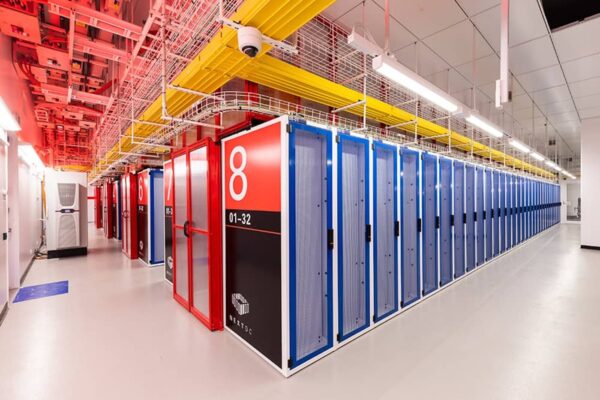
Investment has picked up recently, however. ABS figures show private business investment rose 10.4% over the year to the June quarter 2026, and Bullock said in September that business investment growth was “driven mostly by spending on data centres and renewable energy projects”. When that will come out in the wash of figures, however, remains to be seen.
The case for red tape
In December 2025, the Productivity Commission recommended the government target a $10 billion reduction in net regulatory costs by 2030. It estimated the cost of regulation in housing construction alone at $17.9 billion to $47.5 billion a year, and said the National Construction Code “has grown to more than 2,000 pages”.
In February 2025, the Commission said: “We are completing half as many homes per hour worked as we did in 1995.” Its December 2025 report said: “This regulatory environment has contributed to 30 years of stagnant productivity in the housing construction industry.”
The RBA’s August 2025 analysis of lower productivity growth also listed “regulatory barriers, including in the construction industry”.
In an RBA survey of 105 medium and large firms in its business liaison program between June and August 2025, firms said “the main barriers to enhancing their productivity over recent years have been the regulatory environment and the ability to access suitable labour”.
On the OECD’s 2023 Product Market Regulation indicators, Australia scores worse than the OECD average on administrative and regulatory burden. On the OECD’s overall measure, Australia is in line with the OECD average.
The Business Council of Australia puts the red tape burden at more than $110 billion, which it says is the federal government’s 2014 stocktake estimate of $65 billion in today’s dollars. In the Australian Chamber of Commerce and Industry’s 2025 small business survey, 42% of small businesses said compliance had a negative impact on their operations.
The Productivity Commission also said in December 2025 that the share of wages spent on compliance tasks “has been flat since 2014”.
The government’s 2026-27 Budget included a regulatory reform package it says will “reduce regulatory burden by $10.2 billion each year” once fully implemented. That is a gross figure, while the Productivity Commission’s target is net.
This article does not take into account the investment objectives, financial situation or particular needs of any individual. It does not constitute formal advice. Consider the appropriateness of the information in regards to your circumstances. Before acting on anything we discuss, we strongly recommend you seek the appropriate professional advice.