

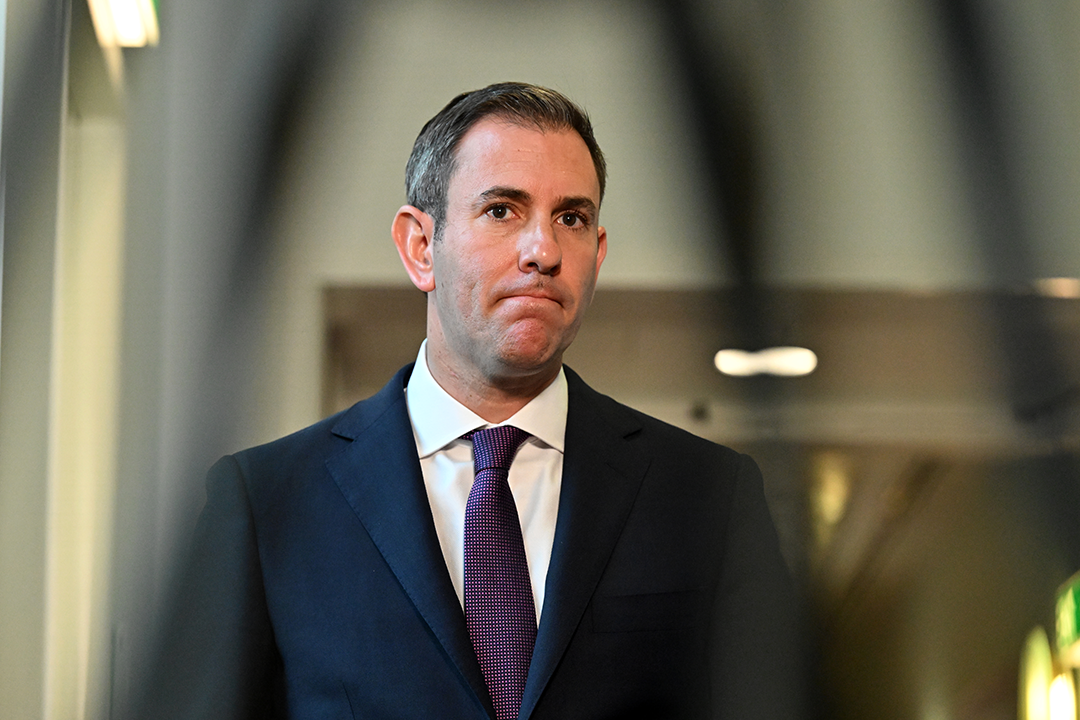
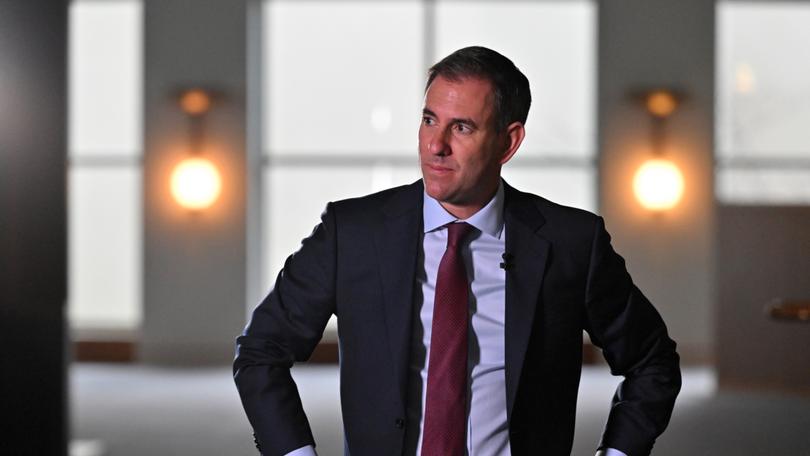
Treasurer Chalmers has a problem: he can’t control his spending. And recent Budget-tracking numbers confirm that our chief money manager is not committed to really knocking the country’s finances into shape.
The AFR’s Michael Read has looked at the final wash-up from last year’s Budget, and his report isn’t great reading for anyone wanting fiscal responsibility for this nation’s bottom line. “The final budget outcome for 2025-26, released last week, showed real federal government spending increased 4.3 per cent last financial year, more than double the projection of 1.8 per cent growth contained in the 2024-25 budget, prepared just two years earlier,” Read reported. And these figures were adjusted for inflation, so they are real numbers that a Treasurer can’t blame inflation for their blowout.
Here were the big takeaways from Read’s analysis:
- Ignoring the crazy Covid rescue government outlays, spending has hit a four-decade high!
- Economists argue this spending makes the RBA’s fight against inflation harder.
- This spending means we’ll have deficits and government debt rising for a long time to come.
- Usual spending growth has been 1.8% a year but under Chalmers it spiked to 4.2%.
- In this year’s Budget, Chalmers says spending will fall to 1.3% growth, but economists doubt this promise.
- Revenue as a share of GDP rose to 26.1%, also its highest since 1986-87.
- This was the highest level of tax revenue as a share of GDP since the mining boom in the mid-2000s.
- Nominal spending, which includes inflation, jumped 8.2% last financial year. That’s the kind of spending you’d expect from Kim Kardashian.
AMP’s chief economist, Shane Oliver, told the AFR: “With the boom in revenue we should have a decent surplus.” Reworking the old Yellow Pages ad for Jim’s spending mistakes, you’d have to say: “Not happy Jim. Not happy!”
The state of Treasurer Chalmers’ spendthrift ways was explained colourfully by a body not known for entertaining turns of phrase: the Parliamentary Budget Office. These accountant/economist types looked at Chalmers’ Budgets and declared that they were built on “systematic optimism”, which is a backhanded slap for a Treasurer of Australia.
Right now, there seems to be a long queue wanting to slap the Treasurer, with criticisms of how his spending is causing this too high inflation. And it’s a bit like the scene from the film Flying High where there was a long line of people wanting to slap a panicking screamer on the aircraft.

🤣 Rrrrr dear Peter. We have covered these topics many times now in your papers and I myself declared several years ago that this is a BIG SPENDING GOVERNMENT !!!
Has the nation finally woken up to this lot in the Canberra Bubble? And don’t think for one moment that the opposition is any better. Both major parties have contributed to the mess we are now in.
The real issue for future Australia will be to wean hand out Aussies off the welfare system.
We constantly hear that Britain is in a worst position than us – really? Their welfare bill is only 11% of their GDP. Ours is now getting closer to 40%!!!
As the interest rates increase, our capacity will diminish to service debt. If the Chalmer does not change his spending habits, the deficit will continue to decline over time making the position much worse.
Australia missed its opportunity to lessen the reliance on debt when we raked in the highest tax revenue ever since Labor came to office. Wasted on ideologies, the ever increasing public service and the NDIS.
Many thanks to the Canberra establishment and to those that voted in these socialist governments. 😡
But we are still a very wealthy nation i.e. those demonised fossil fuels – GAS!!!!
Having seen Four Corners last night on the rorting of DVA benefits by companies set up to milk the system, it seems we don’t have anything that isn’t out of control. I visited a doctor in a medical centre, a three minute consultation with a simple script renewal the result. Guess what, the doctor charged Medicare two expensive item numbers at $185 each. All started when the patient was no longer required to sign the benefit slip! The TRS is another rort. Dodgy invoices and millions being refunded that shouldn’t be. Why have it at all? Collect the GST for heaven’s sake. Stupid idea refunding it to so called travellers. NDIS is only one of many uncontrolled government waste schemes. What’s wrong with these people? DONT they know how to manage money? It’s an absolute disgrace.
Looking back, I believe, Australia has had treasurers who delivered reform and treasurers who delivered rhetoric.
Wayne Swan is widely remembered for the second.
He repeatedly promised a return to surplus, including a pledge of consecutive surpluses, yet delivered none. His budgets relied on optimistic revenue assumptions that failed to materialise, leaving a legacy of deficits and rising debt.
Jim Chalmers, who served as Swan’s chief of staff before entering Parliament, now invites the same comparison.
His background is in political science rather than economics, and his doctorate examined the politics and ideas of Paul Keating.
Keating is remembered because he floated the dollar, cut tariffs and drove productivity-enhancing change. Admiring that legacy is not the same as repeating it, and critics argue the current government has yet to deliver a reform of comparable ambition.
In my view, Chalmers has followed the Swan playbook: confident messaging, optimistic forecasts and little structural change. He delivered budget surpluses in 2022-23 and 2023-24, which relied on windfall revenue rather than structural repair.
He appears to have avoided meaningful tax reform, and has done little to lift productivity growth from its currently weak base.