There is a particular kind of hotel that does not simply operate in a destination, it becomes the destination.
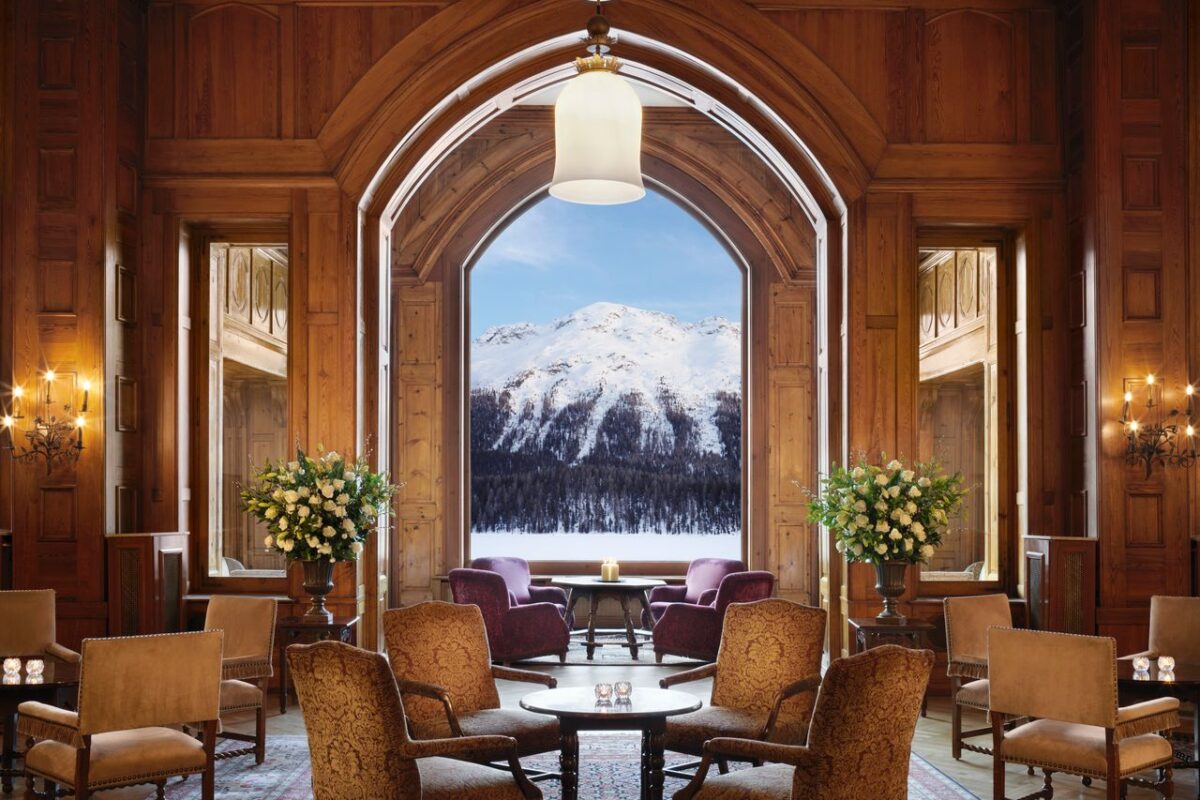
Perched above Switzerland’s Lake St. Moritz since 1896, Badrutt’s Palace was this week named winner of the SeiBellissimi Art of Hospitality Award, voted on by the 800 plus strong Academy of The World’s 50 Best Hotels, each member asked a single, uncompromising question: where did you receive the single best hospitality experience of your life? For Badrutt’s Palace, the answer arrived after more than a century of practice.
It isn’t the turreted neo-Gothic silhouette, though it is magnificent, or the 163 rooms, the 47 suites, or the 11 restaurants and bars, including Nobu’s Japanese-Peruvian artistry and the mountaintop clubhouse at Paradiso. They’re the furniture of luxury. The award recognises something far harder to build and far easier to lose: a team of 700 who, in the words of the hotel’s own leadership, anticipate rather than wait to be asked. Anticipated, not asked, is the line worth sitting with.
Service at Badrutt’s Palace runs through every aspect: front desk, housekeeping, the concierge, the wellness team, even the person clearing a teacup in Le Grand Hall. That kind of consistency raises an obvious question for any luxury property, or business that works in the luxury space: does every team member carry the same instinct to anticipate, or does the warmth live only in the roles trained to perform it?
Legacy, too, is treated here as a discipline rather than a decoration. A hotel that has hosted Alfred Hitchcock in Suite 501 could easily coast on nostalgia. Instead, Badrutt’s Palace paired its history with the new Serlas Wing, designed by the Italian architect Antonio Citterio, proof that reverence for the past and investment in the future are not in tension. Few owners manage that balance. Most either freeze a property in its own history or renovate away the very character that made it distinctive in the first place.
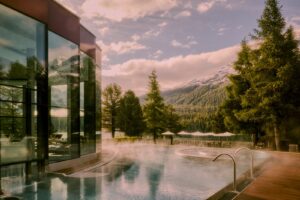
The harder achievement, though, is consistency across time. Any hotel can deliver a flawless evening. Very few can deliver one for 130 years, through changing ownership eras, economic cycles and shifting guest expectations. That is achieved through culture, retention, and training that treats service as a craft rather than a checklist.
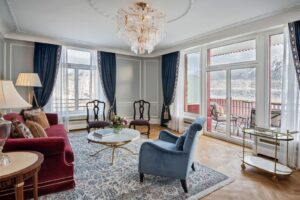
Emma Sleight, Director of Content & Creative for The World’s 50 Best Hotels, put it plainly: Badrutt’s Palace is “a benchmark for outstanding service, proof that true excellence only deepens with age.” That suggests the most disruptive luxury strategy available today might be the oldest one: make people feel completely, unmistakably taken care of.
The award will be formally presented in Paris on 15 September. Between now and then, it is worth every hotelier, independent or branded, mountain or coastal, asking not how to compete with Badrutt’s Palace, but what their own guests would say if asked to name the single best hospitality experience of their lives. Would their hotel’s name come up?