The Iran war with its price-spiking impact on oil and petrol prices will trump the positives from the improvement in inflation yesterday.
While inflation data out yesterday made a case for no rate rise in May, the problem is that these numbers are “ancient history”. The modern history of the Iran war, with its price-spiking impact on oil and petrol prices, will trump the positives from the Consumer Price Index.
However, it’s not all bad news.
The good news is that stock markets, which are the best gauge of how scared we should be about the future of the Iran war (aside from knowing how Supreme Leader Mojtaba Khamenei thinks) were positive overnight.
All European stock market indexes were up strongly as we slept. And all US market indexes are in the green, indicating optimism linked to the war’s end is on the rise. Oil prices fell in accordance with the better sentiment. Even locally, after our S&P/ASX 200 index rose by 154 points or a big 1.85% on Wednesday, we’re expected to see this market measure up 33 points at the start of trade today.
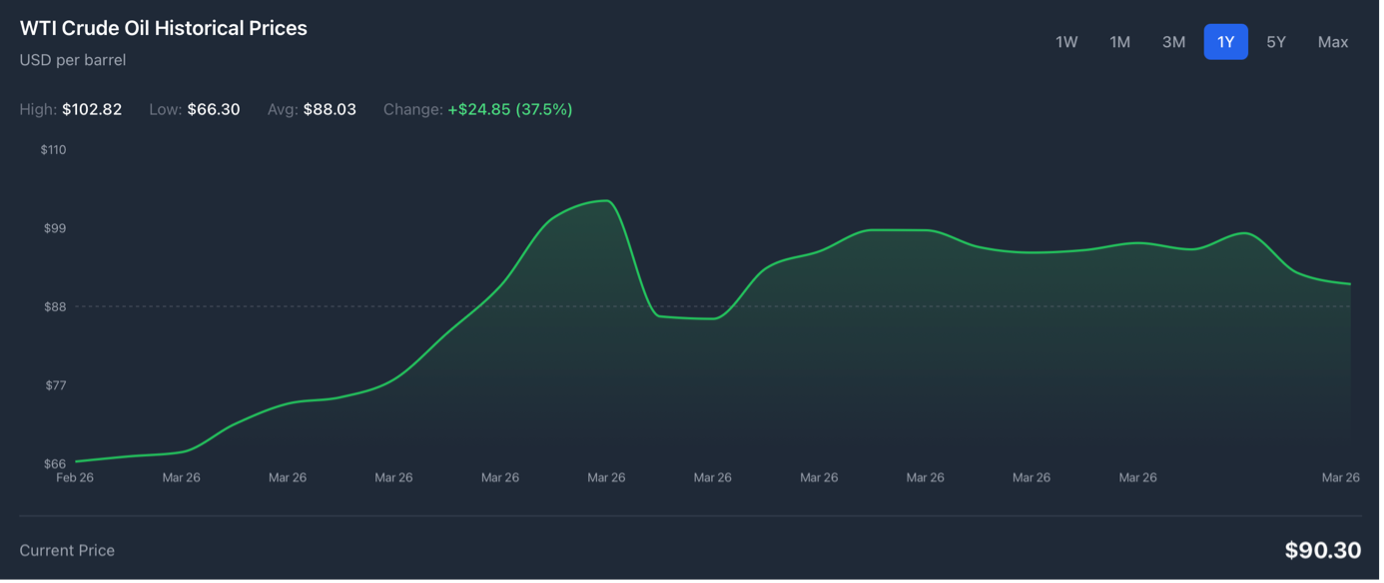
Note how this chart not only shows the recent falls of the oil price (thanks to www.oilpriceapi.com), it also shows that the price was US$66 before bombs and drones started flying in the Middle East.
Despite some headlines saying Iran rejects the US peace plan, the headers are also saying that oil tankers of non-hostile nations will be permitted to pass through the Strait of Hormuz. This explains why West Texas crude oil is down to US$90 a barrel, which is a significant drop from the US$102 we saw on March 9.
For the record, while Iran has rejected Trump’s peace plan, it has laid out its own conditions for ending the war, which centres on Iran controlling the Strait of Hormuz. This is at odds with the President’s goal that he summed up, in his unique style, saying: “Me and the Ayatollah” could have joint control!
Given Iran’s best protective blanket is its control of the strait, this is going to be a big issue in the negotiations.
OK, that’s the wider lie of the land with respect to the Iran war and its impact on oil and the global impact on the oil price and then inflation. Of course, these will be lower going forward, the quicker hostilities end and ships start bringing energy to world economies. But what about how it will directly affect our CPI and interest rate changes?
Headline grabbers are trying to see this war akin to the lockdown scenarios of Covid, which shows you what some intellectual lightweights and attention-seeking media operatives will do to get read.
What is fair to argue is that there’ll be a lasting impact of this disruption to this Iran war, with around 33% of the world’s supply of fertilizer flowing through the Strait of Hormuz, which will affect the supply of food crops, in turn having an impact on food prices.
CNBC reports that “In a Monday note, Oxford Economics’ Alpine Macro said urea and ammonia prices had surged by around 50% and 20%, respectively, since the war began. Other fertilizers, like potash and sulphur, have also risen in price.”
Looking at CPI data, this is what we saw and should conclude:
1, Annual inflation to February dropped from 3.8% to 3.7%.
2. Trimmed mean or core inflation was 3.3%, just like we saw in the year to January.
3. This from AMP economist Diana Mousina sums up what she thinks the RBA will do looking at these numbers and considering the petrol price impact on inflation: “We expect the RBA to hike interest rates in May, after the next set of quarterly inflation figures (in late April). Another hike is possible if there is a larger pass-through of higher oil prices into other parts of spending and if inflation expectations remain elevated.”
This means the cash rate, now 4.1%, could end up at 4.6% some time this year!
Only if this petrol price effect threatens a recession will the RBA back off rate rises, though if the cash rate goes to 4.6%, the chance of a big slowdown for the economy will rise.