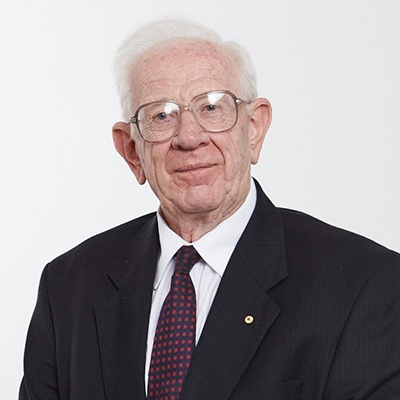
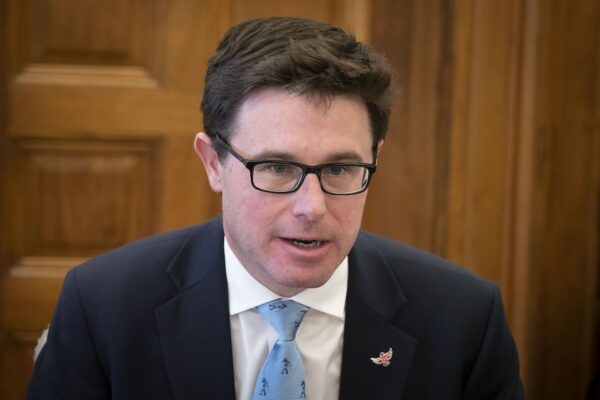
What has the legend of Australian electoral analysis, Malcolm McKerras, been smoking, when he’s aligning with Legalise Cannabis politicians in the Victorian Upper House?
When I was a schoolboy, I was taught a maxim of ethical behaviour: “Honesty is the best policy”. To that was sometimes added: “Honesty is the only policy”. However, as an adult watching our democracy I sometimes wonder whether our politicians believe in that.
Having studied the nine Australian parliaments for over sixty years, I have come to give the benefit of the doubt to all the state legislatures and the two territory parliaments. By contrast, the federal parliament in my view has (metaphorically speaking) erected a second flag to accompany the magnificent Australian flag the flying of which I admire when I drive along Adelaide Avenue in Canberra. This lower flag has written on it a motto: “Dishonesty is the best policy” but the federal parliament can redeem itself in my eyes quite simply. All it needs to do is reform the Senate electoral system along lines I have long advocated. That can be done by a simple act of parliament.
Systems of proportional representation (PR) apply to the election of two Australian lower houses and five upper houses. The system applying to the two lower houses, in my view, is by far the best. That system is known as Hare-Clark and it is candidate-based. The five upper house systems are party-based and in my view that applying to the Legislative Council of Western Australia is by far the best while the Senate system is by far the worst. Though a hard marker in this area I give WA a credit mark of 65 per cent. The Senate system, by contrast, gets a fail mark of, say, 30 per cent. It is wholly without merit or virtue of any kind.
Members of the Legislative Council of New South Wales, South Australia and Western Australia are elected from the state voting as one electorate. I give WA the highest mark because 37 are elected, NSW the second highest with 21 elected and SA comes third because only 11 are elected.
Victoria is unique in two respects. First, its members of the Legislative Council are elected by regions. There are eight with each electing five members, so its total membership is 40. Second, it retains the institution known as the Group Voting Ticket (GVT).
South Australia and Western Australia once had regions and the GVT. Both have been abolished. My contention is that Victoria should follow WA in scrapping the GVT and the regions simultaneously. Quite simply it should COPY the new WA system, including all its features, and elect 37 members from Victoria as a whole voting as one electorate.
What I want, however, is not wanted by the machines of Victoria’s big political parties: Labor, Liberal, Nationals and Greens. They want to cherry-pick between the two characteristics of the present system. They hate the fact that in November 2022 seven cross bench members were elected representing minor parties, two for Legalise Cannabis and one each for the Animal Justice Party, the Democratic Labour Party, the Liberal Democrats, Pauline Hanson’s One Nation Party and the Shooters, Fishers and Farmers Party.
The Animal Justice Party best illustrates the problem for the machines of big political parties. There is a female AJP member of the Legislative Council in each of NSW, Victoria and WA. The big party machines would dearly love to get rid of her, but they can’t in two cases because the number elected in NSW is 21 while in WA it is 37. They can’t rig those systems to get rid of her because she will, almost certainly, get re-elected on the low quotas of the system.
But in Victoria’s case they can get rid of Georgie Purcell, the AJP member for the Northern Victoria Region. And as a bonus they can also get rid of Rikkie-Lee Tyrrell, the PHON member for the Northern Victoria Region. These two women can be ridden of by the simple act of cherry-picking. The machines of big political parties love the situation whereby only five members are elected. Of course, that must be kept! But it is easy to denounce both Purcell and Tyrrell. Each is a wicked woman who gained election courtesy of employing a “preference whisperer”, that most evil of political consultants who knows how to “game the system” through the GVT.
All this brings me to the report of the Electoral Matters Committee of the Victorian Parliament published very recently. Its title is “Inquiry into Victoria’s Upper House electoral system”. To me it is a dishonest document. However, I can see why those who think like I have described above, and who love the machines of big political parties, would read this report differently. They would say it is very learned, is full of useful information and reflects the submissions of the great majority of submitters.
Having searched high and low to find merit in this report I have found two good parts. The first is on page 34 which shows the results of the WA election in March 2025. The second is the dissents of David Ettershank, the Legalise Cannabis member of the Committee. They appear on pages 89, 90 and 91. The problem is that Table 3.1 on page 34 is under cut by lengthy quibbles under the heading “concerns about a state-wide structure” (pages 35-42) and “problems with large ballot-papers” (pages 55-59). Consequently, the Labor, Liberal, National and Greens members of the Committee were able to vote in favour of the very cherry-picking exercise to which I refer above – and quote “respected independent electoral analysts” to support them!
I am not a Victorian but if I were I would live in the Western Metropolitan Region and I would vote for David Ettershank as a way of commending him for his dissents, the summary of which is: “Should the Government choose to adopt these recommendations, it will be a dark day for political diversity and democracy in Victoria.”
Premier Jacinta Allan will make the decision. To me it is a simple call: choose honesty and reject dishonesty. That may, however, not be good enough for her so let me try a pragmatic argument based on my belief that her Labor government will be defeated at the general election fixed for Saturday 28 November 2026. If she implements this report, she will be handing incoming Liberal Party premier Jess Wilson majorities in both the Legislative Assembly and the Legislative Council.
Of course, I cannot expect Jacinta Allan to accept my predictions which are so pessimistic for her. So, let me try another tack. If Allan wins, her decision to choose honesty would give her a Legislative Council in which the cross bench consists of Greens and other minor parties. Her alternative choice would give her a Legislative Council in which the Greens are the sole holders of the balance of power. The reason for that is simple. The Legislative Council would be like the Legislative Assembly – composed only of members from the big parties – Labor, Liberal, Nationals and Greens.
I have made clear what I think should be done. The 2026 Victorian election should be conducted under the present system. Then, as a matter of the highest priority, a royal commission should be established in 2027 headed by a respected former High Court or Supreme Court justice. In WA the equivalent enquiry was headed by a respected former WA governor. Perhaps Victoria’s royal commission should be headed by a former governor of Victoria or any other state.
I am completely confident that such a royal commission would recommend that Victoria should simply COPY Western Australia’s new system in all its details. Then a referendum could be held that would receive an overwhelming affirmative vote. Then in November 2030 the result in Victoria would look very similar to the recent result in Western Australia – for which reason I advise my readers to have a look at page 34 of this report!