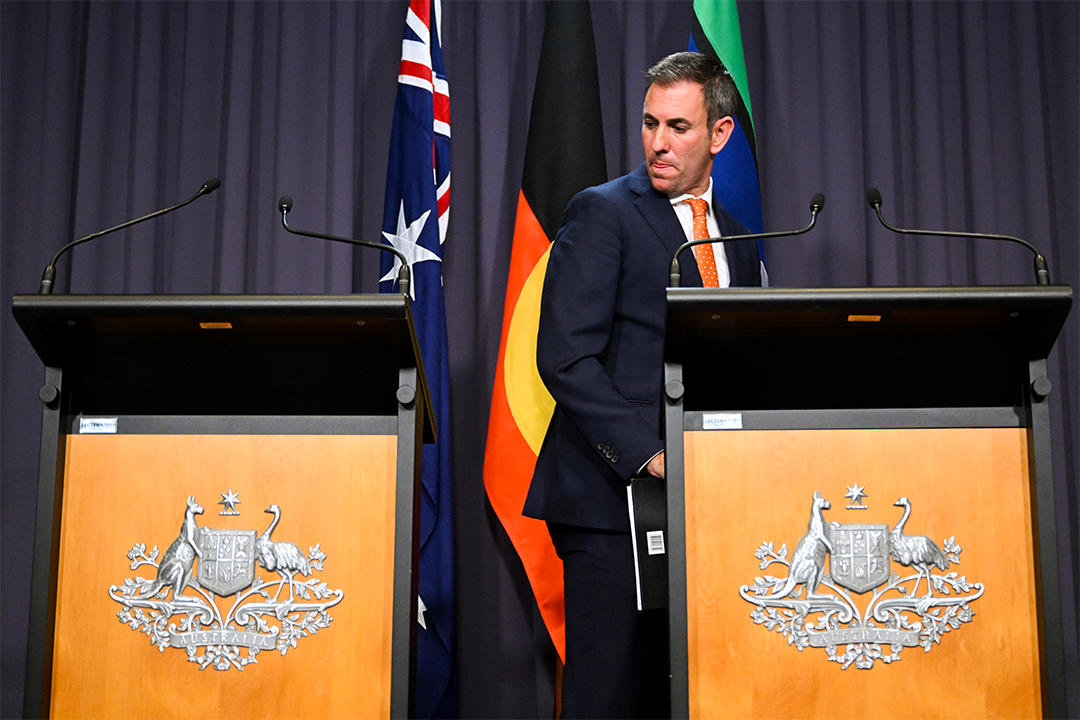
A Senate inquiry has provided Treasurer Jim Chalmers with ammunition for his plan to pare back the capital gains tax discount in the May 12 budget.
The majority report of the inquiry into the operation of the capital gains tax discount, tabled Tuesday, concluded that while various factors influenced housing markets, there was evidence the discount, combined with negative gearing, had “skewed the ownership of housing away from owner-occupiers and towards investors”.
The committee, chaired by Greens senator Nick McKim, included two Labor senators, two Liberals – one of them the Coalition housing spokesman, Andrew Bragg – and independent senator David Pocock. The majority report was supported by McKim, Labor and Pocock, with the Liberals producing a dissenting report.
The committee said it had consistently heard that the current design of the discount “can distort decision making and incentivise tax planning”.
The tax concession reduces the capital gain for tax purposes on an asset by 50%, provided it has been held for at least a year. It has become widely criticised as first home owners have found it increasingly difficult to compete against investors.
Chalmers, who will deliver a major pre-budget speech on Thursday, is known to be pushing to reduce the discount, among other tax reforms.
He set out his ambitions for the budget at the weekend, indicating he was undeterred by the international uncertainty. “I see developments around the world and pressures on Australians here at home, not as a reason to go slower but a reason to go further.
“I’ll be working up a number of reform packages for this budget, and they’ll be focused on savings, they’ll be focused on productivity. I’ll give my colleagues a whole bunch of options when it comes to tax reform,” he said on Sky.
In its findings, the Senate committee said the design of the discount “has the potential to distort the allocation of investment across the economy”.
There was “evidence that existing housing stock makes up a substantial share of capital gains that benefit from the capital gains tax discount,” the findings said.
“The benefits of the capital gains tax discount are also unequally distributed, with implications for income and wealth inequality and intergenerational inequality”.
In additional comments, McKim recommended the discount on all assets be substantially reined in so “unearned income from owning assets is taxed as closely as possible as earned income from going to work each day”.
The discount should be “abolished entirely on investment property sales,” he said.
“The combination of negative gearing and the capital gains tax discount has driven rampant property speculation and inflated house prices over the last 26 years.”
McKim opposed grandfathering changes, saying “to ensure a significant release of housing is made available for renters to buy, hard limits and a phase out of existing arrangements must be part of any negative gearing and capital gains tax reforms”.
In their dissenting report, the Liberal senators said the “idea that Australia’s housing woes could be solved by one tax tweak is as shallow as it is cruel”. Rather, “supply is the key”.
“The supply failure is driving the housing crisis,” they said.
“The analysis in the Chair’s report does not sustain the argument that reducing the CGT discount would deliver more homes or higher levels of home ownership.”
The Labor senators in additional comments said any future tax reforms should be guided by the principles agreed at last year’s economic roundtable. These included delivering a fair go for working people and young people, including in intergenerational equity terms.
The committee’s work and evidence should be considered, with other advice and analysis, in looking at “potential future reforms in the context of future budgets”.
Pocock recommended a reduced CGT discount of 25% be made available only to new homes built from July 1 this year provided they were held longer than three years, with grandfathering of existing ownerships.
Michelle Grattan, Professorial Fellow, University of Canberra
This article is republished from The Conversation under a Creative Commons license. Read the original article.