In a note published on 7 October, Bui says the boom faces five main risks:
- electricity and grid constraints,
- opaque debt financing,
- weaker-than-expected revenues,
- community opposition and
- concentrated supply chains.
“We do not see a bust as the base case,” she wrote. She expects the AI capital spending cycle to plateau around 2028 rather than collapse.
What data centres are doing to our economy
Bui says spending on data centre buildings, server racks and processing equipment in Australia has risen five-fold since 2020, driving much of the growth in business investment.
Australian Bureau of Statistics (ABS) figures show data centres have led the recent surge.
In the March quarter of 2026, business investment in data centre machinery and equipment was the largest contributor to economic growth, as data centres were fitted out across New South Wales and Victoria. On the ABS’s latest revised figures, private investment rose 4.2% in the quarter, led by a 17.3% jump in machinery and equipment.
Most of that equipment was imported, which limited the lift to GDP. Private demand added 1.0 percentage point to growth in the quarter, while net trade took 0.7 percentage points off. The economy grew 0.3%.
The Reserve Bank’s August Statement on Monetary Policy put business investment 10.4% higher over the year to the March quarter, “driven most prominently by data centre fit-outs”.
In the June quarter, the economy grew 0.4%, and 2.1% over the year. Private investment was flat: machinery and equipment fell after the record imports of computer equipment the quarter before, while construction of new buildings for data centres increased.
The ABS capital expenditure survey for the June quarter shows the information media and telecommunications industry, which the ABS uses for data centre operators, lifted building investment 64.9% and equipment investment 93.5% over the year, in volume terms. In the June quarter itself, its equipment spending fell 53.0%.
1. Power and the grid
The Australian Energy Market Operator’s (AEMO) latest forecast, released in August, puts data centres at about 3% of electricity use in the National Electricity Market, which covers the eastern and southern states, rising to about 13% by 2035-36 under its central scenario. Grid connections take about three years in Sydney, according to property group JLL.
Why she isn’t worried: according to the International Energy Agency, the energy used per AI task has fallen by around 90% a year in recent years.
2. Financing
Free cash flow across the five hyperscalers (Amazon, Microsoft, Google, Meta and Oracle) has grown by around 26% a year over the past three years, Bui says, while their capex rose 55% in 2024 and 72% in 2025 and is forecast to rise about 96% this year. Debt markets are filling the gap, she says. Corporate bonds remain the main source, but firms also use off-balance-sheet arrangements that make the risks harder to assess.
Why she isn’t worried: hyperscaler debt is only around 3.5% of the US investment-grade bond market.
3. Demand
Bui says share prices are being justified by forecasts for hyperscaler revenue to grow around 21% a year for the next three years before tapering to around 10% by 2029, leaving 2029 revenue roughly double its 2025 level. If revenue falls short, she says, companies may struggle to meet long-term lease commitments.
Why she isn’t worried: data centre demand is broader than AI training, and big projects are built in stages, so operators can delay fit-outs rather than abandon a site.
4. Community opposition
These days it’s people power versus processing power as the battle for the suburbs rages. Nobody wants a datacentre in their suburban backyard, least of all because it pushes up power prices and brings a constant backdrop of cooling fan noise.
In Sydney, Goodman Group withdrew its proposed 90MW data centre at Lane Cove West after local opposition. In the US, Data Center Watch reported local opposition disrupted at least 45 projects worth nearly US$68 billion in the June quarter.
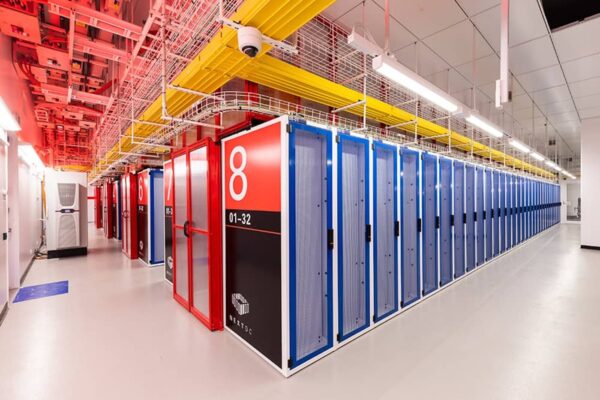
Why she isn’t worried: NextDC’s Artarmon data centre, which NextDC rates at 80MW, sits close to homes and has attracted relatively little opposition.
5. Supply chains
Nvidia supplies around 75% of the chips used for AI training, Bui says, and TSMC makes most advanced chips, with a market share above 90%.
Why she isn’t worried: the countries involved remain interdependent, and Australia is a net exporter of copper ore, iron ore and critical minerals that the AI supply chain needs.
What it means for investors
Bui notes US tech equipment investment is now 2.6% of US GDP, below its 2.9% peak in 2000. She says investors should diversify beyond the hyperscalers, as the AI boom’s beneficiaries are likely to be “the broader supply chain, energy providers, network developers and end users”.
The ABS capital expenditure survey for the September quarter is due on 26 November, followed by the September quarter national accounts on 2 December.
This article does not take into account the investment objectives, financial situation or particular needs of any individual. It does not constitute formal advice. Past performance is not a reliable indicator of future performance.