
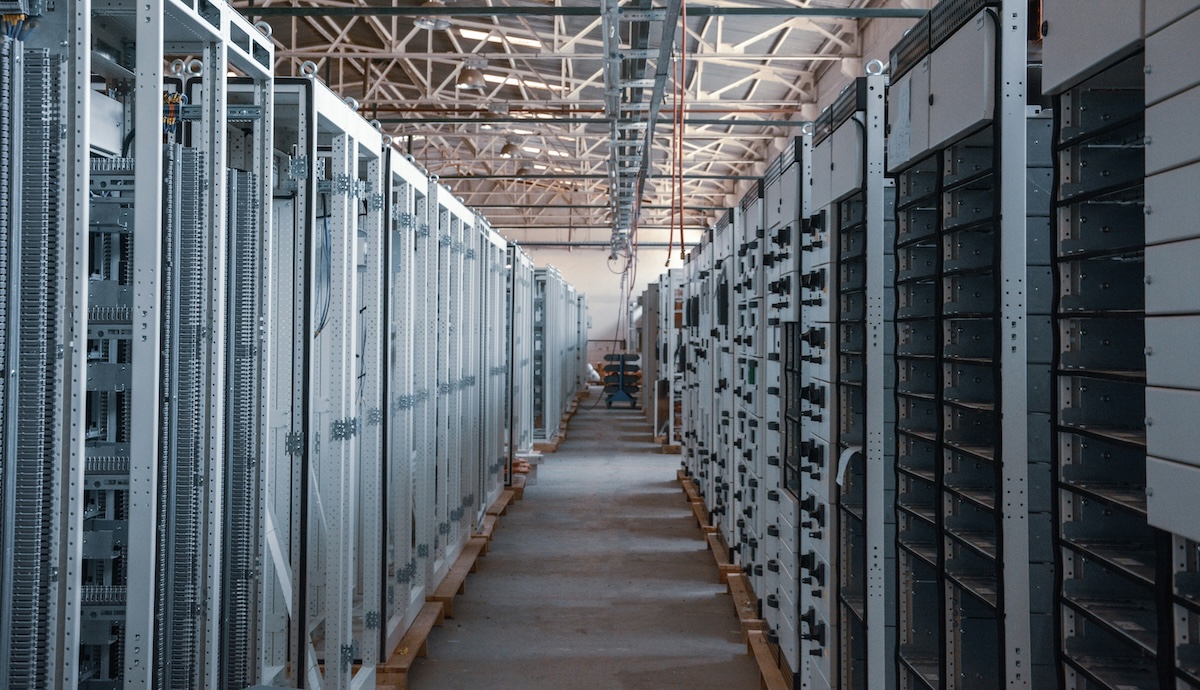
A whole lot of people at the big end of town have waved goodbye to a gravy train that was going to make these already rich people even richer and in doing so have missed out on participating in what was seen as the biggest stock market float of all time. That train is bound to come back into town again but it might not have a price tag of $44 billion from day one.
In case you don’t read the finance pages – sport, politics and influencers on Facebook (Meta) can be distracting – Firmus Technologies, which is a data centre business, was expected to list soon and was going to have a capital base from eager would-be shareholders tipped to be $44 billion.
However, today the AFR tells us “lukewarm interest from major investors and local super funds” has derailed this gravy train, which was carrying shares priced at $11 a pop, making it bigger than the famous Telstra listing in 1997.
That float was a mere $14.3 billion but in today’s dollars that would be around $29 billion, so you can see how highly this company rated itself, which at the moment the key players in the Australian stock market doubt.
Instead, faced with investor scepticism and worries about the AI trade that has even pushed back until November plans to list Anthropic, developer of the popular Claude platform, Firmus’ float was on life support.
There are lots of reasons for this float being pulled now and it certainly will resurface, I suspect, next year but here are some key reasons why the market’s enthusiasm for Firmus has failed to firm:
- The Trump/Iran war with its inflation and interest rate implications is undermining stock market confidence right now.
- Many hardened market smarties expect we would see a buy and dump play on day one making the $11 share price look suss.
- One fund manager argues the share price should be around $8 but earlier shareholders – Nvidia, Blackstone and Coatue – paid half as much for their shares in the private company in August.
- Big potential US institutional shareholders had reportedly got cold feet on the deal.
- The company has a limited financial history and the prospectus did not do enough to explain why its expected listing value had jumped eight-fold!
- This week, CDC Data Centres KO’d its partnership with Firmus to construct $73 billion worth of data centres across Australia.
- Community concerns about data centres could be a problem for future profits of a relatively new business.
- Some pretty smart guys were ready to short Firmus from day one, which is seldom great for a company’s share price.
As you can see, there are many reasons for this float being suspended, albeit temporarily, but Jun Bei Liu of Ten Cap gave the AFR a pretty sound reason for the waning interest in the Firmus float, after there was talk earlier this week that the $11 price might be lowered.
“There is an old saying never to buy a repriced IPO,” said Ten Cap portfolio manager Jun Bei Liu. “They repriced it because demand has fallen significantly short of expectations – not from domestic institutions but international institutions who were supposed to underpin this IPO.”
For anyone wondering what was the magic sauce that once possibly made Firmus worth $44 billion, the AFR explained it in a nutshell: “Firmus rents out high-tech Nvidia chips to customers such as OpenAI and Meta Platforms for use in AI processing, and has pitched its cooling technology as a unique system that provided world-leading efficiency.”
Effectively it looks more acceptable to an environment-concerned community, who see data centres as a necessary evil, which few people want in their neighbourhood.
One day we will see Firmus listed but it will be a less valuable company and if it proves its worth, that share price of $11 might well be seen as very low, but not now.
As the very hard-to-please Dave Allen of Plato Investment Management told the AFR: “If the book was genuinely well covered at $11, why is the price now being cut?
“Call us old-fashioned, but we are not in the habit of valuing what is arguably still a start-up on the assumption that it will execute almost flawlessly and grow revenue by roughly 25,300 per cent in three years.”
That’s a pretty good argument.


With the new CGT grab from 1/7/27 along with the death tax on in specie transfers via a will, the game has changed dramatically. Fully franked, reliable dividends at a respectable yield will now be the order of the day!
I believe that Bowen required AI Data centres to provide their own renewables power source. If this is the case, he effectively banned domestic AI.