The number of companies paying no tax in the 2025 financial year fell to 27%, the lowest on record and down from 36%. This means either locally based companies, both Australian and foreign owned, are being more honest or the tax office is getting better at extracting tax.
This corporate tax news based on the ATO’s Annual Corporate Tax Transparency Report comes as from today, small businesses won’t be able to charge merchant fees when customers use credit and debit cards and accordingly the ATO has informed all businesses they won’t accept credit card payments for those paying tax bills.
Why? That’s simple, they can’t charge merchant fees either!
The first news that fewer big businesses are paying no tax should be seen as a good thing as historically foreign companies have been smart tax evaders.
Significantly, The Australian reports: “Last year, the ATO reported that tech giants Microsoft, Google, Facebook, Apple, and Amazon collectively paid $650m in tax for their Australian operations, while global streaming giant Netflix paid no tax on $1.2bn of revenue.”
How do companies such as Netflix achieve such a favourable tax outcome? Well, they can load up costs here paid to their foreign-registered companies that are domiciled in low tax countries. Ireland has often been used by US companies to have headquarters there to benefit from the country’s low tax rates. So, for example, all research and development for the company is performed by one of its companies in its group and this company charges a lot for its services that might reduce the profit in countries such as Australia. It’s called transfer pricing and tax offices worldwide try to detect such tax tricks by big multinational companies.
So, only 27% of companies were paying no tax, which is the lowest on record, and this is lower than the 36% that was recorded when this ATO report first saw the light of day in 2014.
This suggests companies are either being more honest with their tax or the ATO is getting better with their job of detection and collecting tax. While it could be a bit of both, I bet it’s more the latter than the former!
This is a good development as everyone “Goldman Sachs to Commonwealth Bank, have suggested an AI data centre investment boom of as much as $200bn is heading Australia’s way, lining up significantly higher tax revenues in the years ahead,” The Australian informs us.
For the record, in case you’re not fans of the mining industry, it remains the largest contributor to tax payable. Corporate tax paid by the oil and gas segment for the 2025 financial year hit $10.6bn, the sector’s second-highest contribution since the transparency report began.
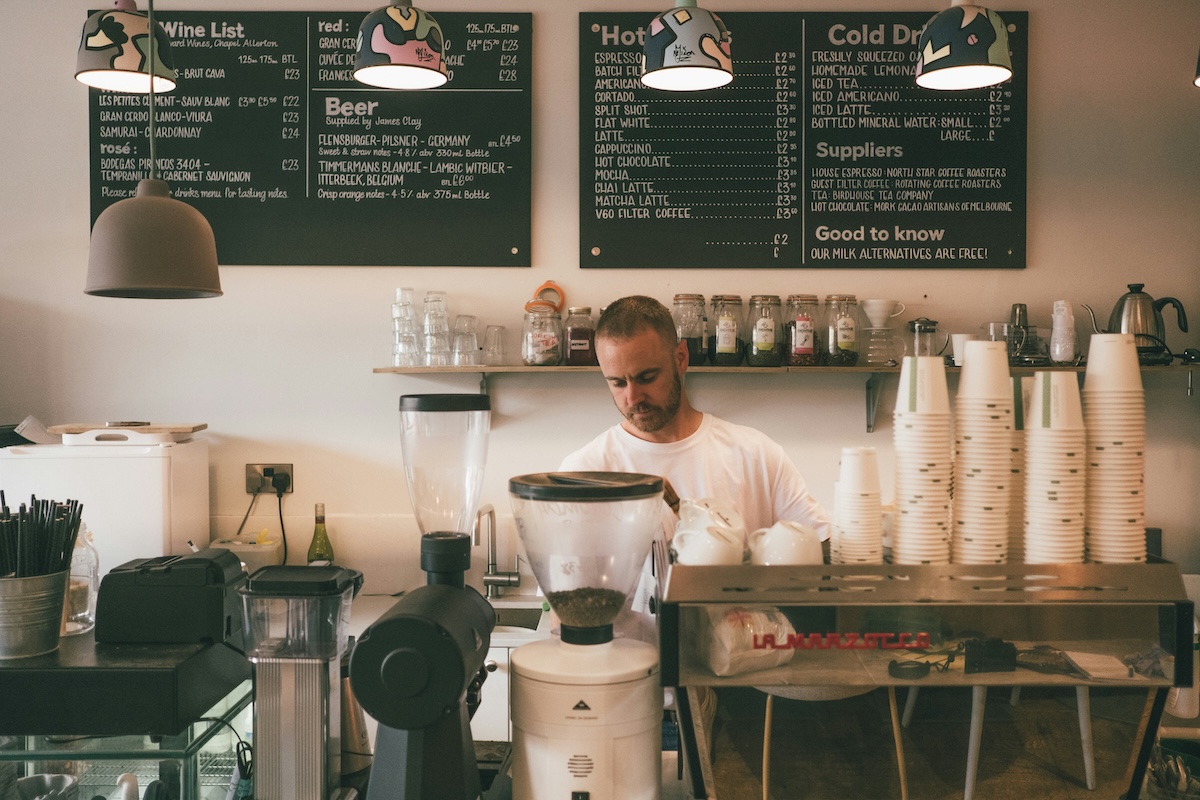
That’s a positive business development, however, the Albanese Government’s ending of merchant fees when consumers use credit or debit cards might be a micro-gain for shoppers over a year, but it will hurt small businesses’ cash flow over all the many transactions on which they get a small clip of the ticket around 1.5%.
This comes when rising interest rates are not only hurting businesses with loans but also have reduced consumer spending. And on top of that, the ATO has now ruled out using credit cards to pay tax debts, which will be another short-term hit on a small business’s cash flow.
And many suppliers are telling their business customers that credit cards won’t be accepted for payments, meaning the businesses will have to have the money and use electronic transfers, BPAY or some other method for paying their bills.
On Facebook and LinkedIn on Monday, Prime Minister Albanese told users, “your coffee shouldn’t cost extra just because you’ve paid by card” and said the reform will be “saving you money every time you tap”.
This might be ‘great’ news for consumers, but it ignores the fact that being able to pay by credit card is a convenience that the business supplies to make buying stuff easier for customers. But the business owner has to pay for the service to the likes of Tyro and Square and then there are bank charges.
Clearly, the PM really doesn’t have a handle on what it is like to be a small business owner and getting the votes of consumers is a far more important goal for Albo.
All this will simply mean, eventually small business owners will raise prices to offset the losses from these changes to credit card fees, which isn’t great news for the RBA and mortgagees who really would prefer that inflation was falling to stop interest rates from rising.
And it also means that if prices sneak up to make up for the cost of people using cards with no merchant fees, then all customers will be paying more for coffee whether they pay by card or cash.
Not happy Albo, not happy.

Transaction fees cost to consumer = $1.6 billion pa.
Albo does not have a handle on anything supporting Australia and Australians. His only interest is gathering votes and laying foundations for his International future
Michael Lee has is correct!
Albanese the most self-serving individual I have ever had the displeasure to witness.
A true Socialist.
Bigger tax take means more money for the Government to waste!
So, I could potentially pay 7-9 cents more on my coffee!!!! Oh no! Sounds like a national emergency!