

Our 15-year-olds have just been handed the dunce hats on maths, so education ministers are bringing cash into the classroom. It’s a rare government idea I can applaud, and it could save a generation from scam merchants and their own money blind spots.
The great US satirist Mark Twain once observed that “the lack of money was the root of all evil”, but fortunately, the penny has finally dropped for our political leaders that not only do our students, and for that matter their parents, need to learn about money, but that getting money smart needs to start early.
And so kids starting school will learn about something they seldom see their parents using, which relies on understanding maths, namely cash!
In the card-carrying generation young people now live in, teachers will be using cash to get their students interested in money and maths as well. This comes as the SMH’s Jackson Graham says the country’s education ministers, through their Australian Curriculum, Assessment and Reporting Authority, want to use money to lift our national mathematics ability.
This comes as this very competitive sporting nation recently found that our 15-year-olds this year were candidates for the dunce hats as they recorded the lowest ever maths results in the Programme for International Student Assessment.
With this in mind, and in an effort to make maths less boring, and to start young people to become financially literate, teachers will introduce cash to maths lessons. “We’re not teaching five-year-olds about superannuation,” ACARA chief executive Stephen Gniel told Jackson. “We’re giving them the foundations they need to become financially literate adults. By developing essential mathematical skills such as addition, subtraction, multiplication and fractions, students build the knowledge and confidence they’ll need to understand more complex financial concepts later in life.”
In an AI-influenced world, we could be de-skilling our young people in critically important areas, which could come back to financially bite them.
South Korea has recently learnt that its students are becoming exceptionally proficient with technology while simultaneously seeing a decline in core exam results.
On that subject, the Korea JoongAng Daily reported: “Recent data released by the Ministry of Education (MOE), the Korea Institute for Curriculum and Evaluation (KICE), and the OECD’s PISA assessments reveal that while Korean students rank at the top globally for digital problem-solving and computer literacy, their reading comprehension, critical thinking, and traditional exam metrics have experienced statistically significant drops.”
In an increasingly smarter world, there is this dumb belief that AI-powered computer programs or robots will show people how to build wealth. However, if people can’t read, think and analyse on more complicated subjects they could become victims of scam merchants or even of their own educational inadequacy, meaning they are led into bad investments like lambs to the slaughter!
Mind you, that is happening now with both young and older Australians who have made only a small commitment to maths and money education, which has left them exposed to scam merchants, crooked financial advisers and even beloved financial institutions that put their clients into stupid, risky products.
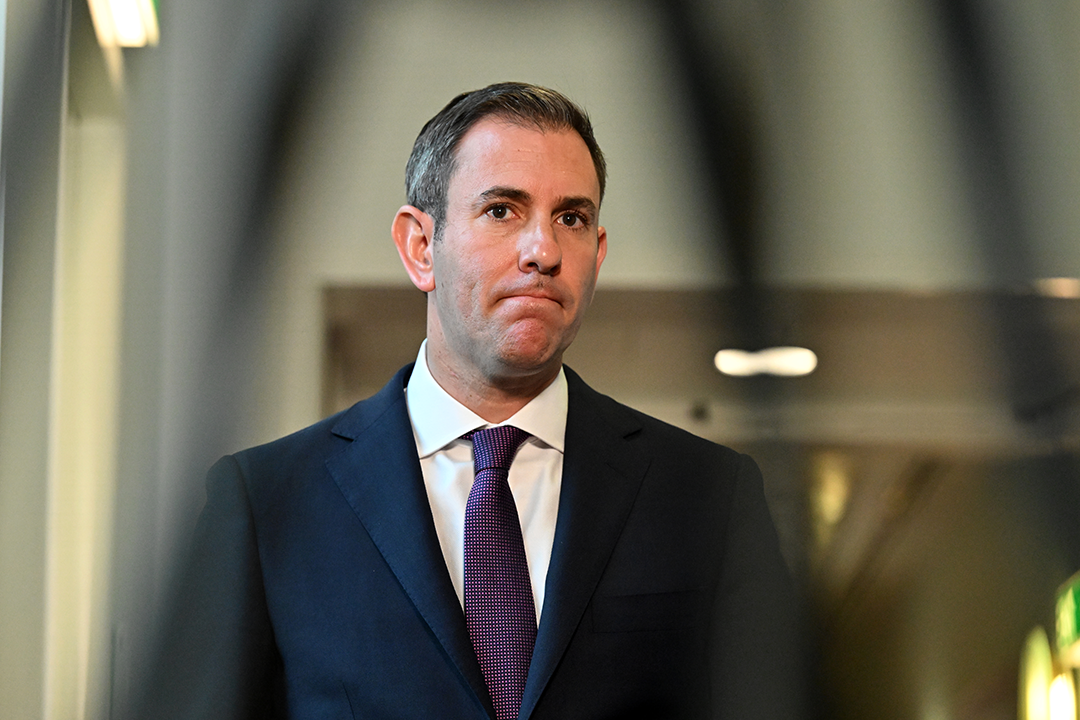
I applaud education ministers introducing cash into school maths lessons to make numbers and money more understandable and interesting. If former ministers had had a greater commitment to money and economics education, Treasurer Jim Chalmers might have scored better on his run of Budget efforts!
Sorry, I couldn’t resist that dig with our economy reeling under some less than helpful government actions towards businesses and investors at the federal and state levels.
In conjunction with this more enlightened money approach to making maths more interesting, if we could make homework compulsory and establish better behaviour in the classrooms so teachers get the respect they need, and the chance to display their talent, then we might not only make our kids both money and maths smart, but we might also eventually turn around the country’s failing productivity.
Fortunately, there are some great quotes on being money-educated, and Benjamin Franklin got it right with: “Investment in knowledge pays the best interest.”
While on a less serious but poignant note, I love this from US comic Steve Martin: “I love money. I love everything about it. I bought some pretty good stuff. Got me a $300 pair of socks. Got a fur sink. An electric dog polisher. A gasoline powered turtleneck sweater. And, of course, I bought some dumb stuff, too.”
A smart teacher could use that to introduce a lesson on being smart with money and I know I will be working that one into my speeches, somehow.

Why in the heck do we have to stoop this low to teach kids about money? Not with you Pete and also never with your woke SMH. What’s wrong with the old CBA savings PB that we had as kids. I saved any birthday gifts and pocket money (even though cash was rare) all of the time. The bank manager (or assistant) used to pop in and show us how to save and to watch for the rising balance.
SIMPLE!!!
And what’s wrong with parot fashion learning – repeat your times tables Pete?
Never ceases to amaze me how much common sense this country now lacks.
May have to first teach the teachers about cash!
And why not, as knowledge grows, expand to include finance related subjects. Statement that they are not teaching superannuation is disappointing. Why not?
When should you start planning and saving for your retirement ? The earlier the better in my view.
Let’s see how this goes.
Finally!! Common sense in the classroom.