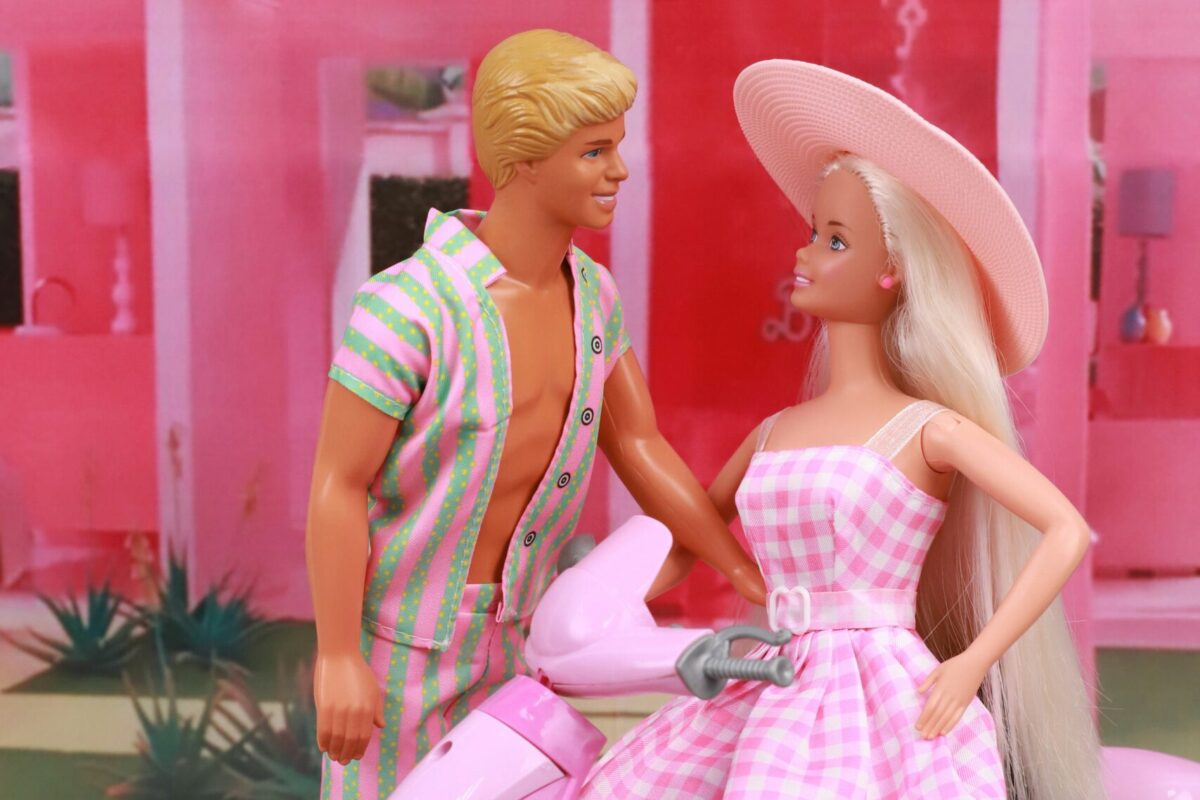
A new study from the University of Adelaide and UNSW Sydney has found the Barbie and Ken are undergoing one of the biggest transformations in their history: they’re becoming more like real people. Why does this matter?
For nearly 70 years, Barbie and Ken have set the standard for an “ideal” adult body — one that’s been almost impossible to match in real life. Now a new study from the University of Adelaide and UNSW Sydney has found the pair are undergoing one of the biggest transformations in their history: they’re becoming more like real people.
The research revisits a landmark 1996 Australian study that first exposed just how extreme Barbie and Ken’s proportions were. That original study found the dolls’ body shapes were so exaggerated that fewer than one in 10 million real people could match them. That statistic followed Barbie for thirty years.
Using the same methodology as the 1996 research (measuring head, neck, chest, waist, hip, thigh, calf, ankle, arm, forearm and wrist), researchers assessed today’s Fashionista range (Mattel’s modern Barbie line, which includes multiple body types sold side by side), including Curvy, Tall, Petite and Standard Barbie, alongside the latest Ken doll. They then compared these against real adults aged 18 to 35.
So, what did they find? Waist-to-hip and chest-to-waist ratios now sit closer to those seen in real people. Curvy Barbie came out on top as the closest match to today’s average female body proportions. And Ken has also improved. His overall shape is more realistic, though his chest-to-waist ratio still lags behind the average man’s.
Lead researcher Associate Professor Sara Grafenauer, from UNSW Medicine & Health, says the shift matters because of how early and how often children encounter these dolls. “Barbie and Ken are among the most recognisable cultural icons globally, and for many children, they’re an early and influential representation of what bodies of adults ‘should’ look like,” she says. “Our study found that Barbie and Ken’s body proportions today have become markedly more realistic, albeit still below the typical female averages.”
Professor Kevin Norton, who authored the original 1996 study, says the changes reflect a broader shift in community expectations. “The positive changes we’re seeing in Barbie and Ken’s body shapes should provide some reassurance for health professionals and parents choosing these dolls,” he says. “We know Barbie and Ken are promoted as aspirational role models, so it makes sense that their body shapes and proportions are meaningful to those who play with them.”
Co-researcher Belinda Durey points out that toys shape more than play. “Children’s toys do more than entertain — they help shape perceptions of bodies, health and identity,” she says. “There’s no doubt that today’s Barbie and Ken are still stylised, but they’re substantially closer to average human body proportions than earlier generations, and that’s a step in the right direction.”
It’s a small but telling data point in a much bigger conversation: the toys we hand children are quietly shaping how they see bodies, including their own, long before they’re old enough to question it.
Three decades on from the original study, the dynamic duo haven’t changed all that much. They’ve just become a little more human.