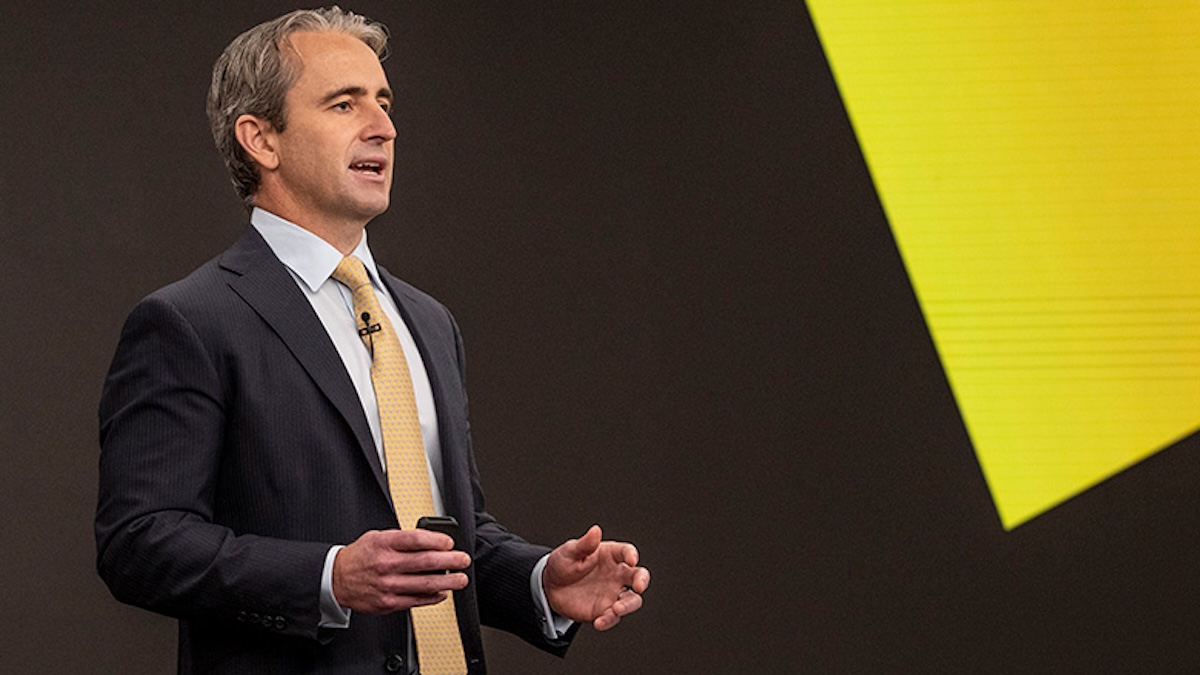
Most experts agree that – for now, at least – the Reserve Bank that has finished hiking interest rates. KPMG chief economist Brendan Rynne told Switzer TV he is not in that camp, and expects one more rate rise as soon as August.
The Reserve Bank left the cash rate at 4.35 per cent on 16 June, a unanimous decision that followed three increases earlier this year. A growing line of forecasters reads that pause as the top. Rynne does not.
“I’m in the camp that thinks they’ve probably still got at least one more left in them,” Rynne said. “I expect that rate rise probably occurs in August.”
Every economy has a level of output it can sustain without stoking inflation. That is its potential. When activity runs above that level, the economy is using more labour and capacity than it can comfortably supply, and prices tend to climb. Economists call the difference between actual and potential output the output gap. The wider the economy runs beyond potential, the less slack there is to absorb new price rises.
Rynne argues Australia is in that tight position now. “There’s no wriggle room to deal with price rises, no spare capacity,” he said.
That feeds into the inflation read. Rynne said core inflation is still sitting away from where the RBA wants it. “We’re still about one per cent off on core inflation against the RBA’s 2.5 per cent target,” he said. The RBA aims to keep inflation between 2 and 3 per cent, and steers policy towards the 2.5 per cent midpoint.
Faced with that, Rynne said the bank’s mandate points one way. “They have to have a bias towards meeting the inflation target rather than keeping full employment,” he said.
The argument is not built on a booming economy. Rynne told the show he expects growth to slow, putting a year-end figure on it. “We’ve rerated our economic growth forecast for the end of this year down to 1.6 per cent,” he said, citing what he called “a negative terms-of-trade event”, the hit that lands when the prices Australia gets for its exports fall relative to what it pays for imports.
A central bank lifting rates into slowing growth is the harder version of the call, and it is the one Rynne is making.
On Switzer TV the week before, HSBC chief economist Paul Bloxham put the opposite view. He said the RBA would “stop at 4.35” and that “we don’t think the RBA will be lifting rates again”, with the next move a cut “well into 2027”.
Rynne tied the rates question back to share prices through company earnings. “Earnings come under more pressure,” he said. “Margins get squeezed, and unless multiples rise, valuations start to come under more pressure.”
The RBA hands down its next decision on 11 August.
This article does not take into account the investment objectives, financial situation or particular needs of any individual. It does not constitute formal advice. Consider the appropriateness of the information in regards to your circumstances. Before acting on anything we discuss, we strongly recommend you seek the appropriate professional advice.