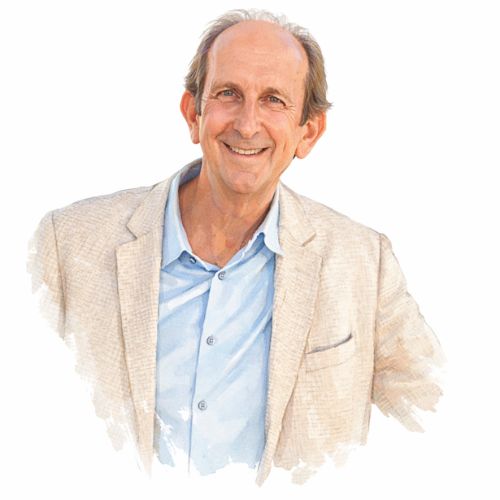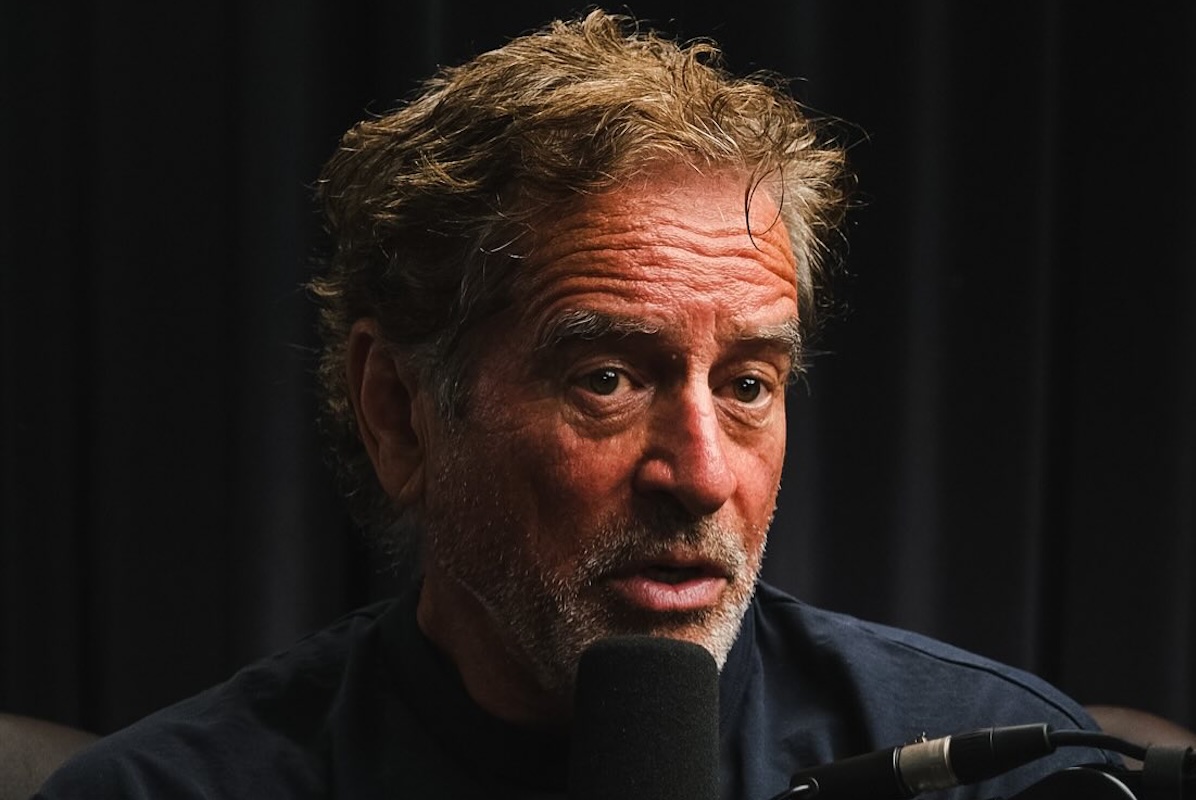

"You can do anything," according to Craig James, former Chief Economist of CommSec tells us, "you just need to recalibrate".
After spending 20 years behind the desk of Australia's most recognisable financial news source at CommSec, Craig James had to step away from the role. He chose to step away to manage the symptoms of his recent Parkinson's Disease diagnosis.
A natural athlete, Craig recalibrated, and now holds a global powerlifting title for those with Parkinson's. He beat out other lifters from Australia, as well as those from Greece and the US in the process.
"Each one of us will face challenges, but it is a case of what you can do, rather than what you can't," James tells us.
Join us for this remarkable story on Diary of an Investor.
Read the transcript
Welcome to Diary of an Investor. I'm producer Luke and I'm here to help set today's scene. If you've had a passing interest in finance news and have been anywhere near a television set in the last 20 years, you'll know that Comse has been all over the box with its talking heads to bring you the latest headlines. These days, it's a slick operation released on YouTube every day and in glorious high resolution. But before that, you might actually recognize it looking a little more like this. one aspect of trade today that which really highlighted that for much of the session and that was >> cast your mind back even further and you'll remember that one of the first and arguably best to do it was comse economist Craig James who is our guest today >> well certainly the the mining state western Australia is doing very very well Northern territory is gaining a little bit on the back >> Craig James spent more than two decades as the voice Australians woke up to in their com market updates breaking down the economy with a clarity and calm arm that made him one of the country's most trusted commentators on markets and finance. He stepped away from the role at the end of 2024 after a Parkinson's diagnosis and his choice to focus on treatment, family, and a new chapter built around strength and purpose. Today, he joins us on Diary of an Investor with Peter Switzer in studio to share the journey from being Australia's leading market expert to becoming a world champion powerliffter who won't let his diagnosis define him. Enjoy the episode. >> Greg, thanks for joining us. Not a problem at all. >> You know, I I go back to the very first time I saw you. Where was that? Try and guess. >> Well, the very first time, >> not on TV. It was >> I give you I'll give you a clue. >> State Bank, Rural Bank. >> Yep. Central Coast. >> Central Coast presentation. >> Yeah. >> Yes. >> It was for a real estate company, wasn't it? Or something. >> Yes. Yes. >> And we're both on the on the program. >> Ah, right. Yes. Yes. >> I remembered you because we didn't totally agree on everything. We ran on most things but but you were this this young whippers snapper from the state bank. >> It wasn't rule then. R the rural bank became the state. >> Yeah. There that was about um 82 83 I think. Yeah. >> Um but um yeah I started the rural bank you sort of all those years ago back in 1990. >> Yeah. And then of course everyone became um knew you because of your com appearances. Of course, my business partner was Paul Rickard who had a little bit to do with com. Yes, he had a lot to do with the comse sec and um and um keeping it number one in terms of um the online brokerage and really for brokerage you sort of generally you include you sort of not just online I mean you sort of and it has been amazing that comse has been able to maintain the market share um through all that period of time. Yeah, he uh apparently David Murray gave him a fax machine, some A4 paper and pencils when when it first started and $78 trades was the the big deal. >> Were you there then or did you come in not long after that? >> Um so I was at State Bank, Rural Bank. Um uh two year 2000 >> um Commonwealth um took over Colonial. >> Yeah. Um and um they said to me, "What what are we going to do with you?" [laughter] Um and they gave me the choice >> because I guess Sydney had their economics team in those days. >> Yeah, that's right. And um we had effectively three people. Yes. By that time uh in the heyday of um economics back in yes the 1980s we were doing >> country risk and we were doing sort of industry risk and we had 20 odd years of people and research library and whatnot. um um at times had changed and um um and I was offered you yes the potential for redundancy and I said look um you know comse you it's a lot like the way that I write yeah they're a retail audience why don't you drop us inside comse sec and yes so we'll drive that >> um and the chap who took over uh who is in charge of CBA well he he disliked me from day one >> right yeah >> um but in the end we end up being sort of best of pals so Um um but um um we still focused very much on um economics 101. >> Um the simple facts, what is so what? What does it mean? What does it mean for my friends, family, you know, uh company? Yes. whatever it happens to be. And um um and um um we had Colonial, State Bank and Colonial at the end of the their time, they were trying to focus on the the media cuz you know it's up to the organization where they want to channel their their stuff and then com end up being we want to get out there as well. Yes, we want to. You >> uh so we did uh stints uh 10 the channel 10 5:00 news >> uh around the country and then it changed and yes we went through the channel 7 route and um uh >> Sky as well was it >> doing Sky? Yes. Um and um uh we played No Favorites. Yes. Anyone who rang us up. So we were ready to present the views. >> Yeah. Yeah. It was good. It was very good. Um, so you also had a short time at the Finn Review. >> Yes. Um, >> what was that? >> Well, that was 200 Well, um, 2001, I think it was. Um, 2001, 2002. Um, yeah, I lasted 12 months. Um, actually, probably a bit under 12 months. When I left school, the recruitment or the careers person said, "Well, there's probably three things that you're likely to be good at." um marketing, economics um and journalism and fortunately I've been able to tinker around through over time um and I thoroughly enjoyed sort of my work you sort of right up to to the end piece where it became >> things became change well things changed yes >> but you knowing you as I I do I've known you a long time you're not a showoff type of person are people like friends or family surprised that You became a big star on television and radio and and newsprint. >> It's like everything. Yeah, I suppose I do. Yes. When I tell people I used to power lift, they look at me and they said, "What are you talking about?" Um and um uh yeah, the um aunties and uncles used to get you excited um when they saw me on the television. Of course, the longer you went on, you through the ' 80s, 90s went on, younger people, you didn't watch something called TV, you know, >> Yeah. So, um, we should actually just do a little bit of a a um a sidebar, uh, the reason why you're not on TV, you've had a a few health issues. Why don't you just explain what's happened and what you're doing now? Um well yes I suppose um uh 2021 over that sort of year things were changing with me. Um I was um um got some symptoms things like you know sort of I was drooling or you know sort of not able to tie up my shoelace. Um >> but you you were sprinting agrade then weren't you? Like when did you stop running a grade 100 m? >> Well I was only ever agrade when it's when they had to fill in somebody. Yeah, but you you still competing >> as an old bloke. You were still competing. What? >> Um Yeah. And I was still competing yesterday around about that time. And when I mentioned um I remember when I was diagnosed with Parkinson's disease and yesterday and I was out doing um 200 >> 200 um and I mentioned to the chap and he said he was just you sort of shook his head and yesterday cuz I end up beating him and yesterday about um and um he was one who did a lot of training whatnot yesterday and I come up there and you said usually got beaten by him. I was doing okay and and the the the work that I was doing I suppose and keep trying to keep my body strong and >> um but um uh yeah got up to the position where I started shaking the hand and um not able to close up and move that hand you know freely as possible and uh then the the doctors sort of diagnosed that yes had Parkinson's disease. It's not something that you can say um do a test on your blood or your body or what say, "Yep, that's it." Apparently, the only reason that you could tell somebody definitely had Parkinson's is postmortem when they look in your brain. >> Um which is um I don't plan to do anything. >> We don't want to know that. Yeah. >> Um but um um we initially um wife and myself kept it to herself. Um, one day though, my sister rang up and she said, >> "Are you all right?" >> Um, and I said, "Well, if I was to have anything, what would I have?" Cuz she's been watching my crosses and things. >> And she said, "Parkinson's." And I said, "She's a nurse." So um and uh I said, "Yeah, yeah, that's right." So >> I didn't come um um I was still able to progress pretty well. >> Yeah. But it was when um um 2021 I suppose yesterday, early 2022 um when I was trying to um oh no it was a bit later than that. Yes. 22 23 yesterday. Um I was required to do 30 seconds basically on TGB in the afternoon. Yes. The share Australian share market did such and such. Um and I basically was gasping for air after one one sentence. So >> um and um I thought that can't be normal. I mean you're so um and end up being one of the things with Parkinson's as well that um it affects your your throat muscles, right? >> Um so I've got a little it's in the bag actually it's a little device which is you exhale and into it you know so the strengthens it over time. um couple of years ago, you know, sort of um I'll be talking like this and now now I'm able to project a little bit more and yes be a bit more animated. Yeah. The um the thing that um riles a lot of people with um PD is um people look at you and say but you look all right. Yeah. >> You you look no different. >> Yeah, but you do look um but um people don't know things like the sleep pattern. I have one and a half sleeping pills every night to to get to sleep. >> Um if I didn't have those, it would be difficult. >> And you wouldn't have been a pill taker in your life, would you? >> No. Not even vitamin pills really. I mean, you said >> um but um uh when it started affecting my job, my judgment, uh things like that. Then it came clean June uh basically was it last year? Um the the time is the strange sort of thing. I have to say to myself, what day is today? Today's Tuesday, isn't it? Um but um um yeah, the speech therapist, um somebody sort of um um neurologist, doctors, um uh I got a coach um for power lifting is. >> Yeah. And and you recently became world champion. >> World champion. Yes. 142 and a half and >> that's some kilograms everybody >> unfortunately sort of I'm 65 kilos so um um because they work on these formulas now for your age as well as um um your your weight and try and sort of um equilibrate that so men and women effectively can compete on the same sort of basis. So they're still working that through. But yes, um and I found a lot of people, you know, sort of um um had embraced something like that. The other thing that >> there's a Marcus's division of power lifting. >> Um effectively, you sort of they've got um uh the advanced rehab center ARC um out there and um I did that yesterday, the PD warrior class. And what that's supposed to do is basically, you know, to go through an exercise regime that gets the muscles firing a little bit. And they do things like you might be doing something like a sit up, you know, so then she'll say, "What repeat how what you had for dinner over the last week, you day by day, and that gets other parts of your your body sort of firing." So the PD Warrior classes have been excellent. Yes. advance rehab center and um um so I've thrown everything at at it. I didn't heard as >> you always do. >> Well, you know, I've heard of people you sort of saying, "Look, you I'm just going to give up the meds. I'm going to give up." Yes. And I'm not going to bother you too much. This is not going to um I'm not going to be able to beat it. Yes. And but of course um yeah, you can live a long time, you know, sort of um my mother-in-law um has Parkinson's. Uh she's battling at the moment, but she's 90. >> Um and um uh she's on different we swap. We don't swap pills, but we swap stories about what pills are you taking at the moment. >> Um and she understands the way I feel and she she understand I understand the way she feels. >> Yeah. My father-in-law probably got it early 70s and he lived to 90, you know. So, >> all right. >> It's the the other things that come on top of it. So um if you um you can't lift one of your legs and then you so you've got to go into other things and they do some research and found this is wrong and this is wrong. So which is what's happening with >> well apart from seeing you and and happy to hear that you're achieving as you always do. Uh, I want to know whether you you still look at the markets with the same kind of interest because you and I, we would get up every morning. We would go to Wall Street Journals and CNBC and all Bloomberg and all that sort of stuff to try and get ready for the day. Do you still do that? >> Uh, I still do that. Um, I knew you would. CNBC last night. Yeah, Ed Yardini was on there talking about the American markets and um uh he's always quite sensible in terms of being a strategist and um um >> you're the former chief economist at Deutsche back. >> Yeah, Deutsche. That's right. Um and um uh I woke up this morning to see that the markets were higher and um that was expected after Australian market was stronger yesterday. And of course being a retiree you tend to look at it you know with a different yes you know sort of focus and um and and another one part of my team um is um my financial advisor. Okay. Um uh my wife does uh a lot now. You sort of um in terms of um uh the finances for for the household and whatnot and my and we just got a tax bloke as well. So um uh I find them you know I can't be across to all the tax law or and I don't really have the ability now to be across all the things like superanuation changes you know um and um they've been excellent in terms of the advice that they've provided me yes over time the first um um advisor that I had financial advisor unfortunately he died while um um providing yes so Yeah, but we lost him and he died providing advice to you or somebody else. >> Well, you know, he found that he had something and he sort of um um and here's me with Parkinson's thinking, you know, worse in the world and he got a sort of incurable disease and um it only lasted you sort of um a month or two and you s is no longer with us. But um uh just it just shows that things can happen sort of are you prepared for it? you know, sort of um are you prepared for early retirement? You sort of retirement before when you want it to go. Um where is your money located? You know, sort of are you in all in the magnificent seven stocks? Well, that's all good, but you know, so there's a degree of risk involved as well. >> Yeah. So, have you thought about artificial intelligence and whether it's a bubble? >> Um it um it's going to it's going to be with us, but it's going to change. It's going to involve it over time. Um I think this is the part that Edard Denni has spoke about last night that technology um the advances in technology you technology crazy if you like you've been going for a long period of time uh really since Apple you know came out with the the first you know sort of iPhone and you so we're going back you know so and it's evolved over time we've got different sorts of phones you sort of different sorts of capabilities Now now we've got um all our news comes from there. Now we've got AI you know sort of overlay and well what will be next? um how many people foraw saw that AI was going to be sort of big thing but now it's a bit bit scary because um um people like um um the the gurus you know sin the financial sector finding that AI is trying to replicate and put out different you know sort of and you just got to be careful about who you're dealing with >> and also mate the one thing I've noticed which you know I'm I'm or you would have noticed is that when a company reports badly, the sell-off seems a lot bigger than it was in the older days. Yeah, the it was a more realistic thought. But now I think AI and computer training is is really increasing the the pylon either up or down. >> But I suppose what it's making um there's finance is available for everyone now. Um it wasn't that long ago when people said no just put all your money in Australian sh you don't want to go out in the outside world where things can happen you sort of course now if you don't go outside Australia and look at you know sort of uh things like the technology sector we got such a small technology sector in Australia you have to go out and you sort of but how do you diffuse the risk well basically you sort of you get um a bundle of shares and um uh together um and offly the risks in terms of uh the the countries where they've been the the firms are from um the sector that they're f from and those sorts of things u people >> diversification >> yeah d I mean you what's the three rules for investment diversifi diversifi diversify so basically >> though um Buffett once said diversification was for wimps but he can say that um What about let's take you back to where you really are strong, namely the economy. Do you think there's a potential debt issue out there that we're currently not taking as seriously as some people particularly there are a lot of you over the years we've had lots of people come to us and say I'm worried about the indebtedness of Australia and the world and whatever. Do you think this changed in any way? Um well, if people had to pay off the debt, if the governments had to pay off the debt, uh then there' probably be an issue. So, you're not going to be able to overnight you has to come up with funds to be able to do that. So, um but to meet the interest cost to make sure that the economy is growing and now it's a case of uh yes, we're h got more debt, but at the same time, we've got more assets as well. Um and the good the the bloomsters out there yes like to focus on the fact that yes we have uh so so much debt and you say well how is that debt yes they're all maserati cars or um artwork or whatnot uh no the money is being used productively in the economy the economy is growing um before the um um the um forgotten no co across Um we hadn't had a recession since the recession we had to have sort of >> was over 20 years, wasn't it? >> That's right. Um and of course we had to go into the technical recessions of the way that you know so but ended that >> our economy you know effectively has not seen a recession like the ones of 82 83 and 1991 um um since those times you sort of um um so I'd be more worried if our economy was imploding. >> Um and um we had that debt. >> Yeah. It it seems to me um Craig that the one thing CO did for government debts right across the world, even our states, was it made them have bigger deficits than they would have because they just simply had to put money out there to avoid a great depression. >> And that probably does put pressure on governments. If something goes wrong, if a a black swan comes along, it's probably not going to be as easy as to throw to throw money at the problem. But I guess they still will. >> Yeah. Yeah. No, it's um I I think you you got to take a situation of um at all costs um protect the economy, keep people in jobs. >> And that was the the big thing that came out of co the money was spent so people could stay in work. >> Uh so did uh unemployment um go out to 15% and stay there? No, it didn't. Uh and now we've got you know unemployment rates you know sort of in the order of 4%. And if it goes up to four and a half 5% we sort of throw throw our arms up and say this is amazing thing you what what's happening. Yeah. >> Um nobody focuses on the fact that if you look at you know sort of uh the what do you call the gloom index you sort of add the um inflation rate to the unemployment rate. these sorts of misery index. >> Uh we're near record lows. We're not that far away from it, but um um and that suggests that um we're doing something right. >> So Craig, the finish off like like me, you came from economics. We we we both embrace the fact that there are stock market. Yeah, that's right. >> Uh stock markets are out there and someone needs to explain it to and people like you and I did that. What do you think was the most important investment lesson you learned along the way that you know you share with like your kids or people who have asked you what do you think is the most important lesson that you've picked up about investing? >> Um well I think it's a case of being aware which is what is happening. um you can have a hands-off principle and you could be changing things too much, you know, sort of in in and out. Um uh you could be following some of the stock tippers and you sort of um and paying for the um their abilities and if they don't turn out to be right. So um the the passive type in investing um while it doesn't seem so sexy, I mean you sort of is important over time. The exchange traded funds was something new that came in our generation of communicator >> and you know my sons um have been in and and still are in ETFs and they found it's such an easy way to get into the market and you sort of you're covering a technology sector that so which what should I be investing in? Um um I think probably some of the biggest risks for those mom and dad investors uh who took um Commonwealth or uh Telra and and really didn't go on from there and say what else should we be adding to to our portfolio particularly in terms of technology don't go fully in but you you need some exposure there. Uh so it's evolving with the times uh taking on investments that um uh are going to be beneficial for you and help you to diversify even more. >> Yeah, great stuff, mate. Good to see you and keep on listening those waves. >> All right, thank you very much. K James.