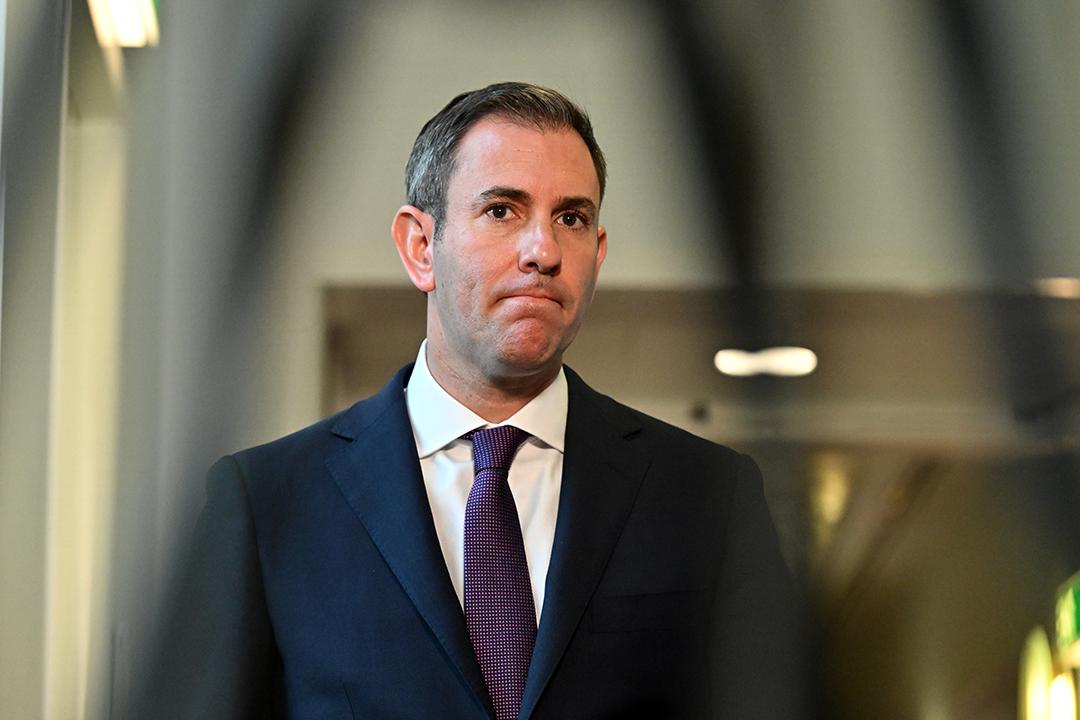
The polls are tanking, the entrepreneurs are revolting, and young property buyers are flabbergasted.
Will the Parliament reform these reforms?
It’s nearly two years before the next election and following the post-Budget ‘mocking’ of Prime Minister Anthony Albanese online by start-up entrepreneurs, the Government could be in trouble. This bad reaction to the Budget changes adds to the outrage felt by property investors and even young people, who the Government said it wanted to help buy a home.
But the question is whether this current voter rage will be maintained to 20 May 2028, being the latest time we can go to the polls.
Today on the Sky News website, Oscar Goodsell, reports on how flabbergasted successful small business owners are taking to social media to complain about how the new capital gains tax (CGT) discount will slug their businesses. The story that’s particularly felt by businesses that have done well and have employees (including the founders, who are both employees and owners or shareholders in their businesses) will cop a big tax if ever they sell their shares.
The rage they feel about this CGT change, which sees the 50% tax discount converted to an inflation-based cost base tax, was captured in this Skynews.com.au headline: “Albanese mocked by AI-generated images welcoming him as a ‘silent partner’ of startup businesses after 47 per cent capital gains tax.”
In case you missed it, whatever the gain, there’ll be a 30% minimum tax rate on capital gains, and the new taxing regime kicks off on 1 July 2027, unless the Senate and an embarrassed Anthony Albanese decides that they’re slugging the people he thought his economics team was allegedly helping.
This news follows that a Resolve Political Monitor in Nine Newspapers found that Angus Taylor is now the preferred PM, leading Mr Albanese 33-30, with 37% of people undecided. Before the Budget, it was “Angus Who?” with the PM leading 38-22.
News.com.au reports that “the federal government’s primary vote has slumped 3 percentage points to just 29 per cent and 36 per cent of people say their view of Labor had been damaged.”
Interestingly, Samantha Maiden on news.com.au noted that Treasurer Jim Chalmers had scored a minus 25 net approval rating after the Budget, “comparing poorly with the minus nine rating that was recorded following the Abbott government’s GP tax budget in 2014”.
To be objective, the following from an Amplify poll conducted by a non-partisan community group founded by technology investor Paul Bassat, is noteworthy:
- The polls showed voters have lost trust in the PM and his Government.
- 27% think the Budget was good for the country, while 40% thought it would be bad.
- 41% supported the changes to negative gearing.
- 41% of poll respondents support replacing the capital gains tax discount with indexation for investment properties.
- Only 27% thought the housing reforms would be effective.
What I find problematic is that these polls followed the Budget and people often form opinions based on a lack of knowledge and understanding. Since the Budget, here are some fair calls on what the Government has got wrong:
- Existing houses prices will fall because investors won’t get the old negative gearing benefits, but they will largely be too expensive for the young people that the Budget wanted to help.
- New builds will have the 50% CGT discount and negative gearing that will attract investors, meaning young people will have competition at auctions, which should push prices up.
- Young people using the stock market to build wealth for a home deposit will pay a bigger capital gains tax when they sell their shares, reducing the potential deposit.
- The Budget increased spending and did little to help the RBA fight inflation, apart from an extension of the fuel excise reduction, which is only a short-term measure ending on 1 July 2026!
- Start-up businesses will cop a bigger tax penalty for success with this new CGT discount method.
And here’s the important point: we have an inflation problem because governments (current and past Federal and State governments) have spent too much and we have a productivity problem that drives up costs and creates inflation.
So, how can the Government think increasing its spending and hitting the businesses chasing productivity and profits with tax disincentives, are great ideas?
The only good news I can offer is that all this PM mocking will find its way into the Senate and the offices of Labor’s power brokers. Some of these ‘great’ Budget ideas will be changed, if only for political popularity and even common sense reasons.
I have to ask: “Who’s advising Jim Chalmers?” Whoever they are, they need to be replaced by people who know how businesses and economies flourish! That’s the way we’ll get higher productivity, lower inflation and lower interest rates, and fewer budget deficit problems.
By the way, Australians have a history of not liking ‘big lies’ from politicians. Julia Gillard said “there will be no carbon tax under a government I lead” and then she tried to introduce one. She ended up losing her top job. Samantha Maiden reminded us that the 1993 budget handed down by the Keating government is considered the worst in Newspoll history, after Paul Keating infamously abandoned his promised “L-A-W” tax cuts.
In 1996, John Howard defeated Keating at the federal election. This history will not be lost on the PM and the Treasurer, so I expect there’ll be some changes before this Budget is passed.



This is a shameless tax grab from a pack of liars. If they want to help young people to get ahead stop taxing bank interest up to $10K PA, maintain the CGT discount and increase it to 75% on the first $100K.
Why does the government think it is entitled to tax Capital, they do nothing to earn a slice.
Lets talk about inflation and what it dos to our superannuation.
Eg :
1. If Inflation is at 5% and your super in pension mode makes a 10% gain in one year,
you have only gained 5% in real terms because the other 5% has been lost in maintaining the purchasing per of your balance.
2. Take the same example but your super is now in accumulation mode. The Government taxes the yearly gain of 10% at 15% . So ,if your super gained $10,000, you have just lost $5,000 in inflation and a further $1,500 to the Government tax, resulting in a total real gain of just $3,500 from the original $10,000 !!!
3. How much money have Australian in Super? and how much money is being held in the Future Fund ? And how much real value has been lost because of Albo’s Government spending ? I shudder to think about it !
4. Why has inflation been allowed to soar? Would this money not have been better spent ?
The opposition have the opportunity to do a double whammy to reverse some of the proposed changes without any cost to government revenue when compared to pre-budget night, and at the same time make themselves the champion of young aspiring rentvesting house owners who have been knocked out of the property market by the budget.
(1) I’d make first property owners (not just first home owners) able to utilise negative gearing during their period of ownership, plus the full 50% CGT discount on the sale of that first property. That way rentvesting remains a viable entry into the property market.
(2) Make any investor selling to a first property owner eligible for the full 50% CGT discount irrespective of when they purchased the property they are selling. That way an investor would be mad not to sell to a first property buyer.
Lauded as a prospective tax, yet always exempt pre 20 September 1985 assets are retrospectively included for tax purposes for gains base dated 1/7/27. Great news for Valuers who will be swamped with work on those remaining legacy 1985 assets. Overlooked is the contribution many of these residential assets have made to rental stock, providing housing to renters, many on a very long term basis, in some cases decades, with Landlords and Tenants forming mutually beneficial relationships and swapping Christmas cards.
Yet again, wasteful governments send out heat seeking missiles to milk the true creators of well being to top up their coffers for further wasteful, uncontrolled, reckless spending. BTW, I haven’t mentioned the ongoing, huge impost of State Land Tax that can almost wipe out any post tax gain from the rental property. Conveniently overlooked. And now they want to tax the gain when the government has done nothing but obstruct and take, take, take!
It is obvious that Labor want a Communist Australia,
And they have a lot of time before the next election to continue to destroy Australia, and achieve thier goal of Communist Australia.
Australians wake up before it is too late.