What will high-speed rail do to property prices?


After more than a few false starts, the white elephant that is high-speed rail might finally be leaving the station between Sydney and Newcastle. With the starting horn well and truly sounded now, you might want to get your ducks in a row if you're looking to invest in property along the route.

What's happening?

Yesterday's news from the high-speed rail authority was probably overhyped on your evening news bulletin. It was more of a plan to announce a plan. Soon.

Nearly 30 boreholes are being drilled along the corridor as part of the High Speed Rail Authority’s (HSRA) business case for the route. That work will guide decisions on tunnel depths, how to cross the Hawkesbury River, and how to carve through the sandstone escarpment into the Central Coast. The government has committed 500 million dollars to planning and corridor protection for this first stage, with the business case due by the end of the year. If you're playing along at home, it feels a bit like that scene from The Castle where "Dale dug a hole".

If completed, the high-speed rail link between Sydney and Newcastle via the Central Coast would significantly reduce travel times between the three locales. Sydney to the Central Coast would take around half an hour, compared with the 90 minutes it currently takes. Sydney to Newcastle, meanwhile, would be cut to an hour, down from the 2.5+ hours it takes now.

Regardless of the material involved in the announcement, property values in the right postcodes won’t wait for a ribbon-cutting. Property prices are set to go up from what Cotality told me is called "the announcement effect".

The 'announcement effect'

Tim Lawless, research director at Cotality (formerly CoreLogic), believes the impact on housing values tends to begin long before the first sleepers are laid.

He pointed to Sydney Metro’s first stage from Cherrybrook to Chatswood as a blueprint. “Most of the growth happened before it was even completed,” he told me yesterday. “Investors start to target that market, and maybe owner-occupiers as well. It’s just about getting in early.”

That speculation phase can deliver sharp gains for neighbourhoods that are expected to benefit from improved connectivity. The catch: it’s not without risk. Lawless noted Sydney’s high-speed rail has been announced “many times in the past”, and buying on promises rather than progress can leave investors holding the bag if timelines slip.

Where property prices will start going up first

If high-speed rail actually arrives, the Central Coast becomes a standout beneficiary. It already sits within Sydney’s formal statistical boundary, yet remains cheaper than most of Greater Sydney with a median value around one million dollars.

“It’s a pretty affordable market, even though it’s seen significant growth,” Lawless said, adding that the growth has come off a relatively low base. Shaving an hour off the rail trip would fundamentally shift the lifestyle-to-commute trade-off. More people could live near the beach and still work in Sydney without the current productivity and fatigue penalty.

Given the choice between the Central Coast and outer-west Sydney at similar price points, Lawless argues many would choose the coast for climate, amenity and liveability alone. Faster rail simply tilts the scales further.

The calculus extends all the way to the end of the line in Newcastle, where property prices would also see themselves elevating as Sydney becomes closer than ever thanks to the new rail link.

Look beyond NSW entirely and the picture gets more interesting. A future line running from Sydney to Brisbane would drop stops into a string of coastal cities that have long struggled with limited access but enviable lifestyles: Port Macquarie, Coffs Harbour, Ballina and others.

“Anywhere that was connected with high-speed rail would be a beneficiary from a housing pricing perspective,” Lawless said. For hybrid workers who only need to be in-office a couple of days a week, being within a two-hour high-speed commute turns “too far” into “suddenly realistic”.

That might help relieve pressure on capital cities by shifting demand into more affordable regional markets – if, and only if, transport is accompanied by schools, health services and local infrastructure to support population growth. Without that, rail could create boomtown strain rather than balance.

Will your property prices go down because of high-speed rail?

One common question is whether improving access to cheaper regions cools growth in the city itself. Lawless thinks that’s unlikely.

This isn’t a zero-sum reshuffle where regional gains mean metropolitan losses. Faster rail broadens the practical commuter belt, expanding rather than cannibalising Sydney’s buyer pool.

The only pockets that could suffer are those too close to the tracks or stations, where noise and disruption outweigh convenience – and even then, Lawless expects those cases to be rare given the likely use of tunnels.

So while high-speed rail is still in the planning and soil-testing stage, property is set to move around the areas that are likely to see connections. The property market rarely waits for certainty.

Qantas is giving its Sydney lounge an upgrade with new balcony, but it's closing for Christmas

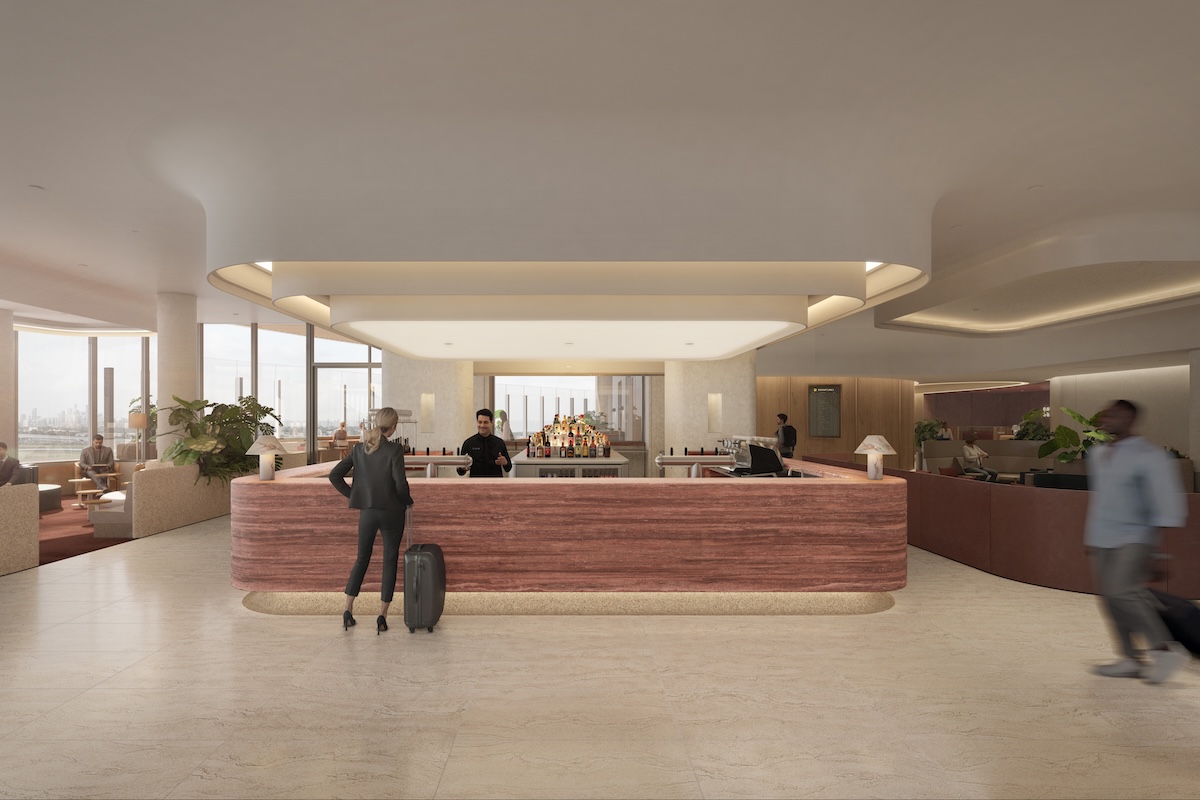
Airlines are always racing each other to have the most luxurious lounges. Now Sydney is one-upping the competition by remodelling itself to create a balcony. The bad news? It’ll be closed for your Christmas travel.

If you’re flying out of Sydney this Christmas, brace for a little disappointment before take-off: the Qantas International Business Lounge will be closed from 8 December as the airline begins the next stage of its major upgrade.

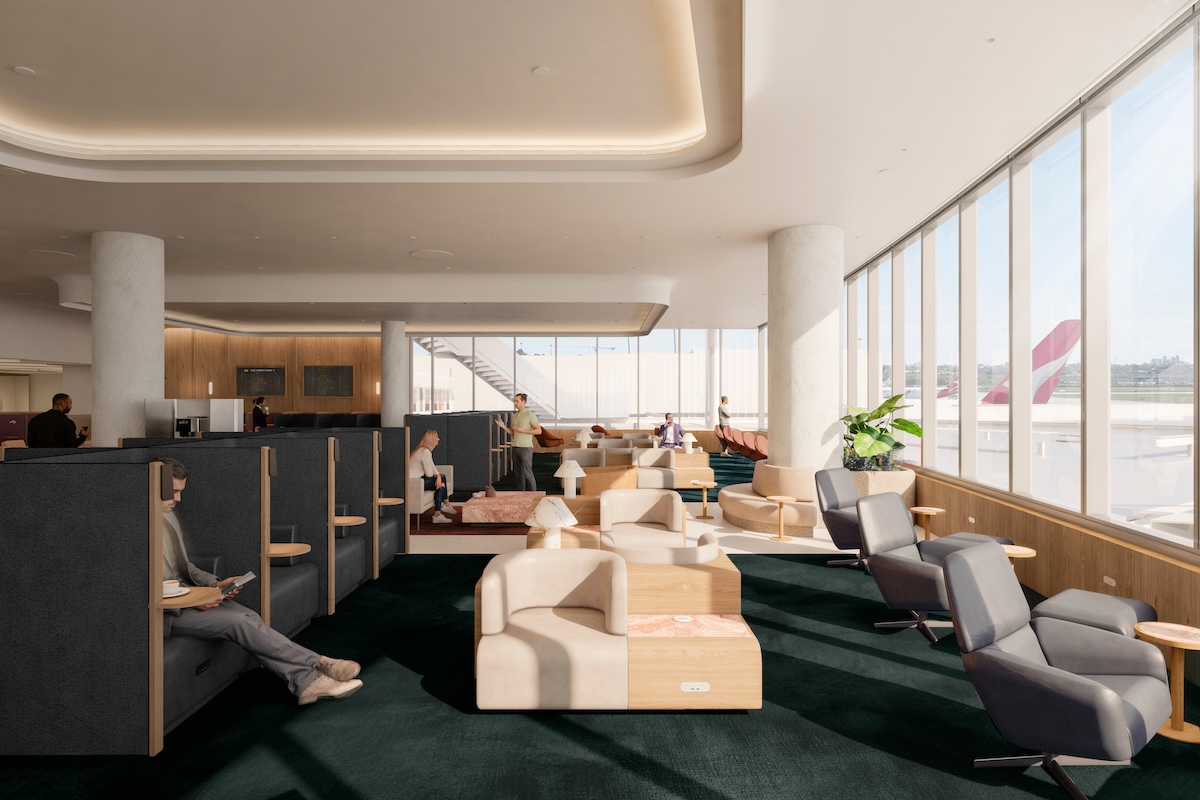
The good news? It’s for something big. The Flying Kangaroo is remodelling its flagship international lounge to add a balcony — or more precisely, a 150-square-metre outdoor terrace where travellers can enjoy real sunlight and fresh air before boarding.

The move is part of a global lounge refurbishment program and a broader push to match Qantas’ ambitious Project Sunrise ultra-long-haul flights, which will soon connect Sydney directly to London and New York. When you’re preparing to spend 20 hours in the air, health, movement and wellness suddenly become key selling points.

Designed by Caon Design Office and Akin Atelier, the new Sydney International Business Lounge takes inspiration from Sydney’s natural beauty, with tones drawn from the Blue Mountains and Bondi. Qantas says the redevelopment will boost seating by more than 30 per cent and introduce a show kitchen, plated dining, and a bar serving everything from barista-made coffee to cocktails.

Flexible zones will cater to different moods — from quiet workstations to social areas — and most seats will feature USB-C and wireless charging.

Qantas International CEO Cam Wallace said the investment was designed to meet surging demand from premium travellers and to prepare for the next era of global flying.

“As the demand for premium travel increases, we’re creating more space, more dining options and a completely enhanced on-ground experience in our new Sydney International Business Lounge and Auckland International Lounge,” Wallace said.

While Sydney passengers will be shuffled into a temporary lounge or the Plaza Premium Lounge during the remodel, Qantas customers across the ditch will be treated to something new. The redesigned Auckland International Lounge opens on 17 December, just in time for the Christmas rush, featuring locally sourced materials and a refreshed layout to support flights to Perth and New York.

The Sydney lounge upgrade is scheduled for completion in 2027 — right in time for the first of those ultra-long Project Sunrise flights to take off. So, while travellers might miss their favourite pre-flight sanctuary this summer, Qantas is betting the future of premium flying starts not just in the air, but on the balcony.

Three pooches and a French train

Oh no, there’s a dog on this train and he’s sitting in one of the best seats. Can I complain? Is this legal in Paris? Would Parisians even care if it wasn’t? What’s the status of dogs on public transport in France?

Currently I’m on a train stationed in Montparnasse en route to Bordeaux Saint-Jean, having flown here from Athens for a taste of France’s prestigious wine region. The train is packed to the rafters, but as I come to learn, there are some unusual travellers on board.

Our seats are upstairs, business class, of course. Dragging even a small bag that far up was no mean feat, but to be stared at by a dog, a scruffy one at that, when those impossibly slow electric doors eventually open to allow access to our seats, seems like a mirage from the exhaustion of 24 hours of travel.

What’s more, this unexpected traveller has a snooty look on his face that any canine raised in Paris might have (you know that snobby expression, possibly mimicking their owner). Unaware of French laws that allow canines to travel by train and fearful that a veritable zoo of animals could march in at any minute, I yearn for the train to get getting.

Now I need to use the toilet, which means another challenge with those automatic temperamental doors, coupled with having to avoid a long tail attached to the aforesaid dog that’s now stretched across the aisle.

To add further discomfort, our seats are facing the opposite direction to our destination. Riding backwards isn’t a first choice. But this four legged creature is now perched at the window looking so relaxed and comfortable. Needless to say, he’s facing the right way, as he stares at me with a look that seems to beg the question: “Got any treats?”.

All humans and dogs aboard, it’s time to exit Montparnasse. A few passengers complain about their seat facing in the wrong direction, one saying she’ll be sick any minute if she can’t move hers. But Buster refuses to heed her call and reclines in his seat. But he pops up again, staring at me with a pomposity that’s simultaneously alluring and revolting.

Now he’s on the floor. Sauntering across to a passenger in the opposite row, the pooch has a sniff – I bet that’s not in the Canine Train Travel Book of Rules (if one exists!).  Dogs just can’t help themselves.

As the train rattles through the chequered fields of the French countryside, I wonder what this dog thinks of being on the train? His movements are restricted; he can’t lift his leg or do anything worse. Can he? Would he? No point complaining – the trip’s only two hours. Accept the things I can’t change and move on.

As the TGV inQui thunders down the track, curiosity gets the better of me. I make a polite move to find Buster’s real name. En route to the dining car (oh hell, I’ll have to manoeuvre those angry glass doors again while the train sways from side to side), I lean into the owners and ask the name that their darling answers to.  Discovering quickly that Buster is actually of the female persuasion, I ask for permission to pat Carla, while making small talk with her adoring parents: “She’s a Spanish hunting dog and doesn’t like travelling (you could have fooled me!),” her owner explains.  “She’s still a pup (at 1 year and 6 months). She’s a Podenco, originating in Spain, a type of hound that runs crazy when let out in an open field,” Carla’s mum continues, as I check to see if there’s an open exit window nearby that could tempt this Podenco’s desire to run free. The talk continues: “I’m surprised Australians don’t let dogs on train,” she says, at which point her travelling companion adds, with a strong French accent, “No surprise. I knew that. But the Dutch are free with dogs and train travel, but I don’t think the English do.” He’s wrong about the English I discover. You can bring two dogs on a train on leads, and they can’t sit on seats and travel in first class at no fee! And in certain circumstances, even Aussies let man’s best friend aboard. Quelle horreur!

However, as time ticks on, getting up close and personal to Carla, I change my tune. She’s a nice ‘mutt’ and has an entourage of friends in the carriage. I come to learn there’s a small brown dog with no distinguishing features crouching carefully under a seat opposite. A few seats down there’s Sally, a miniature dash hound really enjoying the ride and a few treats.

A sign comes up on the train’s public computer screen outlining restrictions on the use of mobile phones, but no message about dogs barking! We humans do need to be regularly curbed.

Between the villages of Pontiere and Angoulême, about 45 minutes out of Bordeaux Saint-Jean, Carla and family alight, along with a small contingency of much-loved pets. I wave at the family who return the gesture, though I forgot to ask their names, as is the custom with dog owners!

The carriage now feels empty, the fun has gone – or so I think, until spying a cat cuddled up to its owner in a trendy pouch.  But when it comes to animals on trains, I much prefer man’s best friend.

Get a look inside the new architecturally-significant Western Sydney Airport design before it opens

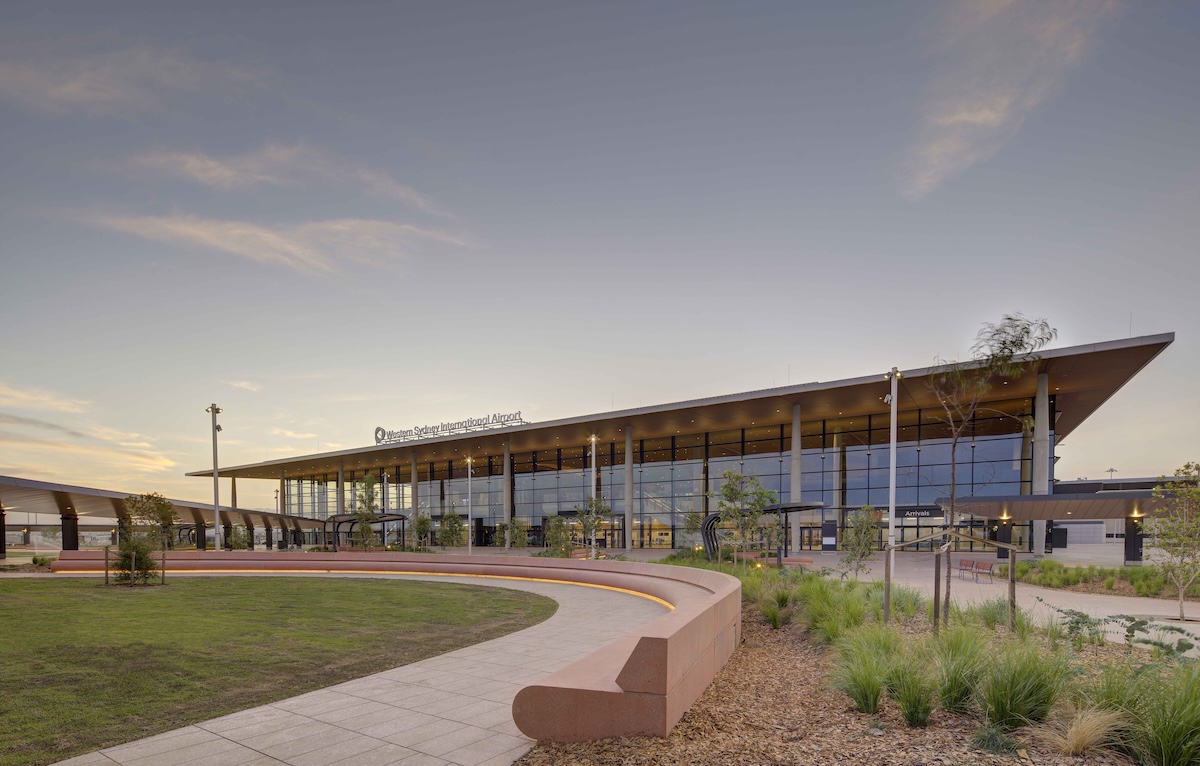
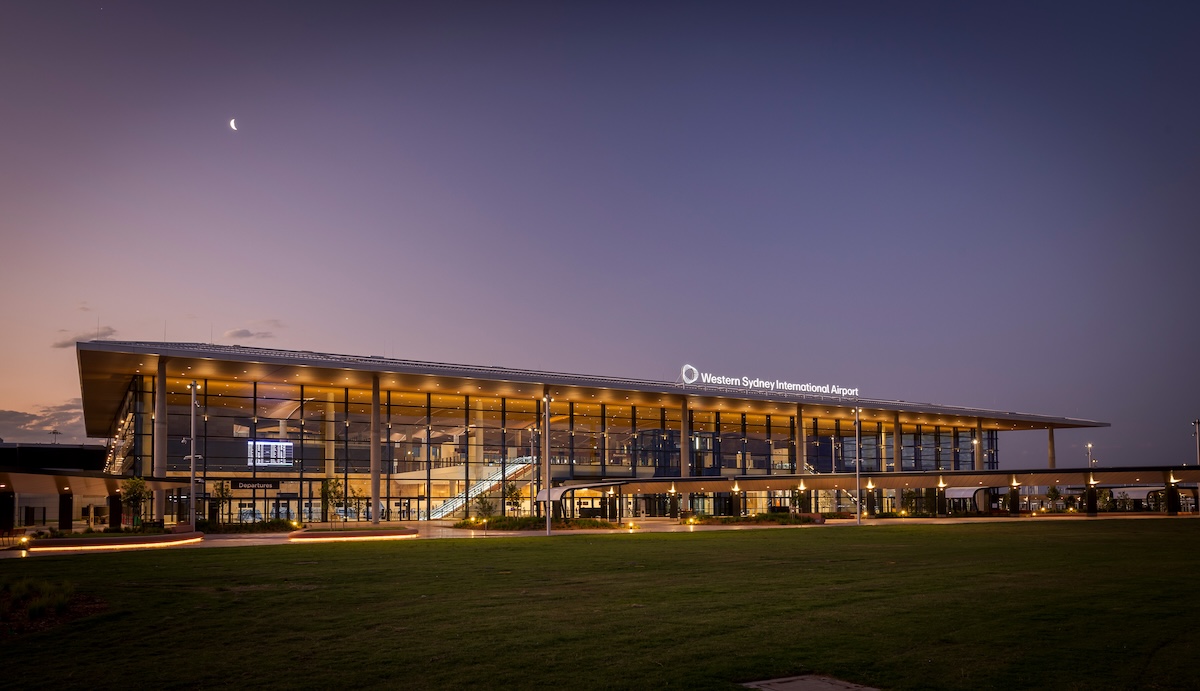
As the first major airport built in Australia in over 50 years, Western Sydney International Airport (WSI) marks a generational transformation for one of the country’s fastest-growing regions.

Located in Badgerys Creek, WSI has been designed as both a global gateway and a catalyst for economic, social and cultural opportunity in Western Sydney.

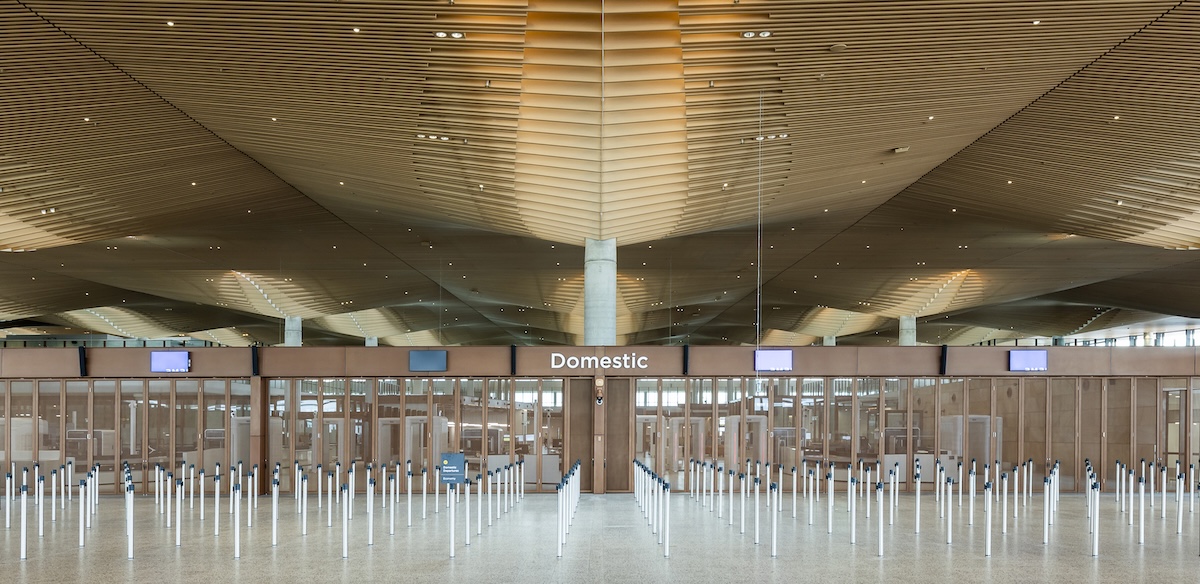
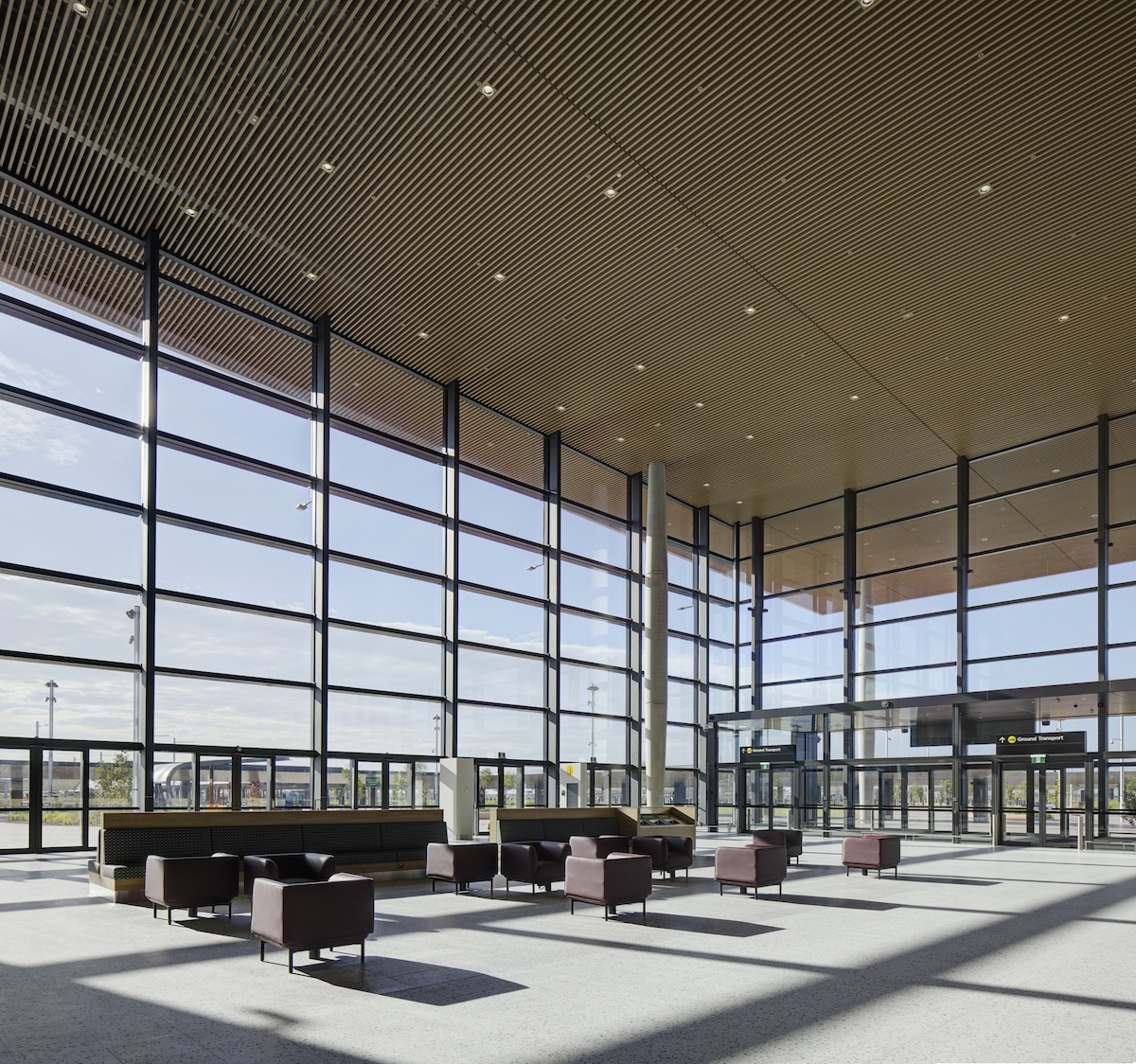
Designed through a collaboration between COX Architecture and Zaha Hadid Architects, and delivered by Woods Bagot and Multiplex, the airport terminal fuses innovation with functionality. The architecture responds directly to the surrounding Cumberland Plain, combining human-scale design with international ambition. Its intuitive layout and sculptural form signal a new standard for airport architecture in Australia.

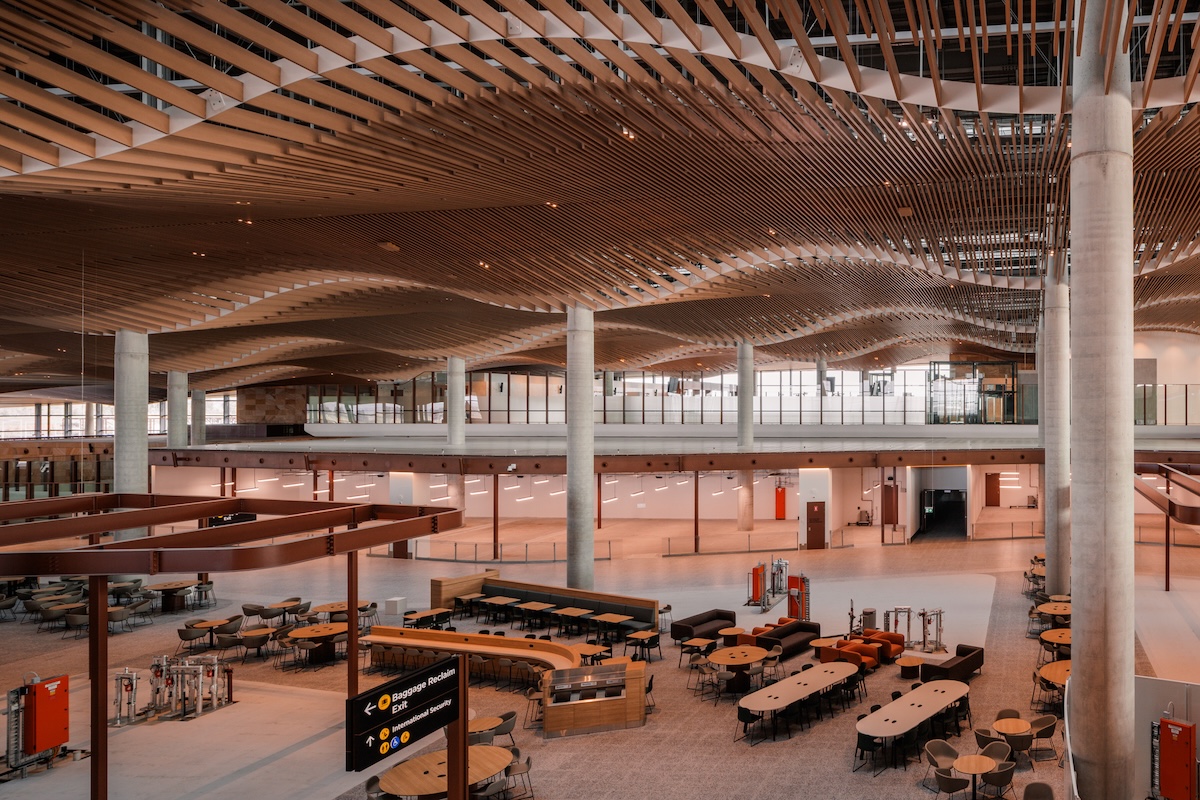
The terminal’s design draws from the natural environment. A horizontal silhouette and generous transparency connect the building to its landscape, while a dramatic sculptural ceiling filters natural light through a network of skylights. This design element evokes the dappled light found under eucalyptus canopies, creating a distinctly Australian experience.

For many travellers, WSI will offer a first impression of Australia. In that spirit, the design channels the beauty of the land and the clarity of light across the region, aiming to create a calm, intuitive and welcoming passenger journey. The building’s visual language is grounded in the concept of the “Great Australian Light,” which shapes movement and orientation throughout the space.

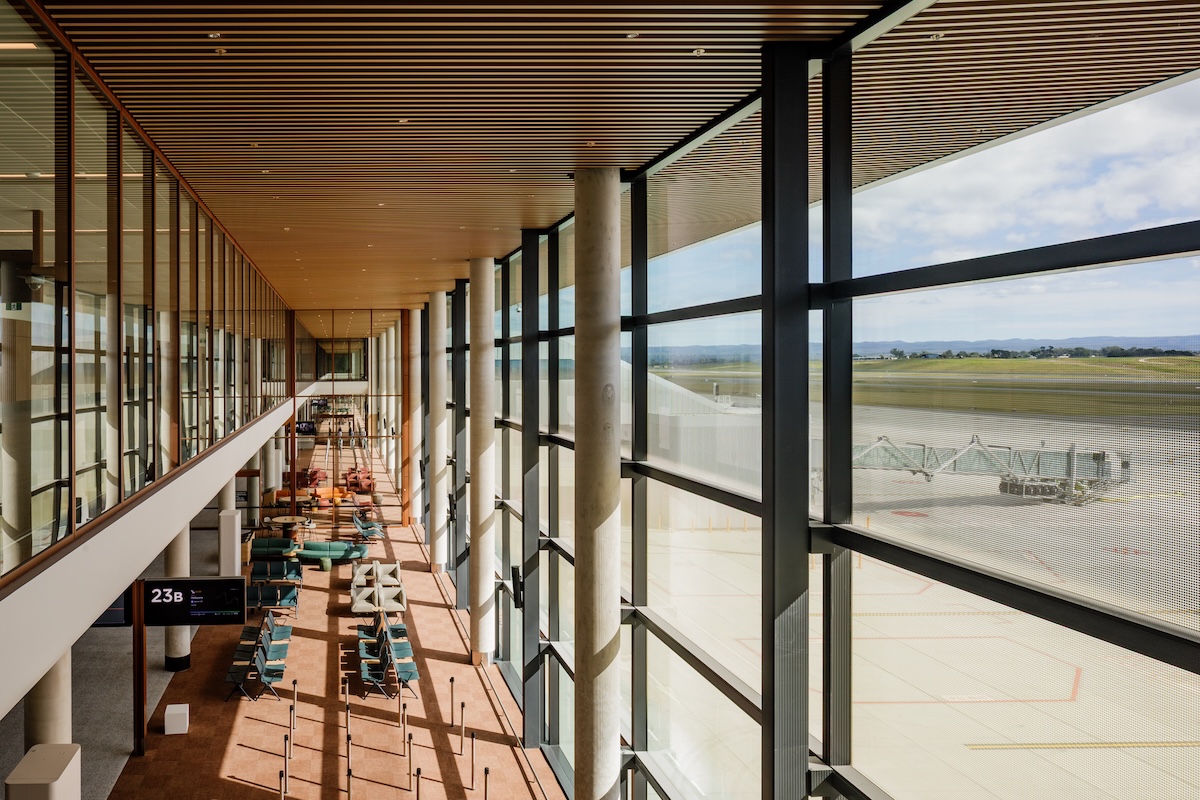
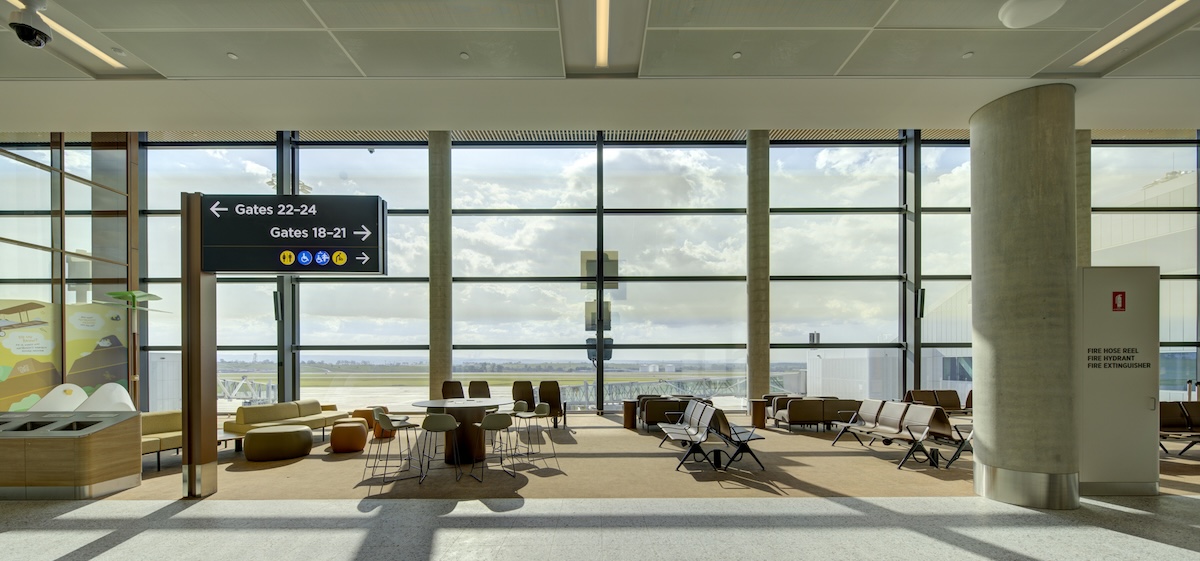
Public areas of the terminal reflect the identity of Western Sydney itself: culturally rich, community-driven, and egalitarian in spirit. Developed in consultation with Dharug Custodians and First Nations consultant Murrawin, the terminal integrates local narratives and values throughout its design. Warm, natural materials, open sightlines and seamless transitions between indoor and outdoor spaces reinforce this community-focused approach.

The forecourt and landside environments have been designed to feel more like a civic destination than a traditional transit hub. The architecture prioritises ease of movement, with intuitive spatial cues guiding passengers smoothly through check-in, security and boarding.

Importantly, WSI has also been designed for the future. The terminal has achieved a 5 Star Green Star Rating and incorporates regenerative design principles including natural ventilation, energy efficiency, and water recycling. Its modular layout allows for flexible expansion, enabling the airport to adapt to new technologies and growing demand without compromising passenger experience.

This infrastructure project stands not only as a functional transport solution but as a defining civic space for the Greater Sydney region.

With its architecture now complete, Western Sydney International Airport offers a vision of what the next generation of Australian transit infrastructure can be: sustainable, human-centred, and unmistakably rooted in place.

Qantas Frequent Flyer hack: what you need to know now, what to do next

Fasten your seatbelts and change your passwords: Qantas just announced its customers have had their data stolen as a result of an external hack. Here's what happened and what you need to do next.

Change your passwords. Right now

First things first: if you're using any common passwords, change them right now. Don't even finish reading this. Go change them.

I've previously worked in cybersecurity for a big bank, and what I can tell you is that shared or common passwords have to be the number one way that people (and companies) get breached these days.

Think of it like this. You've got a key to your house, your car, maybe a locker or maybe even an office. There's a reason all of those keys aren't the same. Because if hackers got one key, they'd be able to unlock and ransack every aspect of your life! It's the same with passwords:  if you've got one shared password between your social networks, banks, superannuation account or even MyGov/Medicare, a breach of one is a breach of all. 

There's a reason that remembering unique passwords feels hard. It's because it is. The human brain isn't meant to remember 100 different passwords. Thankfully, there are a tonne of free ways to be more secure thanks to password vaults. There's probably one on your phone right now and you don't even know it.

A password vault locks up all of your individual and (more importantly) unique passwords behind a PIN, password or even your biometrics like your faceprint or fingerprint. They're then locked up safely on your device inside the most secure enclave your device has (Apple, for example, literally calls it the Secure Enclave, by the way) and they're not online in some honeypot waiting for a hacker to swipe it. That way, you only have to remember the one password. Or if you use biometrics, you won't have to remember one at all.

If you want to set up your device's built-in password vault, follow the instructions here for Apple devices, here for Samsung devices or here for Google Accounts.

On with the show.

Qantas: what got hacked?

Hackers managed to gain access to a system used by a company Qantas works with and made off with a bunch of customer data. The company breached was one of its "contact centres". Think call centres, external marketing firms, any of the hundreds of companies Qantas uses to outsource to these days, really. It isn't giving the name of the company at this time.

Instead, Qantas' CEO has said that all of its own systems "remain secure at this time" after the breach was contained.

So what did they take? Not anything of vital importance, to be honest. Qantas says that "the compromised data includes some customers' names, email addresses, dates of birth and Frequent Flyer numbers".

Qantas CEO Vanessa Hudson has been at pains to point out that really meaningful stuff - like credit card or passport information - was not taken as a result of this hack. 

These sorts of details on you and your friends/family are probably already out in the wild, anyway. The number of data breaches over the last year alone has seen billions of records leaked and sold on the dark web.

How did it happen?

Hackers didn't exactly kick down the door and make off with a computer full of files. Instead, they breached a business that works with Qantas instead.

Here's how Qantas CEO Vanessa Hudson describes what happened:

On Monday, we detected unusual activity on a third-party platform used by one of our airline contact centres. We immediately contained the incident and can confirm all Qantas systems remain secure.

Our initial investigations show the compromised data includes some customers' names, email addresses, dates of birth and Frequent Flyer numbers. Importantly, no credit card details, personal financial information and passport details are held in the system that was accessed. No Frequent Flyer accounts, passwords, PIN numbers or log in details have been compromised.

Honestly, it's unsurprising. It's actually very common these days for businesses who work with lots of other businesses to get hacked this way. Hackers figure it's pretty tough to crack the steel walls of a bank or telco, but their customer's data probably lives on systems outside the secure area so that contractors can do business with them. It's these so-called "third-party hacks" that you're likely to see the most in the wild these days.

Given how much of our data is online and the ongoing boom industry that is cybercrime, scams and phishing, every single service that keeps data on its customers is bound to be hacked eventually. It's a matter of "when" and not "if" these days.

What do you need to do to stay safe after the Qantas hack?

Right now, you don't really need to do anything. Even if you have upcoming travel, this hack won't affect your plans. 

The only action you need to take is to make sure your passwords are all different across all your services, including Qantas. If you are using common or shared passwords, check out the section up top to change your passwords quickly and easily so your whole life doesn't fall into the hands of scammers. 

According to Qantas, passwords weren't leaked as part of this hack, but remember: everyone will get hacked eventually. Better to be prepared earlier!

If you're worried, Qantas has set up a dedicated line you can call to ask questions: 

"Contact our dedicated support line on 1800 971 541 or +61 2 8028 0534 for assistance, including specialist identity protection advice, or visit our webpage for more information."

Freak wind gusts made worse by climate change threaten airline passenger safety

Unexpected severe turbulence injured crew and passengers on a Qantas Boeing 737 during descent at Brisbane on May 4 2024. The subsequent Australian Transport Safety Bureau investigation suggested the severity of the turbulence caught the captain by surprise.

This is not an isolated event. Thunderstorms featuring severe wind gusts such as violent updrafts and downbursts are hazardous to aircraft. Downbursts in particular have been known to cause many serious accidents.

Our new research suggests global warming is increasing the frequency and intensity of wind gusts from thunderstorm “downbursts”, with serious consequences for air travel.

We used machine learning techniques to identify the climate drivers causing more thunderstorm downbursts. Increased heat and moisture over eastern Australia turned out to be the key ingredients.

The findings suggest air safety authorities and airlines in eastern Australia must be more vigilant during takeoff and landing in a warming world.

Warm, moist air spells trouble for planes

Global warming increases the amount of water vapour in the lower atmosphere. That’s because 1°C of warming allows the atmosphere to hold 7% more water vapour.

The extra moisture typically comes from adjacent warmer seas. It evaporates from the surface of the ocean and feeds clouds.

Increased heat and water vapour fuels stronger thunderstorms. So climate change is expected to increase thunderstorm activity over eastern Australia

For aircraft, the main problem with thunderstorms is the risk of hazardous, rapid changes in wind strength and direction at low levels.

Small yet powerful

Small downbursts, several kilometres wide, are especially dangerous. These “microbursts” can cause abrupt changes in wind gust speed and direction, creating turbulence that suddenly moves the plane in all directions, both horizontally and vertically.

Microburst wind gusts can be extremely strong. Brisbane airport recorded a microburst wind gust at 157km per hour in November 2016. Three planes on the tarmac were extensively damaged.

On descent or ascent, aircraft encountering microbursts can experience sudden, unexpected losses or gains in altitude. This has caused numerous aircraft accidents in the past. Microbursts will become increasingly problematic in a warming climate.

Microburst analysis and prediction

Microbursts are very difficult to predict, because they are so small. So we used machine learning to identify the environmental factors most conducive to the formation of microbursts and associated severe wind gusts.

We accessed observational data from the Bureau of Meteorology’s extensive archives. Then we applied eight different machine learning techniques to find the one that worked best.

Machine learning is a field of study in artificial intelligence using algorithms and statistical models to enable computers to learn from data without explicit programming. It enables systems to identify patterns, make predictions and improve performance over time as they take in more information.

We found atmospheric conditions in eastern Australia are increasingly favouring the development of stronger, more frequent thunderstorm microbursts.

We investigated a microburst outbreak from a storm front in 2018. It produced severe surface wind gusts at six regional airports in New South Wales: Bourke, Walgett, Coonamble, Moree, Narrabri and Gunnedah.

Regional airports in Australia and around the world often use small aircraft. Small planes with 4–50 passenger seats are more vulnerable to the strong, even extreme, wind gusts spawned by thunderstorm microbursts.

Widespread consequences

Our extensive regional case study identified the weather patterns that create severe thunderstorms in eastern Australia during the warmer months.

High cloud water content creates a [downward force] [https://repository.library.noaa.gov/view/noaa/11215] in the cloud. This force induces a descending air current. When the heavier air reaches the ground, wind gusts spray out in multiple directions.

Sketch showing a thunderstorm microburst and its effect on wind gusts and the flight path.
A small yet powerful downburst can deflect a plane from it’s intended path of descent, pushing it down towards the ground.
Mehmood, K., et al (2023) Fluids., CC BY

These wind gusts endanger aircraft during takeoff and landing, because rapid wind shifts from tail winds to head winds can cause the aircraft to dangerously gain or lose altitude.

Our analysis highlights the elevated aviation risks of increased atmospheric turbulence from thunderstorm microbursts across eastern Australia.

Smaller aircraft at inland regional airports in southeastern Australia are especially vulnerable. But these sudden microburst-generated wind gusts will require monitoring by major east coast airports, such as Sydney and Brisbane.

Beware of heightened microburst activity

Flying has long been recognised as a very safe mode of travel, with an accident rate of just 1.13 per million flights.

However, passenger numbers worldwide have increased dramatically, implying even a small risk increase could affect a large number of travellers.

Previous research into climate-related risks to air travel has tended to focus on high-altitude cruising dangers, such as clear air turbulence and jet stream instability. In contrast, there has been less emphasis on dangers during low-level ascent and descent.

Our research is among the first to detail the heightened climate risk to airlines from thunderstorm microbursts, especially during takeoff and landing. Airlines and air safety authorities should anticipate more strong microbursts. More frequent wind gust turbulence from microbursts is to be expected over eastern Australia, in our ongoing warming climate.The Conversation

Milton Speer, Visiting Fellow, School of Mathematical and Physical Sciences, University of Technology Sydney and Lance M Leslie, Professor, School of Mathematical And Physical Sciences, University of Technology Sydney

This article is republished from The Conversation under a Creative Commons license. Read the original article.

Virgin Australia is coming back to the share market: here's what the new chapter could mean

It is finally happening. After five years of being a private company, Virgin Australia will relist on the Australian Securities Exchange (ASX) on June 24. The company is expected to raise A$685 million through the initial public offering (IPO).

So, who will benefit from Virgin Australia’s return to the share market? Having paid $3.5 billion for the bankrupt carrier back in 2020, private equity firm Bain Capital will be the most immediate winner.

Earlier this year, Bain had sold 25% of the company to Qatar Airways. Now, with the IPO, Bain will reduce its stake from about 70% down to 40%. Most of the $685 million raised will go straight to Bain.

With Virgin’s anticipated market capitalisation close to $2.3 billion and enterprise value of reportedly up to $3.6 billion, it is now evident that Bain has – with Jayne Hrdlicka at the helm of the airline – not only managed to turn the company around, but to also profit nicely from doing so.

Without Bain’s rescue at the beginning of the pandemic (which was catastrophic for airlines globally), the situation may have become quite detrimental for travellers. It also avoided having the Australian taxpayer foot the bill for a bailout.

Will the airline’s customers be better off after this? It will depend on how much, if anything, Bain chooses to reinvest in Virgin after this share offering is over. But Virgin has also recorded substantial recent profits, some of which are expected to be spent on newer aircraft and improved services.

Stronger competition for Qantas?

Looking at the strategies of both Virgin Australia and its biggest competitor, Qantas, in recent years, it seems both have learned to love playing the duopoly game.

Based on our own calculations, Virgin controls roughly 33% of Australia’s domestic seat capacity and the Qantas group (which includes Jetstar) much of the rest on the country’s core flight network. The ACCC also backs this up with its quarterly observations on the market.

In the 2010s, the two airlines were out-competing themselves in adding capacity to the market, which drove down yields (or revenue per passenger) and nearly killed Virgin Australia 1.0.

Now, Qantas and Virgin have new chief executives who understand both airlines can be very profitable if they show some (capacity) discipline in how many seats they create and sell.

Better services

For that reason, it’s likely not much will change in terms of competition, at least in the domestic market. But this is only true as far as capacity is concerned.

It seems reasonable to assume Virgin’s recent profits and any funds from the capital raise will only be used to support future growth if it is profitable. The majority of the profits will likely go towards fleet renewal and improvement of the airline’s product.

For consumers, this wouldn’t necessarily mean lower airfares in the domestic market. But it would mean newer aircraft and enhanced services, which is a positive for both flyers and the environment.

International departures

Virgin Australia will become a more formidable competitor to Qantas, thanks to its newly formed relationship with international partner Qatar Airways and the additional cash from relisting.

It will be interesting to observe what Qatar will do next and whether a new player – perhaps Singapore Airlines – will enter the scene and take a stake in the airline once Virgin Australia is trading publicly again.

It would not be the first time an international airline has taken a stake in Virgin Australia, and could create some interesting dynamics.

Another beneficiary is Virgin Australia’s management team, who’ve been somewhat shackled by the priority of getting the IPO off the ground. The IPO will free up management to deploy resources towards more longer-term priorities.

Many will see a significant payday – it’s estimated staff are sitting on shares that could soon collectively be worth $180 million.

Why now?

Bain Capital has timed this IPO carefully. Virgin Australia has (in tandem with Qantas) produced a stellar financial performance in the last financial year. It may deliver an even better one in the current reporting period.

To maximise returns, it is likely Bain did not want to waste the opportunity to capitalise on the moment. Global markets are still full of volatility and geopolitical uncertainty. What may diminish is the financial performance of the core business Bain Capital is trying to sell.

At $2.90 a share, Virgin Australia will have a price-to-earnings ratio (used to assess how relatively expensive a share price is) of seven times its expected earnings this financial year. This is lower than Qantas’ ratio of ten times expected earnings this financial year.

Profits are likely to remain high this year, with continuing strong demand, high yields and low jet fuel prices. The brokers and underwriting investment banks will use this to sell the story.

IPOs can sometimes deliver those already holding shares in a company significant day-one windfall profits. In this case, however, Bain’s expertise in the venture capital market means it is unlikely to leave any money on the table.

One may also argue while Virgin appears to be priced at a discount compared to Qantas, there may be legitimate reasons for the price differential, such as Qantas’ very profitable loyalty business.

Given uncertainties around demand and geopolitical tensions, there is no guarantee the share price of Qantas will remain at record highs for too long, which means the opportunity to present Virgin shares as a bargain may be short-lived.

In the long term, it is widely agreed airlines are by definition volatile investments and not necessarily something the average investor should have in their portfolio.

Moving forward

Symbolically, the decision for Virgin to use a new stock ticker – VGN instead of the old VAH – may avoid bringing back bad memories.

Five years can be a lifetime in aviation, but maybe not to bond holders who got just 10 cents in the dollar and shareholders (including the large airline partners who held equity stakes) who got nothing when the airline collapsed in 2020.

From a strategy perspective, it will be important for management to avoid history repeating itself with international airlines buying into Virgin and securing board seats.

This can be one way of influencing the strategy of the carrier’s domestic arm to funnel more passengers to their own international flights.

It is positive, for both Virgin Australia and the Australian aviation industry, that Bain Capital appears set to pull this off and that the revitalised airline is now truly Virgin Australia 2.0.


The Conversation

Rico Merkert, Professor in Transport and Supply Chain Management and Deputy Director, Institute of Transport and Logistics Studies (ITLS), University of Sydney Business School, University of Sydney

This article is republished from The Conversation under a Creative Commons license. Read the original article.

Qantas and Virgin's true market supremacy revealed by ACCC

Thought the domestic aviation market was a two-horse race in 2024? As the ACCC reports, in 2025 it’s way worse than you think.

Back in 2023, Treasurer Dr Jim Chalmers asked the ACCC to keep a watchful eye on the skies. The government asked it to make sure as tourism started taking off again that the airlines weren’t price gouging. Enter the Domestic Airline Competition Report, which is a quarterly update of the watchdog’s findings. 

According to the ACCC’s latest report released today, there’s not a whole lot of competition going on in the skies above our great nation. Qantas Group (made up of Qantas, Jetstar and QantasLink) and the Bain Capital-owned Virgin Australia, now account for a staggering 94.4% of all domestic passenger carriage. The Qantas Group alone holds over 60% of the market.  

Virgin, boosted by the collapse of Bonza and the retreat of Rex from capital city routes, has lifted its share to 34.4% as of March 2025.

Those figures reflect more than just strong demand for travel. It’s the result of a year that saw the cascading failures of smaller players in the domestic carriage market. 

That dominance isn’t just reflected in passenger numbers—it shows up on the balance sheet. Qantas posted $1.5 billion in EBIT in the first half of FY2024–25, with $916 million coming from domestic flying. Virgin, while private under Bain Capital, confirmed record profits during the same period.

Jetstar, which is now Australia’s only low-cost carrier, saw its earnings jump 53.7% year-on-year to $269 million. With no other budget competitor in the market, its margins have expanded alongside its market share.

The ACCC warns that this level of consolidation isn’t just a matter of good corporate performance. It has pretty serious implications for prices, service, and consumer choice.

“Jetstar has been able to capitalise on the continued absence of competitive pressure,” said ACCC Commissioner Anna Brakey.

And that absence may not change anytime soon. 

Bonza’s crash out of the Australian market in April 2024 marked the second failed attempt at a third domestic player in a decade. Meanwhile, Rex has largely returned to its regional roots, operating with government backing as it navigates voluntary administration.

Despite seasonal swings in demand and weather disruptions in March, airfares are still up compared to historical norms. The ACCC noted that while fares dropped in early 2025, they had risen again by 9.6% in March—a pattern that may become familiar in a low-competition environment.

The market may be moving, but it’s not opening up. And for investors watching Qantas and Virgin’s grip on the skies, the story now is about how long they can hold altitude before competition returns, or regulators intervene.

Union wants Qantas to pay through the nose in COVID outsourcing case

Qantas has landed back in court this week to find out how much it’s going to pay in penalties for outsourcing staff during COVID.  (more…)

Air Force Trump: Inside Trump’s gifted $400m Qatari 747-8 jumbo jet

Ever copped a lavish gift through your job? Ask US President Donald Trump and he’ll tell you all about the latest gift he’s accepting - his very own Boeing 747-8 jumbo jet from the Royal Family of Qatar. Let’s take to the skies together in Trump’s latest toy. (more…)

Trump slump: Expedia expects US travel decline, but are Aussie carriers worried?

Trump’s work on reciprocal tariffs has certainly dinged up our portfolios, but is it also hurting US tourism? Expedia thinks so. (more…)

Bhutan will let you pay for your next holiday in Bitcoin

I’ve just come home from a trip and every time I went to pay for something, store owners shook their heads to decline my American Express. One country is going above and beyond just tap-and-pay systems however, with the nation of Bhutan now saying it will accept tourist payments via Bitcoin. (more…)